
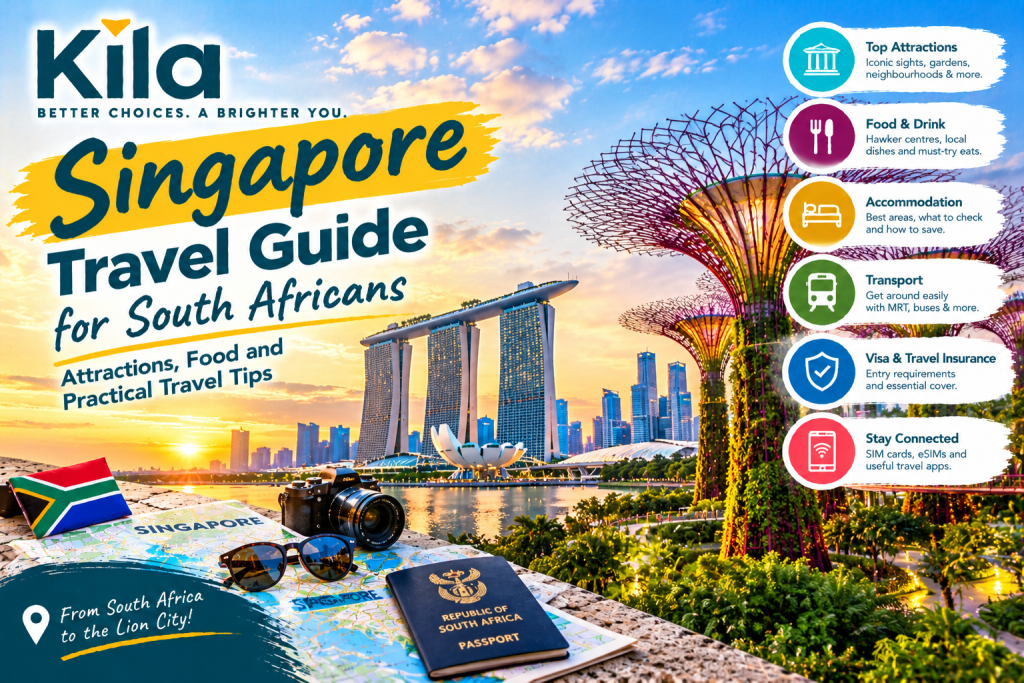
Singapore offers a fascinating mix of modern architecture, tropical gardens, traditional neighbourhoods and some of Asia’s most interesting food.
You can admire the futuristic skyline around Marina Bay, explore the colourful streets of Chinatown and Little India, sample local dishes at a hawker centre and spend an evening beneath the illuminated Supertrees at Gardens by the Bay.
For South African travellers, Singapore can also work well as a standalone holiday or as part of a longer Asian itinerary.
However, it is not necessarily a cheap destination. Accommodation, major attractions and some restaurants can take a significant portion of your budget, particularly if you travel during busy periods.
The good news is that Singapore’s public transport system is convenient, many neighbourhoods are easy to explore on foot, and you can enjoy plenty of the city’s atmosphere without paying for expensive attractions.
This guide explains what to know before travelling from South Africa to Singapore, from entry requirements and budgeting to accommodation, food and a suggested itinerary.
Why visit Singapore?
Singapore is more than a stopover between long-haul flights.
Its appeal comes from the contrast between different experiences within a relatively compact destination.
You can visit historic temples and traditional shopfronts in the morning, explore modern shopping districts in the afternoon and enjoy waterfront views after dark.
Singapore is particularly suitable for travellers who enjoy:
- Modern city skylines and distinctive architecture
- Gardens, parks and outdoor attractions
- Asian food and multicultural neighbourhoods
- Shopping and entertainment
- Clean, efficient public transport
- A city break that combines sightseeing with relaxation
It is also a practical introduction to Southeast Asia for travellers who prefer a well-connected city with a wide range of accommodation, restaurants and organised attractions.
Where is Singapore?
Singapore is a small island country at the southern end of the Malay Peninsula, close to Malaysia and within reach of Indonesia.
Its position makes it a major international aviation hub. Travellers from South Africa may visit Singapore directly as their main holiday destination or combine it with destinations such as Malaysia, Thailand, Indonesia or Vietnam.
English is widely used, alongside Mandarin Chinese, Malay and Tamil. This makes it relatively easy for English-speaking South Africans to navigate the city.
Singapore uses the Singapore dollar (SGD), and its time zone is six hours ahead of South African Standard Time.
When is the best time to visit Singapore?
Singapore has a tropical climate throughout the year. Expect warm temperatures, high humidity and the possibility of rain in every season.
There is no conventional winter with cold weather, so you can visit throughout the year.
November to January
These months fall within a wetter period, although rainfall varies. You can still enjoy sightseeing, but plan for showers and keep some indoor activities available.
February to April
This period can be appealing for visitors who want to explore the city, gardens and outdoor attractions. Hot and humid weather remains normal, and rainfall is still possible.
May to September
Expect hot conditions, with occasional heavy showers and thunderstorms. Air-conditioned shopping centres, museums and indoor attractions can provide welcome breaks from the heat.
October
October can be a useful time to visit if you find suitable flights and accommodation, although conditions remain tropical and unpredictable.
Practical tip: Rather than choosing your dates based on weather alone, compare flight prices, hotel rates, school holidays and major events. Singapore can be busy at popular times, and accommodation costs can change considerably.
For current climate and travel information, consult the official Visit Singapore website.
How to travel from South Africa to Singapore
Singapore is a long-haul destination from Johannesburg or Cape Town. Your best route will depend on your travel dates, preferred airline, ticket price and whether you want to make a stop along the way.
When comparing flights, look at:
- Total journey time
- Number and length of connections
- Whether all flights are on one ticket
- Baggage allowances
- Arrival and departure times
- Whether you need a transit visa for any connecting country
A cheaper flight is not always the best value if it involves a long overnight layover, separate tickets or the risk of missing a connection.
If you book separate tickets, allow sufficient time between flights and understand what happens if the first flight is delayed.
For a longer trip involving several countries, see our guide to How to Plan a Multi-City International Trip from South Africa: Flights, Connections, Budget & Itinerary.
Singapore entry requirements for South African travellers
Entry requirements should be checked before booking non-refundable travel arrangements.
Singapore’s Immigration and Checkpoints Authority (ICA) publishes the official rules for foreign visitors. Requirements can depend on the passport you hold and the purpose of your visit.
South African travellers should check whether their particular passport requires an entry visa before departure. Do not assume that the rules for South African passport holders apply to every nationality or residence status.
Start with the official Singapore ICA visa requirements page.
Passport validity
Singapore generally requires visitors to have a passport with at least six months’ validity at the time of entry or departure, as specified by the applicable entry rules.
Check your passport well in advance. If it is approaching expiry, allow enough time to renew it before travelling.
The SG Arrival Card
Most travellers must submit the Singapore Arrival Card electronically before arriving, subject to the official exemptions.
The submission is generally made within three days before arrival, including the day of arrival. It is not a visa and does not guarantee admission to Singapore.
Use the official ICA SG Arrival Card service. Be cautious of unofficial websites that charge unnecessary fees for this free government submission.
Other documents
Depending on your circumstances, you may need to show:
- A valid passport
- A return or onward ticket
- Evidence of sufficient funds for your stay
- Entry permission for your next destination, if applicable
- A visa, if required for your passport
Border officials make the final decision on entry.
Important: Immigration rules can change. Confirm the current requirements shortly before departure and make sure you also meet the rules for any country where you transit.
What currency does Singapore use?
Singapore uses the Singapore dollar (SGD).
You can pay for many purchases with a bank card or mobile wallet, particularly in larger shops, hotels and restaurants. Cash can still be useful for some small purchases and market stalls.
Before leaving South Africa, check:
- Your bank’s foreign transaction fees
- Your card’s international payment settings
- ATM withdrawal charges
- Whether your card supports contactless payments
- The exchange rate offered by your bank
Avoid exchanging all your money at the airport without comparing rates. Convenience can come at a cost.
A sensible approach is to carry a payment card for most purchases and a modest amount of cash for situations where it is useful.
How much does a Singapore holiday cost?
Singapore can be expensive compared with some other Southeast Asian destinations. Accommodation is often one of the biggest expenses, especially in central areas.
Your total cost will depend on your travel dates, hotel standards, dining choices, attractions and flight prices.
Rather than relying on a single estimated holiday price, build a budget around the main expenses.
| Expense | What to consider |
|---|---|
| Flights | Compare different dates, airlines and connection options from South Africa |
| Accommodation | Central hotels are convenient but can cost more |
| Transport | MRT trains and buses can reduce daily transport costs |
| Food | Hawker centres offer alternatives to restaurant dining |
| Attractions | Some gardens and public areas are free; major paid attractions add up |
| Travel insurance | Compare cover for medical emergencies, cancellations and baggage |
| Shopping | Set a separate allowance so purchases do not disrupt your budget |
How to keep costs under control
You do not need to spend heavily every day to enjoy Singapore.
Consider staying near an MRT station rather than paying a premium for a hotel directly beside a major attraction.
Eat some meals at hawker centres, where you can experience local dishes without choosing a full-service restaurant each time.
Choose paid attractions that genuinely interest you rather than purchasing every available ticket.
Also compare the cost of attraction bundles carefully. A pass is only worthwhile if the attractions you intend to visit would otherwise cost more individually.
The best places to visit in Singapore
Singapore has enough attractions to fill several days, but first-time visitors can cover many highlights with a well-planned three- or four-day stay.
1. Marina Bay
Marina Bay is one of Singapore’s most recognisable areas.
The waterfront offers views of the skyline, modern buildings and the famous Marina Bay Sands complex.
Walk along the waterfront, take photographs of the city and explore nearby attractions. The area is particularly attractive after dark, when the buildings and waterfront become illuminated.
You can enjoy the public waterfront without paying for a hotel stay or an observation-deck ticket.
2. Gardens by the Bay
Gardens by the Bay is one of Singapore’s signature attractions.
Its enormous Supertrees, landscaped gardens and conservatories create a distinctive setting that feels very different from a conventional city park.
Highlights include:
- Supertree Grove
- Cloud Forest
- Flower Dome
- OCBC Skyway, subject to ticket availability and operating arrangements
The outdoor gardens offer opportunities to explore without necessarily purchasing every available ticket.
Check the official Gardens by the Bay website for opening hours, admission prices and any scheduled maintenance.
3. Chinatown
Chinatown combines historic streets, temples, traditional businesses and modern cafés.
It is a good place to explore Singapore’s Chinese heritage and sample local food.
Allow time to walk through the neighbourhood rather than simply visiting one landmark. Smaller streets and traditional shopfronts can be just as interesting as the main attractions.
4. Little India
Little India is known for its colourful buildings, Indian restaurants, shops, markets and religious landmarks.
It offers a different atmosphere from the modern waterfront districts.
Visitors can explore the streets, sample Indian food and visit temples while learning more about the communities that contribute to Singapore’s cultural identity.
Dress respectfully when entering religious sites and follow any photography restrictions.
5. Kampong Glam
Kampong Glam is a historic Malay and Muslim cultural district with cafés, boutiques, street art and traditional businesses.
Haji Lane is popular for its murals, independent shops and lively atmosphere.
The area is worth visiting if you enjoy exploring neighbourhoods at a slower pace and discovering local cafés and small businesses.
6. Sentosa Island
Sentosa is a resort island with beaches, attractions, entertainment and leisure facilities.
It can be a good option for families or travellers who want a change from the city centre.
However, some activities and attractions can be expensive. Choose the experiences that interest you most instead of assuming you need to purchase a large package.
Check the official Sentosa website for current attractions, transport options and admission details.
7. Jewel Changi Airport
Jewel is a major attraction at Singapore’s Changi Airport, featuring the Rain Vortex indoor waterfall, landscaped spaces, shops and restaurants.
It can be worth visiting at the beginning or end of your trip, especially if you have time before a flight.
However, do not assume that every transit passenger can access every part of Jewel without meeting immigration requirements. If you are connecting through Singapore without entering the country, check the airport’s current transit and access arrangements first.
8. Singapore Botanic Gardens
The Singapore Botanic Gardens offers a quieter experience away from the busiest shopping and waterfront areas.
It is a good option for visitors who enjoy green spaces, tropical plants and leisurely walks.
Check the official Singapore Botanic Gardens website for current visitor information and details of any ticketed areas.
What should you eat in Singapore?
Food is one of the highlights of a Singapore visit.
The city brings together Chinese, Malay, Indian and Peranakan influences, creating a wide range of dishes and dining experiences.
You do not have to visit expensive restaurants to eat well.
Hainanese chicken rice
This popular dish consists of chicken served with rice cooked in a fragrant stock, usually accompanied by sauces and other condiments.
It is a good starting point for visitors who want to try a familiar but distinctive local meal.
Laksa
Laksa is a noodle soup that often combines coconut milk, spices, seafood or other ingredients.
Recipes vary, so try it at a reputable stall or restaurant that appeals to you.
Chilli crab
Chilli crab is a well-known Singapore dish featuring crab in a rich, spicy sauce.
It is often more expensive than everyday hawker food, particularly in seafood restaurants, so check prices before ordering.
Satay
Satay consists of skewered meat grilled over heat and served with a sauce, often accompanied by other condiments.
It is a useful option for sharing when eating with family or friends.
Kaya toast and kopi
Kaya toast is commonly served with coconut-and-egg jam, while kopi is local-style coffee.
It can make a simple breakfast or snack between sightseeing activities.
Where should you eat?
Hawker centres are a practical way to sample different dishes in one place.
Look for busy stalls, read menus carefully and check prices before ordering. Some dishes contain peanuts, seafood or other common allergens, so ask about ingredients if necessary.
Singapore has many halal, vegetarian and other dietary options, but it is best to confirm the suitability of a specific stall or restaurant rather than making assumptions.
How to get around Singapore
Singapore’s public transport system is one of the reasons the city is relatively straightforward to explore.
For most visitors, the MRT train network and buses will handle the majority of journeys.
MRT trains
The Mass Rapid Transit (MRT) network connects many of the city’s main neighbourhoods and attractions.
It is generally an efficient choice for getting between areas such as Marina Bay, Chinatown, Little India and Orchard Road.
Before travelling, check the route, interchange stations and final train times for your planned journey.
Buses
Buses reach many locations and can be useful when an attraction is not close to an MRT station.
They can also provide a different view of the city as you travel between neighbourhoods.
Contactless payment
Contactless bank cards and supported mobile wallets can be used for public transport in many circumstances.
However, international cards may incur foreign transaction fees, and card compatibility can vary. Check the official SimplyGo website before relying on your South African bank card for every journey.
Taxis and ride-hailing services
Taxis and ride-hailing services can be convenient when travelling with luggage, returning late or reaching places less accessible by public transport.
Compare the estimated fare with the train or bus alternative before booking.
Walking
Walking is a good way to explore individual neighbourhoods, especially when attractions are close together.
Singapore’s heat and humidity can make longer walks tiring, so carry water, wear comfortable footwear and allow time for breaks in air-conditioned spaces.
Where should you stay in Singapore?
The best area depends on your budget, the type of holiday you want and how much sightseeing you plan to do.
Marina Bay and the central area
This area is convenient for major attractions, skyline views and waterfront walks.
It can be expensive, particularly for hotels with premium views or facilities.
Choose it if convenience and location are more important than minimising accommodation costs.
Chinatown
Chinatown offers a mix of accommodation, restaurants and cultural attractions.
It can be a useful base for visitors who want to explore on foot and use the MRT for longer journeys.
Little India
Little India can provide access to food, shops and public transport, with a different atmosphere from the modern central business district.
Compare accommodation carefully because quality, room size and noise levels can vary.
Bugis and Kampong Glam
These areas can suit visitors who want restaurants, shops and cultural attractions within reach.
They are worth comparing with the more expensive waterfront districts.
Orchard Road
Orchard Road is known for shopping centres, hotels and restaurants.
It may suit visitors who want shopping to be a major part of their trip, although accommodation costs can be higher in some properties.
Booking tip: Compare the total price, not just the nightly rate. Check taxes, cancellation terms, room size, distance to an MRT station and whether breakfast is included.
A practical three-day Singapore itinerary
If this is your first visit, three full days can provide a good introduction. A longer stay gives you more time for Sentosa, additional museums, gardens and food experiences.
Day 1: Marina Bay and Gardens by the Bay
Start with Marina Bay and its waterfront views.
Explore the area around Marina Bay Sands, then visit Gardens by the Bay. Decide in advance whether you want to pay for the conservatories or elevated walkways.
Spend the evening enjoying the illuminated skyline and Supertrees.
Day 2: Chinatown, Little India and Kampong Glam
Begin in Chinatown and explore its temples, shops and food options.
Continue to Little India for its colourful streets and cultural landmarks.
Finish in Kampong Glam, where you can browse independent shops and enjoy dinner.
Use the MRT between neighbourhoods to save time and energy.
Day 3: Botanic Gardens, shopping or Sentosa
Choose your final day according to your interests.
For a relaxed day, visit the Botanic Gardens and spend time exploring another neighbourhood.
If you prefer shopping, explore Orchard Road.
If you want beaches or entertainment, spend the day on Sentosa Island.
You do not need to follow this itinerary exactly. Check opening times and travel distances before deciding which attractions to combine.
What should you pack for Singapore?
Singapore’s climate makes lightweight clothing practical throughout the year.
Consider packing:
- Breathable clothing
- Comfortable walking shoes
- A compact umbrella or lightweight rain jacket
- Sunscreen and sunglasses
- A reusable water bottle
- A small day bag
- Any prescription medication you need
- A suitable power adapter
- A payment card and some cash
Air-conditioned buildings, shopping centres and public transport can feel cool compared with the outdoor temperature, so a light layer can be useful.
If you plan to visit religious sites, pack clothing that allows you to dress respectfully.
Check the rules for bringing medication into Singapore before travelling, particularly if you use prescription or controlled medicines. Carry medication in its original packaging and keep prescriptions or supporting documentation available when appropriate.
Staying connected in Singapore
Reliable mobile data can make travelling easier.
You may need internet access for maps, transport information, hotel bookings, restaurant searches and communicating with family back home.
Before departure, compare the following options:
- International roaming from your South African mobile provider
- A local Singapore SIM card
- An eSIM, if your phone supports it
- Wi-Fi at your hotel and other establishments
Check your phone’s compatibility, the data allowance, validity period and any restrictions before purchasing a plan.
If you plan to use an eSIM, install or configure it according to the provider’s instructions before travelling where possible. Make sure you understand when the data package activates and whether it includes calls or only data.
Travel insurance for Singapore
Travel insurance is worth considering for a long-haul trip.
Medical treatment, hospital care, flight disruption and unexpected accommodation costs can be expensive when travelling internationally.
When comparing policies, check:
- Emergency medical expenses
- Medical evacuation and repatriation
- Trip cancellation and interruption
- Missed connections and travel delays
- Lost, stolen or delayed baggage
- Exclusions and excesses
- Any pre-existing-condition requirements
Read the policy wording rather than choosing on price alone.
Keep the insurer’s emergency contact details accessible while travelling.
Local rules and practical etiquette
Singapore is known for its organised public spaces and clear rules. Visitors should take time to understand local regulations rather than relying on assumptions.
In particular:
- Do not litter.
- Follow signs and instructions on public transport.
- Observe restrictions on eating and drinking in places where they apply.
- Respect religious sites and local customs.
- Check current rules for bringing food, tobacco, medication and other restricted items into the country.
- Avoid carrying prohibited substances or items across borders.
Penalties for some offences can be serious. If you are uncertain about a rule, consult official Singapore government information before travelling.
Is Singapore suitable for families?
Singapore can be a good destination for families because transport is convenient and the range of attractions is broad.
Families may enjoy Gardens by the Bay, Sentosa, wildlife attractions, shopping centres and the waterfront areas.
However, admission tickets and accommodation for several people can increase the total cost quickly.
Before booking, check age restrictions, ticket prices, child discounts, walking distances and whether attractions are suitable for the ages of the children travelling with you.
Allow time for meals, rest and indoor breaks, especially during hot or rainy weather.
Is Singapore worth visiting from South Africa?
Singapore can be worth the long journey if you enjoy city sightseeing, architecture, gardens, food and exploring different cultures.
It is particularly appealing if you want a destination where you can experience a lot within a relatively small area.
The main drawback is cost. Flights from South Africa, accommodation and paid attractions can make Singapore more expensive than some other destinations in Southeast Asia.
A sensible plan is to choose your travel dates carefully, book accommodation near convenient transport, use public transport for most journeys and balance paid attractions with free activities.
Final thoughts
Singapore offers a memorable combination of modern city life, cultural neighbourhoods, tropical greenery and excellent food.
For South African travellers, it can be a rewarding city break or a convenient starting point for a wider Asian holiday.
The most important preparation is to confirm your entry requirements, compare flights and accommodation, plan a realistic budget and allow enough time to enjoy the city without rushing from one attraction to the next.
You do not need to visit every landmark or spend money on every experience. A few carefully chosen attractions, some time exploring the neighbourhoods and several meals at local food centres can provide a very good introduction to Singapore.
Plan around your interests, check official travel information before departure and leave room for a few unexpected discoveries along the way.
Related Kila articles
For readers planning a longer trip, link naturally to these existing Kila guides where relevant:
- Bangkok Travel Guide for South Africans: What to Know Before You Go
- Dubai Travel Guide for South Africans: What to Know Before You Go
- How to Plan a Multi-City International Trip from South Africa: Flights, Connections, Budget & Itinerary