
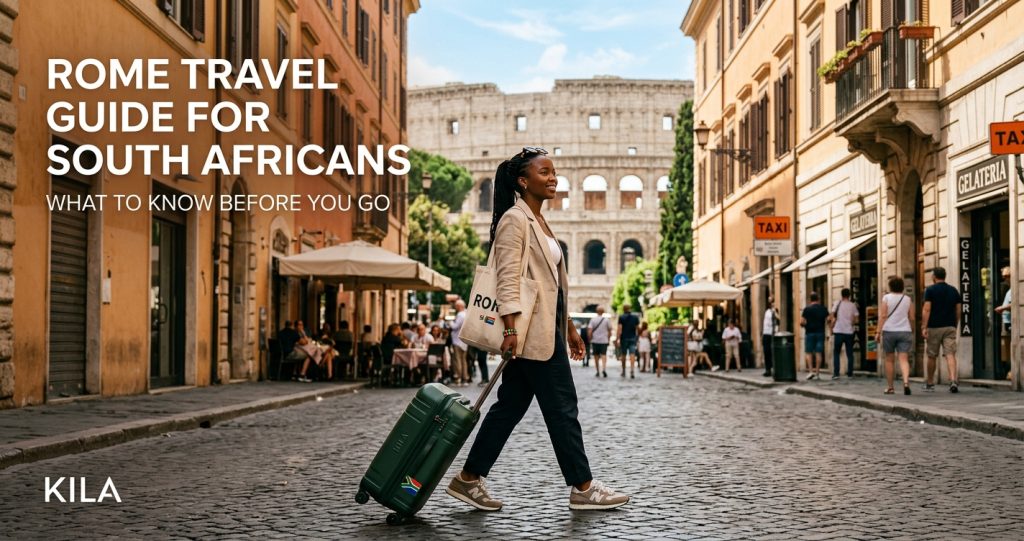
Rome is one of Europe’s most fascinating destinations.
The Italian capital combines ancient Roman history, Renaissance art, magnificent churches, world-famous food, fashion, shopping and modern city life.
For South African travellers, Rome can also be an excellent starting point for a wider European holiday.
You can visit Rome on its own, combine it with other Italian cities or build a multi-country itinerary around it.
But before booking your trip, there are several practical issues to consider, including flights, Schengen visa requirements, accommodation, airport transfers, public transport, travel insurance, mobile connectivity and your daily budget.
This guide explains what South Africans should know before planning a trip to Rome.
Why Visit Rome?
Rome offers an unusual combination of history and everyday city life.
You can spend the morning looking at buildings that are thousands of years old, have lunch in a neighbourhood trattoria and then spend the afternoon shopping or enjoying a coffee in a busy piazza.
Rome appeals to many different types of travellers.
You might visit for:
- Ancient history
- Art and architecture
- Food
- Fashion
- Shopping
- Religious sites
- Photography
- Family holidays
- Romantic breaks
- European city tours
- A longer Italian holiday
The city is also an excellent base for exploring other parts of Italy.
Florence, Venice, Naples and other destinations can be incorporated into a wider Italian itinerary.
If you’re planning several destinations, our guide How to Plan a Multi-City International Trip from South Africa: Flights, Connections, Budget & Itinerary can help you think through the logistics.
How Many Days Do You Need in Rome?
For a first visit, three to five full days is a good starting point.
Two to three days
A shorter trip can cover many of the major attractions, but you’ll need to prioritise.
Four to five days
This gives you more time to combine major sights with neighbourhoods, restaurants, shopping and relaxed sightseeing.
A week or longer
A longer stay allows you to explore Rome at a slower pace and potentially include day trips or another Italian destination.
Don’t make the mistake of trying to see everything.
Rome has an enormous number of museums, churches, archaeological sites, squares and historic buildings.
Trying to visit too many attractions every day can turn a holiday into a schedule of queues and rushing.
The Colosseum
The Colosseum is probably the most recognisable symbol of ancient Rome.
The enormous amphitheatre was constructed almost 2,000 years ago and remains one of the city’s most important attractions.
If visiting the Colosseum is high on your list, plan ahead rather than simply arriving and hoping to buy a convenient ticket.
You can also combine the Colosseum with the nearby Roman Forum and Palatine Hill.
Allow enough time to explore the wider archaeological area rather than treating the Colosseum as a quick photo opportunity.
The Roman Forum and Palatine Hill
The Roman Forum was once the centre of political, religious and commercial life in ancient Rome.
Today, the ruins provide a remarkable glimpse into the city’s past.
Nearby Palatine Hill is also associated with the traditional origins of Rome.
This area is particularly worthwhile if you’re interested in history and archaeology.
Wear comfortable shoes, however.
You’ll be walking over uneven surfaces and spending considerable time outdoors.
The Trevi Fountain
The Trevi Fountain is one of Rome’s most famous landmarks.
It is located in a relatively compact urban area, surrounded by streets, restaurants and shops.
Because of its popularity, the fountain can become extremely busy.
Consider visiting at a quieter time of day if you want to enjoy the area without the largest crowds.
Remember that the fountain is a public monument rather than simply a photo opportunity.
Respect the rules around the site and avoid behaviour that could result in fines or inconvenience.
The Pantheon
The Pantheon is one of Rome’s most remarkable ancient buildings.
Its enormous dome and central opening make it particularly impressive.
It is also conveniently located in the historic centre, making it relatively easy to combine with several other attractions during a day of sightseeing.
This is one of the places where simply walking between attractions can be part of the experience.
Piazza Navona
Piazza Navona is one of Rome’s best-known public squares.
It is surrounded by historic buildings, cafés, restaurants and fountains.
It can be an enjoyable place to stop for a drink or meal while exploring the historic centre.
Don’t rush through Rome’s piazzas.
Part of the attraction of the city is experiencing its public spaces rather than simply moving from one major attraction to another.
Vatican City
Vatican City is an independent country located within Rome.
It is home to:
- St Peter’s Basilica
- St Peter’s Square
- The Vatican Museums
- The Sistine Chapel
Even travellers who aren’t particularly interested in religious tourism may find the architecture and art worth experiencing.
The Vatican Museums can be extremely busy, so check current ticketing and entry arrangements before your visit.
If the Vatican is one of your priorities, give yourself enough time rather than trying to squeeze it between several other major attractions.
St Peter’s Basilica
St Peter’s Basilica is one of the world’s most famous churches.
Its enormous scale, architecture and artworks make it a major attraction in Rome.
Remember that it is an active place of worship, so appropriate clothing and behaviour are important.
Check current visitor requirements before you go.
Explore Rome’s Neighbourhoods
Rome is more than its famous monuments.
Some of the most enjoyable experiences can come from exploring different neighbourhoods.
Trastevere
Trastevere is known for its narrow streets, restaurants, cafés and lively atmosphere.
It can be particularly enjoyable in the evening.
Monti
Monti is close to the Colosseum and has a more local neighbourhood atmosphere, with restaurants, cafés and independent shops.
Prati
Prati is close to the Vatican and offers restaurants, shopping and a more residential atmosphere.
Centro Storico
The historic centre is ideal for visitors who want to be close to many famous attractions.
The downside is that accommodation can be more expensive and busy areas can be crowded.
Don’t Underestimate Walking in Rome
Walking is one of the best ways to experience Rome.
Many attractions are relatively close together, and walking allows you to discover:
- Small churches
- Historic buildings
- Hidden courtyards
- Local cafés
- Shops
- Street scenes
- Unexpected archaeological remains
However, don’t assume that every walking route will be easy.
Historic streets can involve:
- Uneven paving
- Steps
- Crowded pavements
- Long distances
- Hot weather
Comfortable footwear is therefore important.
Our guide How to Choose the Right Shoes for Your Lifestyle can help if you’re looking for comfortable shoes for extensive sightseeing.
How Do South Africans Get to Rome?
For most South African travellers, flying is the practical option.
Your choices will depend on:
- Departure city
- Travel dates
- Airline
- Number of stops
- Baggage
- Budget
- Total journey time
Johannesburg and Cape Town are the obvious starting points for many international itineraries, although travellers elsewhere in South Africa may need a domestic connection.
Don’t automatically choose the cheapest ticket.
Compare the complete journey, including:
- Number of stops
- Connection times
- Airports
- Baggage allowance
- Seat selection
- Arrival time
- Total travel time
Our guide How to Choose the Right Flight for an International Trip from South Africa: Price, Stops, Baggage & Schedule covers these considerations in more detail.
For particularly long journeys, see How to Plan a Long-Haul Flight from South Africa: Comfort, Connections, Baggage & Costs.
Rome’s Airports
Rome is served primarily by two airports:
- Leonardo da Vinci–Fiumicino Airport (FCO)
- Ciampino Airport (CIA)
Fiumicino is the major international airport and handles a large proportion of long-haul and international traffic. Rome’s official tourism authority describes it as a major international and intercontinental hub.
Ciampino is closer to the city and is used by a number of airlines, including some low-cost services.
When comparing flights, check which airport you’ll actually use.
A cheaper flight isn’t necessarily better if the airport transfer is substantially more complicated.
Getting From Fiumicino Airport to Rome
Fiumicino is around 30 km from central Rome.
Transport options include:
- Train
- Bus
- Taxi
- Private transfer
- Car hire
The Leonardo Express provides a rail connection between Fiumicino and Roma Termini.
Rome’s official tourism information also provides airport transport information and operates a tourist information point at Fiumicino’s Terminal 3.
If you’re arriving after a long flight, consider how much luggage you have and where your hotel is before deciding which transfer option to use.
Getting Around Rome
Rome has an extensive public transport system.
Options include:
- Metro
- Buses
- Trams
- Regional trains
- Walking
- Taxis
For many tourists, a combination of walking and public transport works well.
The Metro is particularly useful for covering longer distances between neighbourhoods and attractions.
However, don’t assume that public transport will take you directly to every historic attraction.
Some of the most interesting parts of Rome are best explored on foot.
Should You Hire a Car in Rome?
For a normal city holiday, hiring a car is usually unnecessary.
Driving in central Rome can be challenging because of:
- Traffic
- Narrow streets
- Limited parking
- Restricted traffic zones
- Pedestrian areas
- Busy roads
Public transport and walking are generally more convenient for a city-centre holiday.
A rental car may make more sense if Rome is the beginning of a wider Italian road trip.
Where Should South Africans Stay in Rome?
Your choice of neighbourhood can have a major effect on the experience.
Consider areas such as:
Centro Storico
Best for being close to many famous attractions.
Monti
Good for visitors looking for a lively neighbourhood close to the Colosseum.
Trastevere
Attractive for restaurants, nightlife and atmosphere.
Prati
Convenient for the Vatican and generally more residential.
Termini area
Useful for transport connections, particularly if you’re planning train journeys or have an early departure.
When comparing hotels, look at:
- Distance to public transport
- Walking distance to attractions
- Reviews
- Air conditioning
- Lift availability
- Room size
- Breakfast
- Cancellation conditions
- Airport transfer options
Our Hotel Booking Guide for South Africans: How to Choose the Right Accommodation provides a broader checklist for comparing hotels.
Don’t Choose a Hotel Solely on Price
A cheaper hotel can sometimes end up costing more in time and transport.
For example, saving €30 per night may not seem worthwhile if you spend an additional hour travelling to and from the main attractions every day.
Look at the complete value proposition.
A well-located mid-range hotel may provide a better experience than a cheaper property far from the areas you want to visit.
Rome and the Schengen Visa
This is one of the most important issues for South African travellers.
Italy is part of the Schengen Area, so South African passport holders should check the current visa requirements before booking a non-refundable trip.
Visa requirements can change, and your circumstances may affect the application process.
The Italian Consulate General in Johannesburg currently handles Schengen visa applications for residents within its stated consular jurisdiction, with applications lodged through the designated VFS Global centres.
Check the current requirements through the official Italian authorities before travelling.
If Rome is only one stop on a European trip, also make sure you understand the Schengen rules applicable to your complete itinerary.
Check Your Passport Before Booking
Before committing to flights and accommodation, check:
- Passport validity
- Blank pages
- Visa requirements
- Travel insurance requirements
- Proof of accommodation
- Return or onward travel
- Financial requirements
- Any current entry conditions
Keep digital copies of important documents somewhere secure.
It is also sensible to carry a separate physical copy of critical travel information.
Travel Insurance for Rome
International travel insurance is worth considering for a European holiday.
Potential problems include:
- Medical emergencies
- Cancelled flights
- Delays
- Lost luggage
- Stolen belongings
- Missed connections
- Trip cancellation
- Travel interruption
Don’t compare policies solely by price.
Look at:
- Medical cover
- Excesses
- Cancellation cover
- Baggage cover
- Exclusions
- Destination restrictions
- Pre-existing condition requirements where applicable
Our guide Travel Insurance for South Africans: What to Check Before You Buy explains the main features to compare.
Staying Connected in Rome
Mobile data can make international travel considerably easier.
You’ll likely use your phone for:
- Maps
- Public transport
- Translation
- Restaurant searches
- Hotel directions
- Attraction information
- Messaging
- Online bookings
- Flight updates
An eSIM can be convenient if your phone supports the technology.
Check whether the plan covers Italy and any other European countries you’ll visit.
Our guides How eSIMs Work When Travelling Overseas from South Africa and How to Choose the Best eSIM for International Travel: A South African Traveller’s Guide explain the options.
How Much Does a Rome Holiday Cost?
There is no single budget that works for every traveller.
Your total cost will depend on:
- Flights
- Accommodation
- Food
- Attractions
- Transport
- Travel insurance
- Mobile data
- Shopping
- Day trips
Accommodation and flights will usually make up a substantial portion of the overall budget.
Instead of asking only, “How much does Rome cost?”, calculate the entire trip.
Flights + accommodation + transport + food + attractions + insurance + spending money
That will give you a much more realistic figure.
Ways to Save Money in Rome
Rome doesn’t have to be an ultra-expensive holiday.
Walk where possible
Many attractions are close enough to reach on foot.
Use public transport
Avoid taxis for every journey.
Compare accommodation locations
A slightly more expensive central hotel may actually provide better overall value.
Mix restaurant meals with simpler food
You don’t need an expensive restaurant every night.
Book major attractions ahead
This can help avoid wasting time and may make planning easier.
Look for free attractions
Many churches, piazzas, streets and outdoor areas can be enjoyed without paying an admission fee.
Is the Roma Pass Worth Considering?
Rome has an official tourist card known as the Roma Pass.
The official tourism authority says the pass is available in 48-hour and 72-hour versions and can provide access to attractions together with public transport benefits.
Whether it represents good value depends on what you intend to visit.
Before buying it, compare:
- Attractions you plan to visit
- Admission prices
- Public transport you expect to use
- Duration of your stay
Don’t buy a tourist pass simply because it sounds convenient.
Calculate whether it actually saves you money.
What Should You Eat in Rome?
Food is one of the pleasures of visiting Rome.
You might want to try:
- Carbonara
- Cacio e pepe
- Amatriciana
- Roman-style pizza
- Supplì
- Gelato
- Italian pastries
- Espresso
- Local wines
Don’t restrict yourself to restaurants around the most famous tourist attractions.
Exploring local neighbourhoods can lead to better value and a more authentic experience.
Shopping in Rome
Rome offers a wide range of shopping opportunities.
You can find:
- Italian fashion
- Shoes
- Handbags
- Jewellery
- Leather goods
- Cosmetics
- Designer brands
- Independent boutiques
- Souvenirs
For travellers interested in fashion, Rome can be particularly enjoyable.
Our buying guides How to Choose the Right Handbag: A Practical Buying Guide, How to Choose the Right Shoes for Your Lifestyle and How to Choose the Right Jewellery for Everyday Wear can help before your trip.
Is Rome Safe for Tourists?
Rome is a major international tourist destination, but normal big-city precautions still apply.
Pay particular attention to your belongings in:
- Crowded tourist areas
- Public transport
- Busy streets
- Major attractions
- Queues
- Stations
Keep your passport and valuables secure.
Avoid carrying unnecessary valuables while sightseeing.
A comfortable crossbody bag can be useful because it allows you to keep your belongings close to you.
Handling Money in Rome
Italy uses the euro.
Before travelling, check:
- Your bank’s foreign transaction fees
- ATM charges
- Currency conversion rates
- Card limits
- Emergency access to funds
Don’t rely on a single payment card.
Having a backup card stored separately can be useful if your primary card is lost, stolen or blocked.
Keep emergency banking contact details somewhere secure.
What Should You Pack for Rome?
Your packing list depends on the season, but comfortable walking equipment is essential.
Consider:
- Comfortable walking shoes
- Lightweight clothing
- Layers
- Weather-appropriate jacket
- Compact umbrella
- Day bag
- Phone charger
- Travel adapter
- Passport holder
- Travel documents
- Medication
- Travel insurance information
If you’re visiting during hot weather, remember that you’ll often be walking between attractions and waiting outdoors.
If you’re visiting churches and religious sites, pack clothing that is appropriate for places of worship.
When Is the Best Time to Visit Rome?
Rome can be visited throughout the year.
Spring
Spring can provide pleasant conditions for walking and sightseeing.
Summer
Summer can be hot and busy, particularly around major attractions.
Autumn
Autumn can provide comfortable sightseeing conditions and a different atmosphere from the peak summer period.
Winter
Winter can be cooler, but some travellers prefer the quieter atmosphere and potentially lower accommodation demand.
There isn’t one universally best time.
The right choice depends on whether your priority is weather, crowds, prices or particular events.
Day Trips From Rome
If you are staying for five days or longer, consider adding a day trip.
Possible options include:
- Tivoli
- Ostia Antica
- Orvieto
- Florence
- Naples
- Pompeii
The best choice depends on how much time you have and how much travelling you want to do.
If this is your first visit to Rome and you only have three days, concentrating on Rome itself may be the better option.
Combining Rome With Other European Destinations
Rome works extremely well as part of a larger European holiday.
For example:
South Africa → Rome → Paris → South Africa
or:
South Africa → Rome → Florence → Venice → South Africa
You could also combine Rome with destinations such as London, Amsterdam or Istanbul.
The best route depends on:
- Flight prices
- Train connections
- Time available
- Number of destinations
- Luggage
- Your interests
Avoid adding too many destinations simply because they appear close together on a map.
Travel between cities takes time.
A Simple Four-Day Rome Itinerary
If you have four full days, you could structure your trip like this.
Day 1 — Ancient Rome
- Colosseum
- Roman Forum
- Palatine Hill
- Monti
Day 2 — Historic Centre
- Pantheon
- Piazza Navona
- Trevi Fountain
- Spanish Steps
- Evening meal in the historic centre
Day 3 — Vatican City
- Vatican Museums
- Sistine Chapel
- St Peter’s Basilica
- St Peter’s Square
- Prati
Day 4 — Explore Rome
Choose between:
- Trastevere
- Villa Borghese
- Shopping
- More museums
- Local food
- Relaxed neighbourhood exploration
The itinerary doesn’t need to be rigid.
Leave some free time to discover the city rather than spending every minute following a schedule.
Common Mistakes South Africans Should Avoid
Booking flights before checking visa requirements
Make sure you understand the entry requirements before committing to non-refundable arrangements.
Choosing a hotel solely because it is cheap
Location matters enormously in a large tourist city.
Trying to see everything
You will enjoy Rome more if you allow yourself time to slow down.
Underestimating walking
Rome involves considerably more walking than many visitors expect.
Wearing uncomfortable shoes
Historic streets and long sightseeing days can be hard on your feet.
Carrying too many valuables
Take only what you need while sightseeing.
Forgetting travel insurance
A medical or travel emergency overseas can become extremely expensive.
Ignoring transport from the airport
Check your arrival airport before booking accommodation.
Planning too many day trips
Don’t spend the entire holiday travelling away from Rome.
Rome Travel Checklist for South Africans
Before leaving South Africa, check:
- Passport validity
- Schengen visa requirements
- Return or onward flights
- Accommodation
- Airport transfer
- Travel insurance
- Mobile data or eSIM
- Bank cards
- Emergency funds
- Copies of important documents
- Major attraction bookings
- Weather forecast
- Comfortable walking shoes
- Travel adapter
- Luggage
Final Thoughts
Rome is one of those destinations where the famous attractions are only part of the experience.
The Colosseum, Vatican City, Trevi Fountain and Pantheon deserve their place on your itinerary, but don’t spend the entire trip rushing between landmarks.
Leave time to walk through neighbourhoods, stop at a café, enjoy Italian food and discover places that weren’t on your original itinerary.
For South African travellers, the journey requires some planning.
Check the current Schengen visa requirements, compare flights carefully, choose your accommodation based on location as well as price, arrange travel insurance and make sure you have reliable mobile connectivity.
Then give yourself enough time to enjoy the city.
Rome is not a destination to tick off a list in a hurry.
Plan the important things carefully, but leave enough room for the unexpected. That’s often where the best travel experiences begin.