
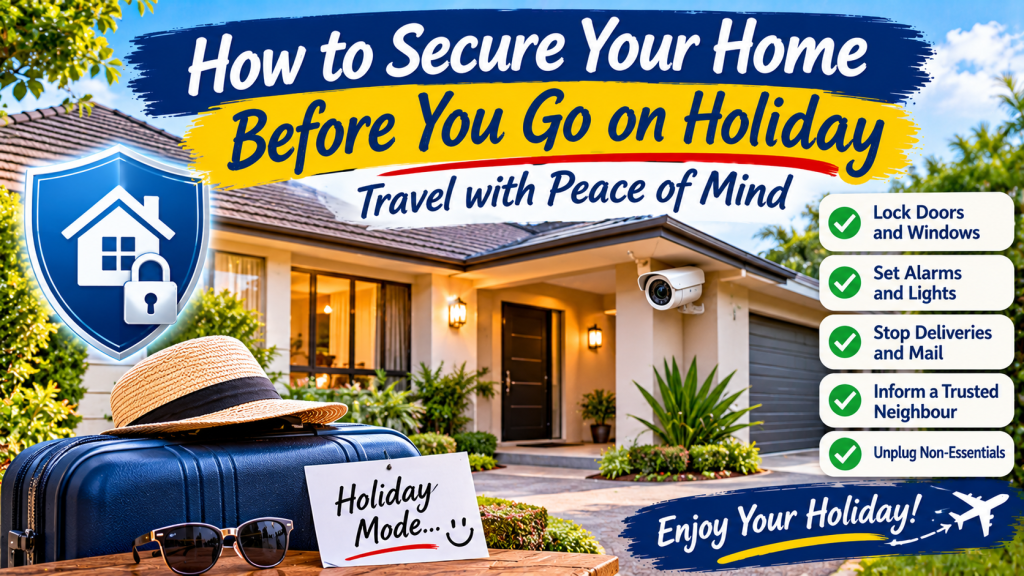
Few things spoil a holiday faster than a call from a neighbour saying your front door is open. December is the busiest travel month in South Africa, and it is also when home burglaries peak. SAPS recorded 42,969 home burglaries between October and December 2025, which averages about 467 a day. Insurers report that many break-ins happen in the week between Christmas and New Year, when whole streets stand empty.
This guide gives you a practical, South African checklist for securing your home before you go away, whether you are flying overseas or driving to the coast. It covers locks and lights, alarms and backup power, insurance conditions that catch people out, how to avoid a burst geyser or storm damage while you are gone, and what to do if the worst happens. It is written for homeowners and renters, and it pairs with our guides to backup power and geysers.
Quick answers
- Break-ins spike in the festive season. Insurers and security companies report a sharp December rise, and SAPS logged almost 43,000 home burglaries in the last quarter of 2025. Stats SA estimates that over 1.5 million households experienced housebreaking in 2024/25.
- Check your insurance before you leave. Some policies treat long absences as a change in risk, and some claims are rejected if security conditions aren’t met. Ask your insurer in writing.
- Make the house look lived in. Lights on timers, no overflowing post, a tidy garden and someone checking in all help.
- Don’t advertise your trip. Keep holiday plans and photos off public social media until you are back.
- Protect against water and power damage too. A burst geyser or storm surge can cost more than a burglary. Switch off what you can.
- Test your alarm and its backup battery before you go.
Why the holidays are riskier
Opportunistic criminals look for signs that nobody is home: full bins, piled-up post, dark windows at night and a car that hasn’t moved for days. They also watch for open garages and unlocked windows. Neighbours who are away themselves mean fewer eyes on the street, and the crowds of the festive season can make strangers harder to spot.
The goal isn’t to turn your home into a fortress. It is to make it less attractive than the next house and to be able to recover quickly if something goes wrong.
Step 1: Check your insurance before you do anything else
Review your home contents policy and your buildings cover well before you leave. Contents insurance covers your belongings, and buildings insurance covers the structure. If you rent, you still need contents cover. Ask your insurer or broker these questions and keep the answers in writing:
- Is there an unoccupied-home clause? Some policies treat absences beyond a set number of days, often 30 but sometimes shorter, as a material change in risk. If you don’t notify your insurer, a claim could be reduced or rejected.
- What security conditions apply? Many policies require locked doors and windows, burglar bars, working alarms or armed response to be active. Forced entry is often required for a theft claim.
- Are your valuables covered? Laptops, jewellery, cameras and bicycles may have limits or need to be listed individually. High-value items may need to be specified.
- Are you covered for water and electrical damage? Check whether burst geysers, storm damage and power surges are included, and what the excess is.
- Are you renting out your home? If you plan to host paying guests, tell your insurer and check the policy conditions.
- What is the claims process? Know how soon you must report a loss and what you will need to provide.
Insurance for the trip itself is a separate issue. See our guide to travel insurance for South Africans for what to check.
Make a home inventory
Photograph or film your valuables, and record serial numbers for electronics, appliances and jewellery. Store the files in the cloud or email them to yourself. A clear inventory makes a claim much faster and helps the police recover stolen goods.
Step 2: Secure the house
- Lock everything, every time. Check all doors, windows, security gates, garage doors and gates. Don’t forget small bathroom and laundry windows.
- Don’t hide spare keys outside. Under a flowerpot or doormat is the first place a burglar looks. Give spare keys to someone you trust.
- Check locks, hinges and burglar bars. Repair loose, rusty or damaged ones before you go. Make sure gate motors, intercoms and remotes work.
- Put ladders, tools and garden furniture away. Anything that helps a burglar climb, break in or carry your goods should be locked up.
- Remove garage door remotes from your car if the car will be left unattended while you travel, and lock the door between the garage and the house.
- Move valuables out of sight. Keep laptops, jewellery, cash, passports and important documents in a safe or a well-hidden spot. Don’t leave valuables visible from windows.
- Close curtains and blinds partly so that nobody can see in, but don’t draw every curtain, which can look as if nobody is home.
- Trim hedges and shrubs that provide cover near doors and windows.
Step 3: Alarms, armed response and backup power
- Test your alarm system and make sure all sensors, panic buttons and the siren work.
- Check the backup battery. An alarm with a flat battery won’t help during a power cut. Our guide to backup power for South African homes explains how to keep essentials running.
- Tell your security company that you will be away, and update your emergency contacts and the details of anyone who has keys or codes.
- Confirm your monitoring and response arrangements, including whether alerts reach someone while you are overseas.
- Consider cameras and a smart system, but only if you can monitor them and have reliable internet and power.
- Don’t share alarm codes with anyone who doesn’t need them, and change codes you have given to contractors or former house-sitters.
Step 4: Make the house look lived in
- Use timers or smart plugs on a few lights and a radio so that they switch on and off at realistic times. Leaving lights on all day and night looks suspicious.
- Ask someone to collect your post and parcels and put your bins out and bring them in. Pause magazine and newspaper deliveries.
- Keep the garden and pool tidy. Arrange for lawn cutting and pool servicing, and check that irrigation timers work.
- Park a car in the driveway or ask a neighbour to use your driveway, so that the property looks occupied.
- Don’t leave notes on the gate or an out-of-office message on your answering machine saying that you are away.
Step 5: Tell the right people and keep quiet about the rest
- Tell a trusted neighbour or friend how long you will be away, and give them your contact details and the numbers for your alarm company and insurer.
- Join or alert your community patrol or neighbourhood watch group if you have one, and let your security company know.
- Brief your house-sitter properly. Show them the alarm, the locks, the water and electricity isolators, where emergency numbers are kept and how to care for pets and plants.
- Keep your holiday off social media until you get back. Public posts about your trip, boarding passes and “checked in at the airport” updates can tell criminals when your home is empty. Check privacy settings and tell your family not to post either.
- Arrange pet care. A pet-sitter or kennel is safer and more reliable than leaving animals unattended.
Step 6: Protect against water, power and storm damage
Burglary isn’t the only risk. Summer brings thunderstorms, power surges and, in some areas, load reduction or outages. A burst geyser can flood a home within hours and cause damage costing far more than a theft.
- Switch off the geyser if you will be away for more than a few days, and consider closing the main water valve. If you leave the geyser on, make sure it has a drip tray and overflow pipe, and have an older unit checked. See our geyser guide for safety and installation tips.
- Close the main water supply at the valve if you are away for an extended period, and check for dripping taps and leaks before you leave.
- Unplug electronics such as TVs, computers and chargers that you don’t need, to protect against surges and to avoid wasting standby power. See our electricity-saving guide.
- Check your fridge and freezer. Empty perishable food, and decide whether to leave the fridge running or turn it off and prop the door open. Remember that power cuts could spoil food.
- Turn off gas at the cylinder if you won’t be using it.
- Clear gutters and drains before the rainy season, and secure loose roof sheets and outdoor items.
A countdown timeline
| When | What to do |
|---|---|
| 2–4 weeks before | Review your insurance, ask about unoccupied-home conditions, arrange a house-sitter or checking-in plan, book pool and garden services and service your alarm |
| 1 week before | Photograph valuables and record serial numbers, repair locks and gates, tidy the garden, arrange parcels and post, and update emergency contacts |
| 2–3 days before | Clear perishables, test the alarm and battery, set up timers and smart plugs, and confirm instructions with your house-sitter or neighbour |
| The day before | Unplug non-essential electronics, switch off the geyser and decide about the main water valve, take out the bins and finish packing |
| Leaving day | Do a final walk-through, lock every door and window, set the alarm, lock the gate and garage, and keep your departure photos off social media |
If you are renting
Renters share many of the same risks. Check what your landlord’s insurance covers, because it usually insures the building and not your belongings, so you will need contents cover yourself. Tell your landlord or managing agent that you will be away, make sure you have a copy of the lease and emergency contacts, and follow any building or complex security rules. If you live in a complex, ask security to keep an eye on your unit.
If you are staying home over the holidays
Burglaries also happen when people are home, and the festive season brings more visitors, deliveries and open doors. Keep gates and doors locked while you braai or relax in the garden, don’t leave valuables visible and activate your alarm at night.
What to do if you are burgled
- Don’t enter if you think the intruders are still there. Call your security company or the police.
- Report the crime to SAPS and get a case number. You will need it for an insurance claim.
- Don’t touch or clean up until the police have finished, and take photographs of the damage.
- Notify your insurer immediately, or as soon as you can, and follow their claims process and deadlines.
- Secure the property by repairing doors and windows and changing locks and alarm codes if keys were taken.
- Block stolen cards, phones and devices and change important passwords.
- Use your inventory to list what was taken, with photos and serial numbers.
Planning a trip? Prepare the trip as well as the house
While you are sorting out your home, make sure your trip is ready too. See our guide to planning an international trip from South Africa and the 10 things South African travellers should check before booking. If you are travelling overseas, check your visa requirements early, since some applications take weeks.
Home security before-you-go checklist
- Insurance reviewed, and unoccupied-home conditions confirmed in writing
- Inventory photographed with serial numbers saved
- All doors, windows, gates and garage locked, with no spare keys hidden outside
- Alarm tested and backup battery checked
- Security company and neighbour informed, with emergency contacts shared
- House-sitter briefed, or checking-in plan arranged
- Lights on timers, post and bins handled, and garden and pool serviced
- Valuables and documents stored out of sight or in a safe
- Geyser off and water, gas and electronics switched off or unplugged
- Holiday plans kept off social media
Frequently asked questions
Does home insurance cover me while I am on holiday?
Usually yes, but there can be conditions. Some policies require you to tell the insurer about long absences, and many require locks, burglar bars or alarms to be in place. Check your policy and ask your insurer in writing.
Do I need to tell my insurer I am going on holiday?
Not always for short trips, but some policies treat absences beyond a set number of days, often 30 and sometimes shorter, as a change in risk. If your policy has this condition and you don’t notify the insurer, a claim could be affected.
When are break-ins most common in South Africa?
SAPS figures show a clear rise in the last quarter of the year. Insurers report that many break-ins happen in the week between Christmas and New Year.
Should I leave lights on while I am away?
Use timers or smart plugs to switch a few lights on and off at realistic times. Lights on all day and night can signal that nobody is home.
Should I switch off my geyser when I go on holiday?
For longer trips, yes. It saves electricity and removes the risk of a burst geyser flooding an empty home. Check the main water valve as well.
Is it safe to post holiday photos?
It is safer to wait until you are home. Public posts and boarding-pass photos can tell criminals that your house is empty.
What should I tell a house-sitter?
Show them the alarm, locks, water and electricity isolators, emergency numbers, pet routines and what to do in an emergency. Give them a copy of any instructions and your contact details.
What should I do if my home is burgled while I am away?
Ask a trusted person to call the police and your security company, report the crime to SAPS, get a case number and notify your insurer as soon as possible. Don’t clean up before the police have finished.
Final thoughts
Securing your home before a holiday is mostly about preparation. Check your insurance first, lock up properly, make the house look lived in, tell the right people and keep your plans private. Then switch off the things that could flood or fry while you are away. An hour or two of planning is a small price for coming home to a house that is exactly as you left it.
Policies, conditions and crime trends vary, so check your own insurance policy and security arrangements. This article is general information, not professional security or insurance advice.
More Kila home and living guides
- Backup Power for South African Homes: Inverter, Power Station or Solar?
- Geyser Guide for South Africa: Electric, Solar, Heat Pump or Gas?
- How to Reduce Electricity Use at Home in South Africa
- All Kila Home & Living guides
Sources and further reading
- BusinessTech: Last-minute warning before heading off on holiday (Santam)
- Daily News (IOL): December home break-ins spike
- George Herald: Is your home safe while you’re away for the holidays?
- Cover: Checks to do before you lock up and go
- The Star (IOL): Insurer warns of spike in break-ins over the festive season
- East Coast Radio: Protect your home this festive season (Fidelity ADT)
- South African Police Service: Crime statistics
This article is general information, not professional security or insurance advice. Policies, conditions and crime trends vary, so check your own insurance and security arrangements. Statistics are from SAPS and Stats SA as reported in the sources above. Kila may earn a commission if you buy through some links on our site. See our disclosure policy.