
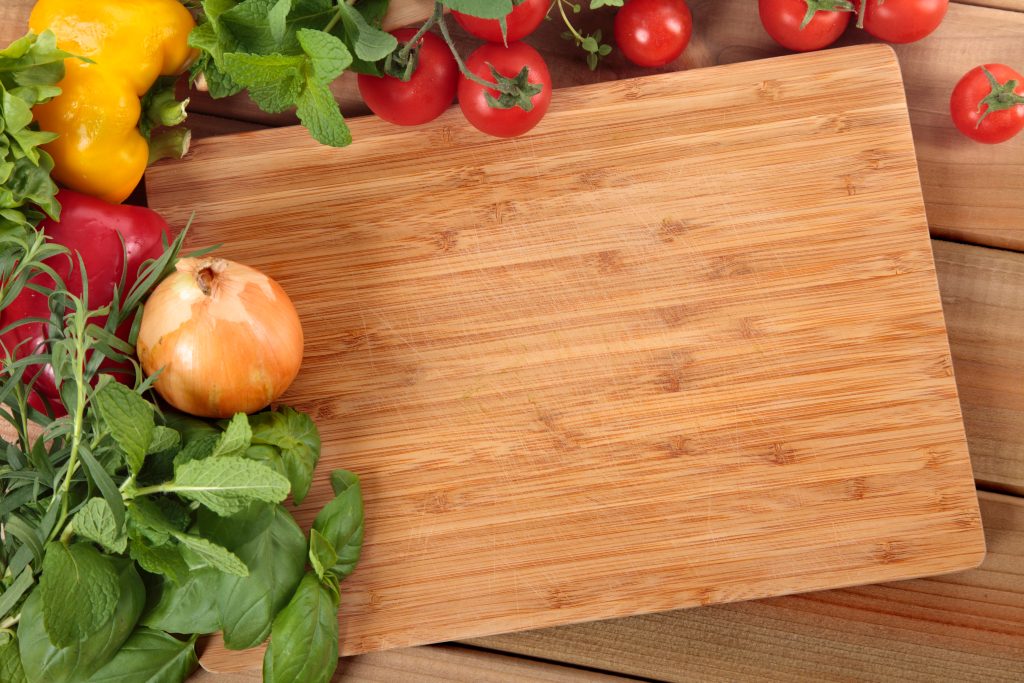
A cutting board is one of those kitchen essentials that is easy to overlook.
You probably use one almost every day, whether you’re chopping vegetables, slicing bread, preparing meat or cutting fruit. Yet cutting boards vary considerably in material, size, thickness, durability and ease of cleaning.
The wrong board can be too small, slide around the countertop, damage your knives or become difficult to clean. The right one can make everyday food preparation considerably easier.
So which should you buy?
There isn’t one cutting board that is perfect for every kitchen. Wood, plastic and bamboo all have advantages and disadvantages, while factors such as size, stability and maintenance can be just as important as the material.
This guide explains what to look for before buying.
How to Choose the Right Kitchen Knives for Your Home
Why Does the Cutting Board Matter?
A cutting board provides a dedicated surface between your knife and your countertop.
It needs to perform several jobs:
- Provide a stable cutting surface
- Protect your countertop
- Be reasonably kind to your knife edge
- Resist moisture and food stains
- Be easy to clean
- Provide enough working space
- Remain stable while you’re cutting
It also needs to suit the food you are preparing.
A board that works perfectly for chopping vegetables might not be the most convenient choice for handling raw meat.
This is why some households use more than one cutting board.
Wood vs Plastic vs Bamboo: What’s the Difference?
The three most common choices are wood, plastic and bamboo.
Each has a different combination of characteristics.
| Material | Main advantages | Potential disadvantages |
|---|---|---|
| Wood | Durable, attractive, generally knife-friendly | Requires more care and should not normally go in the dishwasher |
| Plastic | Easy to clean, lightweight, practical | Can develop deep knife grooves over time |
| Bamboo | Hard, durable and often affordable | Can be harder on knife edges and requires care |
| Glass | Easy to clean and non-porous | Very hard on knife edges and can be slippery |
Let’s look at each in more detail.
Wooden Cutting Boards
Wood has been used for cutting boards for generations.
A good wooden board can be durable, attractive and pleasant to use.
Common woods include:
- Maple
- Beech
- Acacia
- Walnut
- Teak
- Rubberwood
The characteristics vary between species, so “wooden” doesn’t automatically tell you how a particular board will perform.
Advantages of wooden boards
A quality wooden cutting board can:
- Last for many years
- Provide a stable cutting surface
- Be relatively gentle on knife edges
- Look good enough to leave on the countertop
- Be refinished in some circumstances
Wood can also develop a natural patina with use, which some people appreciate.
Disadvantages
Wood requires more maintenance than plastic.
It should generally be:
- Washed appropriately
- Dried thoroughly
- Kept away from prolonged soaking
- Treated periodically with a suitable food-safe board oil when required
It should also not normally be placed in a dishwasher unless the manufacturer specifically states that it is suitable.
Plastic Cutting Boards
Plastic boards are popular because they are practical and relatively easy to maintain.
Many are made from food-safe plastics such as polyethylene.
Advantages
- Lightweight
- Easy to clean
- Generally affordable
- Available in many sizes
- Many are dishwasher-safe
- Easy to replace
Plastic boards can be particularly convenient for everyday food preparation.
They can also be useful when you want a separate board for raw meat.
Disadvantages
The knife gradually creates grooves in the surface.
Over time, these grooves can become difficult to clean thoroughly.
A heavily scarred plastic board may therefore eventually need replacing.
Bamboo Cutting Boards
Bamboo is often marketed as an environmentally friendly alternative to traditional hardwood.
Technically, bamboo is a grass rather than a tree, but it is widely used for kitchen products.
Bamboo boards can be:
- Attractive
- Durable
- Relatively lightweight
- Resistant to moisture compared with some untreated woods
However, bamboo is relatively hard.
That can mean it isn’t as forgiving to knife edges as some softer wooden boards.
If protecting your knives is a high priority, this is worth considering.
What About Glass Cutting Boards?
Glass cutting boards look hygienic and are very easy to wipe clean.
However, they have a major disadvantage:
They are extremely hard on knives.
The hard surface can quickly dull a knife edge.
Glass can also be relatively slippery, depending on the design.
For these reasons, a glass board generally wouldn’t be my first choice for regular chopping and slicing.
What Size Cutting Board Should You Buy?
Size matters more than many people realise.
A board that is too small can become frustrating because ingredients quickly run out of working space.
Imagine chopping:
- Two onions
- Several tomatoes
- Carrots
- Peppers
- Herbs
on a tiny board.
You’ll constantly be moving ingredients aside to make room.
Small boards
Useful for:
- Small kitchens
- Quick preparation
- Fruit
- Garnishes
- Small quantities
- Bread and snacks
Medium boards
A good general-purpose option for many kitchens.
Suitable for:
- Vegetables
- Meat
- Fruit
- Everyday food preparation
Large boards
Useful for:
- Family cooking
- Large quantities
- Meal preparation
- Large vegetables
- Meat preparation
- Dough and pastry in some circumstances
The trade-off is storage.
A large cutting board needs somewhere to live.
How Thick Should a Cutting Board Be?
Thickness affects stability and durability.
Very thin boards can be lightweight and easy to store, but they may move more easily on the countertop.
Thicker wooden boards tend to feel more substantial.
They can also be more durable and resistant to warping, depending on construction and material.
However, thicker doesn’t automatically mean better.
A very heavy board may become inconvenient to move and clean.
For everyday use, look for a board that feels solid and stable without becoming unnecessarily bulky.
End-Grain vs Edge-Grain Wooden Boards
If you’re considering a premium wooden cutting board, you may encounter terms such as end-grain and edge-grain.
These refer to how the wood is constructed.
Edge-grain
The board is constructed so that the long edges of the wood fibres form much of the cutting surface.
These boards can be durable and are often less expensive than end-grain boards.
End-grain
The ends of the wood fibres form the cutting surface.
End-grain boards are often thicker and heavier and can be more expensive.
Their construction can make them particularly attractive to people who want a premium, long-lasting cutting surface.
For most households, however, a good-quality edge-grain or conventional wooden board can be perfectly adequate.
You don’t need a premium butcher-block-style board simply to chop vegetables.
Should You Have Separate Cutting Boards?
There is a strong practical argument for having more than one.
For example, you might use:
Board 1: Vegetables, fruit and bread
Board 2: Raw meat, poultry and fish
The reason isn’t that you necessarily need a particular colour or material.
The benefit is keeping different food-preparation tasks separate and making cleaning routines easier to manage.
Some households use colour-coded boards to make the distinction obvious.
This can be especially useful if several people regularly prepare food in the kitchen.
Which Cutting Board Is Best for Meat?
When preparing raw meat, poultry or fish, ease of cleaning is an important consideration.
A plastic board can be practical because many are dishwasher-safe.
If you use a wooden board for meat, follow the manufacturer’s cleaning and care instructions carefully and avoid allowing the board to remain wet for prolonged periods.
Regardless of material, wash the board appropriately after preparing raw animal products and avoid using the same surface for ready-to-eat foods without proper cleaning.
Which Cutting Board Is Best for Vegetables?
Almost any good-quality cutting board can work well for vegetables.
Wood is popular because it provides a stable, pleasant cutting surface.
Plastic is convenient because it is easy to clean.
Bamboo is another option for people who like its appearance and durability.
For vegetables, the size and stability of the board may ultimately matter more than the material.
If you’re regularly preparing large quantities, choose a board that gives you enough working space.
Protecting Your Kitchen Knives
Your cutting board and knives work together.
A poor cutting surface can make a good knife unpleasant to use.
Hard surfaces such as glass are particularly unforgiving.
Wood and suitable plastics are generally more appropriate for regular chopping.
Your board should also be reasonably flat.
A warped board can:
- Rock while cutting
- Become unstable
- Create uneven contact with the countertop
- Make food preparation more awkward
How to Choose the Right Kitchen Knives for Your Home
Stability Is More Important Than It Looks
A cutting board that slides across the counter while you’re chopping isn’t just annoying—it can make food preparation less controlled.
Look for:
- Non-slip feet
- Rubber grips
- A sufficiently heavy construction
- A textured underside
- A flat base
If your preferred board doesn’t have non-slip features, you can sometimes place a suitable damp kitchen cloth or non-slip mat underneath it.
The board should remain firmly in place while you’re working.
What About Juice Grooves?
Some cutting boards have a groove around the edge.
This is sometimes called a juice groove or drip groove.
Its purpose is to catch liquid from foods such as:
- Meat
- Tomatoes
- Citrus fruit
- Watermelon
This can help prevent liquid from running onto your countertop.
However, the groove also reduces the usable cutting area slightly.
If you mainly chop vegetables, you may prefer a completely flat surface.
If you regularly carve meat, a juice groove can be useful.
Should the Board Have Handles?
Some cutting boards include:
- Carrying handles
- Finger holes
- Integrated grips
These can make the board easier to move.
But a handle can also reduce the usable cutting area.
If the board will mostly stay on your countertop, a handle may not be particularly important.
If you frequently carry food from the kitchen to the dining table, it may be more useful.
Cleaning Your Cutting Board
Cleaning requirements depend heavily on the material.
Plastic
Many plastic boards can be washed in a dishwasher, but check the manufacturer’s instructions.
They can also generally be washed by hand with warm water and dishwashing detergent.
Wood
Wood requires more care.
Generally:
- Wash after use
- Don’t leave it soaking
- Dry it thoroughly
- Store it where air can circulate
- Follow the manufacturer’s maintenance instructions
Occasional application of an appropriate food-safe board oil may help maintain some wooden boards.
Bamboo
Follow the manufacturer’s instructions.
Many bamboo boards should be hand-washed rather than placed in a dishwasher.
Don’t Leave Wooden Boards Wet
Water is one of the biggest enemies of wooden cutting boards.
Repeated prolonged exposure to water can contribute to:
- Warping
- Splitting
- Cracking
- Surface deterioration
After washing, dry the board promptly and allow it to dry fully before storing it.
Avoid leaving it submerged in a sink.
How Do You Know When to Replace a Cutting Board?
There isn’t necessarily a fixed replacement schedule.
Inspect the board regularly.
Consider replacing it if it has:
- Deep grooves
- Major cracks
- Splits
- Persistent stains or odours
- Significant warping
- Damage that makes it difficult to clean properly
A plastic board with extensive deep scoring may have reached the end of its useful life.
A wooden board may sometimes be sanded or refinished, depending on its construction and condition.
Can You Use One Board for Everything?
Technically, one good board can handle many kitchen tasks.
But having two or more can make life easier.
A practical arrangement might be:
Everyday board
For:
- Vegetables
- Fruit
- Herbs
- Bread
Meat board
For:
- Raw meat
- Poultry
- Fish
You could also have a smaller board for bread or quick jobs.
You don’t need a cupboard full of cutting boards.
The aim is simply to have enough boards to keep food preparation convenient and manageable.
How a Food Processor Changes Your Cutting Board Needs
If you regularly use a food processor, you may find that you don’t need to manually slice and grate as many ingredients.
However, you’ll still need a cutting board for:
- Preparing ingredients before processing
- Trimming vegetables
- Cutting large items into suitable pieces
- Portioning meat
- Bread and other food preparation
How to Choose the Right Food Processor for Your Kitchen
A food processor doesn’t eliminate the need for a good cutting board—it simply changes how you use it.
What About Food Storage?
Once you’ve prepared your ingredients, you may need to store leftovers or pre-prepared food.
That makes cutting boards part of a larger kitchen workflow:
Prepare → cook → store
Suitable storage containers can make the final stage considerably easier.
How to Choose the Right Food Storage Containers for Your Kitchen
Buying a Cutting Board Online
Cutting boards are particularly easy to buy online because you can compare materials, dimensions and prices.
However, check the specifications carefully.
Look at the dimensions
A product photograph can make a board appear larger than it really is.
Check:
- Length
- Width
- Thickness
Check the material
Don’t assume “wood” means solid hardwood.
Look for a clear description of the construction.
Check cleaning instructions
If dishwasher compatibility matters to you, make sure the manufacturer specifically states that the board is dishwasher-safe.
Check the weight
This is particularly important for large boards.
A heavy board may be very stable but difficult to move.
Read customer reviews
Look for comments about:
- Warping
- Splitting
- Slipping
- Staining
- Durability
- Actual size
- Cleaning
These can reveal problems that aren’t obvious from the product description.
Don’t Buy Based Only on Appearance
A beautiful wooden cutting board can look fantastic in a kitchen photograph.
But ask yourself how you’re actually going to use it.
If you want something that can go into the dishwasher, a decorative wooden board probably isn’t the right choice.
Likewise, an inexpensive plastic board may be more practical for daily food preparation even if a thick hardwood board looks considerably more impressive.
Function should come before appearance.
Common Cutting Board Buying Mistakes
Buying one that’s too small
This is probably the most common mistake.
A little extra working space can make a big difference.
Choosing glass because it looks hygienic
Glass is easy to clean, but it can be very hard on knives.
Buying a board that’s too heavy
A huge, thick board can be excellent until you have to move it to clean the countertop.
Ignoring maintenance
Wood and bamboo generally need more care than plastic.
Using a badly damaged board indefinitely
Deep grooves and cracks can make a board increasingly difficult to maintain.
Buying too many
You don’t need ten cutting boards.
Two or three well-chosen boards can be more useful than a large collection.
What Should You Look for in a Cutting Board?
For most kitchens, prioritise:
1. Suitable size
Choose a board that gives you enough working space without taking over your kitchen.
2. Stability
It should remain firmly in place while cutting.
3. Knife-friendly surface
Avoid unnecessarily hard surfaces such as glass for routine chopping.
4. Easy cleaning
Choose a material and design that suits your cleaning routine.
5. Appropriate thickness
It should be stable without being unnecessarily bulky.
6. Durability
Look for good construction and materials appropriate to your intended use.
7. Storage
Make sure you have somewhere practical to keep it.
Cutting Board Buying Checklist
Before purchasing, ask:
☐ Is it large enough for the food I normally prepare?
☐ Is it stable on my countertop?
☐ Is the material appropriate for my needs?
☐ Will it be kind to my knives?
☐ Can it be cleaned easily?
☐ Is it dishwasher-safe if that’s important to me?
☐ Is it thick enough to remain stable?
☐ Is it too heavy for my kitchen?
☐ Does it have a useful juice groove or handle?
☐ Can I store it conveniently?
☐ Is the construction clearly described?
☐ Does the price make sense for how often I’ll use it?
Final Thoughts
The best cutting board isn’t necessarily the biggest, thickest or most expensive one.
For everyday kitchen use, the priorities are relatively straightforward:
A suitable size, stable construction, a knife-friendly surface and easy maintenance.
Wood offers a traditional and durable option, plastic is practical and easy to clean, while bamboo provides another durable alternative. Glass may look attractive and be easy to clean, but its hardness makes it less suitable for regular knife work.
For many households, having two good cutting boards may be more practical than buying one expensive board and expecting it to do everything.
Choose according to the way you cook, the amount of food you normally prepare and how much maintenance you’re prepared to do.
And remember that a cutting board is part of a larger kitchen system. Your knives, food processor, cookware and storage containers all work together to make food preparation easier.
How to Choose the Right Kitchen Knives for Your Home
The right cutting board doesn’t need to be complicated. It simply needs to work well for the way you use your kitchen.