
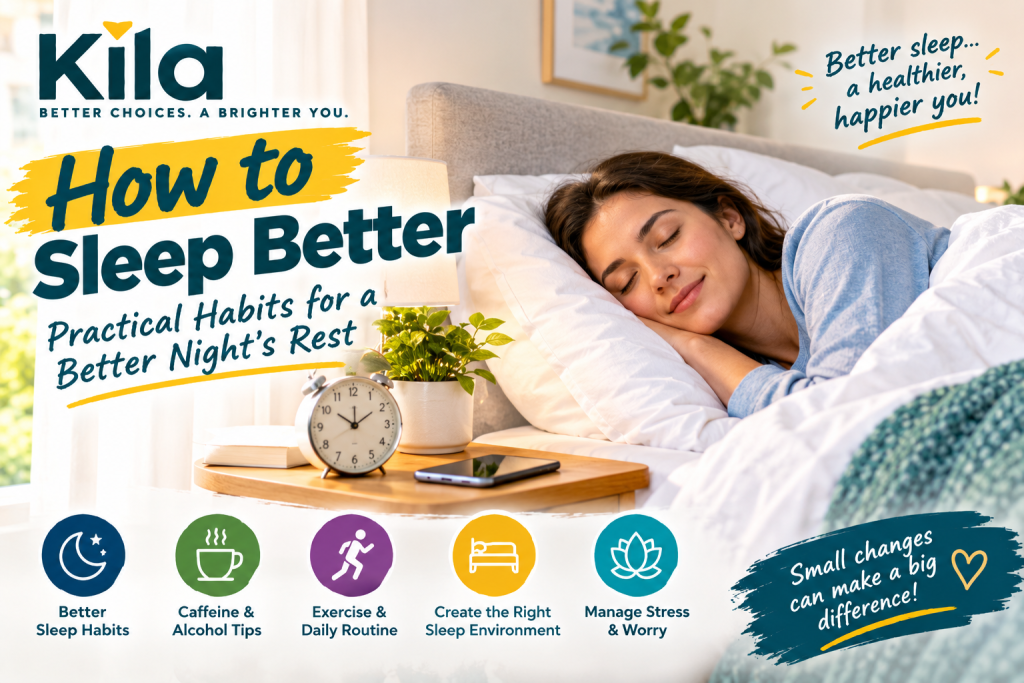
Getting a good night’s sleep can make a real difference to how you feel during the day.
When you sleep well, it is generally easier to concentrate, manage everyday demands and maintain a consistent routine. But falling asleep isn’t always easy. Stress, late-night screen time, caffeine, uncomfortable surroundings and irregular sleeping hours can all contribute to a poor night’s rest.
The good news is that small, consistent changes to your daily habits may help improve your sleep.
This guide explains how to sleep better, create a practical bedtime routine, make your bedroom more comfortable and recognise when persistent sleep problems may need professional attention.
How much sleep do adults need?
Sleep requirements vary between individuals, but most healthy adults need around seven to nine hours of sleep per night. Some people may need slightly more or less depending on their age, health and circumstances.
The amount of time spent in bed is not the only consideration. Sleep quality matters too.
You might spend eight hours in bed but still feel tired if you wake repeatedly during the night or have a sleep disorder that interrupts normal sleep.
Signs that you may not be getting enough good-quality sleep include:
- Feeling tired when you wake up.
- Struggling to concentrate during the day.
- Feeling unusually irritable or low in energy.
- Finding it difficult to stay alert during routine activities.
- Frequently waking during the night.
- Regularly needing to catch up on sleep.
If these problems persist despite allowing sufficient time for sleep, consider discussing them with a healthcare professional.
Important to note that some of the above symptoms may also suggest that your body is run down and needs a good multivitamin.

The addition of brain fog could indicate that you would benefit from using a nootropic such as Mind lab Pro.
12 practical tips for better sleep
1. Keep a consistent sleeping schedule
One of the simplest ways to support better sleep is to maintain reasonably consistent sleeping and waking times.
Going to bed and waking up at very different times from one day to the next can make it harder to establish a predictable routine.
Try to:
- Choose a realistic time to wake up each morning.
- Go to bed when you feel sleepy rather than forcing yourself to sleep too early.
- Keep your schedule reasonably consistent over weekends.
- Allow enough time for sleep before setting your morning alarm.
You do not need to follow a rigid schedule every minute. The goal is to give your body a regular pattern that fits your lifestyle.
2. Create a relaxing bedtime routine
If you move directly from a busy day to bed, your mind may still feel active when you want to sleep.
A calming routine gives you an opportunity to slow down before bedtime.
You could try:
- Reading a book.
- Taking a warm bath or shower.
- Listening to quiet music.
- Doing gentle stretching.
- Preparing clothes and essentials for the following morning.
- Writing down tasks you need to remember tomorrow.
Choose activities that feel relaxing rather than turning bedtime into another demanding task.
Consistency is more important than having a complicated routine.
3. Be mindful of caffeine
Coffee is not the only source of caffeine. Tea, energy drinks, cola and some other products can also contain it.
Caffeine stimulates the nervous system and can interfere with sleep, particularly when consumed later in the day. How sensitive you are to caffeine varies.
If you struggle to fall asleep, experiment with moving your last caffeinated drink earlier.
For example, you could try avoiding caffeine from the afternoon onwards and see whether your sleep improves. If you are particularly sensitive, you may need a longer gap before bedtime.
You do not necessarily have to give up coffee completely. Adjusting the timing and amount may be enough to make a difference.
4. Limit alcohol close to bedtime
Alcohol can make some people feel sleepy initially, but that does not mean it improves sleep quality.
It can disrupt sleep later in the night and contribute to waking up or feeling less rested in the morning.
If you regularly drink alcohol in the evening and have difficulty sleeping, consider reducing your intake and avoiding it close to bedtime.
Alcohol can also interact with medicines, including some products used to help with sleep. Ask a pharmacist or healthcare professional about potential interactions if you take medication.
5. Make your bedroom comfortable
Your sleeping environment can influence how easily you fall asleep and remain asleep.
Aim to make your bedroom as dark, quiet and comfortably cool as practical.
Consider the following adjustments:
- Use curtains or blinds to reduce unwanted light.
- Reduce noise where possible.
- Use a fan or adjust ventilation if the room feels too warm.
- Choose comfortable bedding.
- Keep your mattress and pillows in good condition.
- Put your phone on silent if notifications disturb you.
In South Africa, bright security lights, street lighting, summer heat and neighbourhood noise can make sleep more difficult in some homes. Simple changes to curtains, ventilation and noise reduction may help.
You do not need an expensive bedroom makeover to create a more sleep-friendly environment.
6. Reduce screen use before bed
Phones, televisions and computers can keep you mentally engaged when you should be winding down.
Bright light in the evening can also affect your body’s normal sleep timing.
Try setting aside the final 30 to 60 minutes before bed for quieter activities. You might charge your phone away from your bed, turn off unnecessary notifications or use this time to read instead.
If you need your phone for an alarm, place it where you can hear it without continually checking the screen.
The aim is not to eliminate technology from your life. It is to prevent it from becoming a regular source of distraction at bedtime.
7. Get regular physical activity
Regular exercise supports general health and may help with sleep.
Walking, cycling, swimming, gardening and other forms of movement can all contribute to a more active daily routine.
You do not need to start an intense exercise programme. If you have been inactive, begin with manageable activities and gradually increase them.
Pay attention to timing as well. Some people sleep comfortably after evening exercise, while others find vigorous activity too stimulating close to bedtime.
If evening workouts appear to affect your sleep, try exercising earlier in the day.
8. Get some daylight during the day
Daylight helps regulate your body’s internal clock, which influences when you feel awake and sleepy.
Where practical, spend some time outdoors during the day. A morning walk, time in the garden or a short outdoor break can be useful ways to incorporate daylight into your routine.
This does not require a special programme or equipment.
If you work indoors, even brief breaks outside may help you build a more consistent daily rhythm. Take sensible precautions against excessive sun exposure, particularly during hot weather.
9. Be sensible about meals and late-night snacks
Going to bed very hungry can be uncomfortable, while eating a large meal shortly before lying down may cause discomfort or worsen reflux in some people.
If late meals affect your sleep, try eating your main evening meal earlier.
If you are hungry later, a small snack may be more comfortable than a large meal.
There is no single food that guarantees a good night’s sleep. A balanced eating pattern and a meal schedule that suits your body are more useful starting points than relying on special bedtime foods.
If you experience frequent heartburn or digestive discomfort at night, discuss persistent symptoms with a healthcare professional.
10. Avoid turning naps into a sleep problem
Short naps can be helpful for some people, but long or late-afternoon naps may make it harder to fall asleep at night.
If you struggle with nighttime sleep, consider limiting daytime naps or avoiding them temporarily to see whether your sleep improves.
If you need a nap, keep it relatively short and avoid taking it too late in the day.
People who work shifts or have particular medical needs may require a different approach, so consider your circumstances rather than following a rule that does not suit your routine.
11. Do not force yourself to fall asleep
Trying harder and harder to sleep can sometimes increase frustration.
If you have been lying awake for a while and feel increasingly alert or irritated, get out of bed and do something quiet in dim light.
For example, read a few pages of a book or listen to relaxing audio. Return to bed when you feel sleepy.
Avoid checking the time repeatedly or calculating how little sleep you have left before morning. This can make you more anxious about falling asleep.
If difficulty sleeping becomes a regular pattern, simple sleep-habit changes may not be sufficient on their own. Professional assessment can help identify the underlying cause.
12. Make time to manage stress
Worries about work, finances, family responsibilities or tomorrow’s tasks can become more noticeable when everything is quiet at night.
You may find it useful to create a short evening routine that helps you separate the day’s responsibilities from bedtime.
Options include:
- Writing down tomorrow’s priorities.
- Listing tasks that can wait until the next day.
- Practising slow, comfortable breathing.
- Spending a few minutes on gentle stretching.
- Talking to someone you trust about ongoing concerns.
These techniques are not a substitute for professional help when stress or anxiety becomes overwhelming. They are practical ways to make winding down easier.
What if you wake up in the middle of the night?
Waking briefly during the night is not necessarily a sign that something is wrong. The more important question is whether you can return to sleep and whether you feel rested during the day.
If you regularly wake and struggle to fall asleep again, consider the following:
Look for patterns. Does it happen after drinking alcohol, consuming caffeine late in the day or eating a large meal?
Check your environment. Heat, noise, light or an uncomfortable sleeping position may be disturbing you.
Review your routine. Irregular bedtimes, long naps and changing waking times may contribute.
Consider physical symptoms. Pain, frequent urination, reflux, breathing difficulties and other health issues can interrupt sleep.
A simple sleep diary may help you notice patterns. Record your bedtime, approximate waking times, caffeine and alcohol intake, naps and how you feel the following day.
You do not need to track every detail perfectly. The purpose is to gather useful information, especially if you decide to discuss the problem with a healthcare professional.
Common mistakes that can make sleep more difficult
Some well-intended habits may actually work against better sleep.
Going to bed too early
Spending a long time in bed while you are wide awake can create frustration. Go to bed when you feel sleepy and maintain a consistent waking time.
Sleeping late after a bad night
Sleeping much later than usual may disrupt your routine. Where possible, return to your normal waking time and allow your schedule to stabilise.
Using alcohol as a sleep aid
Alcohol may make you drowsy, but it can interfere with the quality of your sleep.
Relying on supplements without investigating the problem
Products marketed for sleep do not necessarily address the cause of poor sleep. They can also have side effects or interact with medicines.
Before using a sleep supplement or over-the-counter sleep aid, speak to a pharmacist or healthcare professional, particularly if you take other medicines or have an existing health condition.
Assuming every sleep problem is caused by poor habits
Healthy sleep habits are helpful, but they cannot resolve every sleep disorder or medical problem. Persistent symptoms deserve attention rather than endless experimentation with bedtime routines.
When should you seek medical advice about sleep?
Occasional poor sleep is common. However, ongoing sleep difficulties can affect daily functioning and may have an underlying cause.
Consider consulting a healthcare professional if:
- You have difficulty falling asleep or staying asleep for an extended period.
- Poor sleep regularly affects your concentration, mood or ability to function.
- You remain excessively tired despite allowing enough time for sleep.
- You snore loudly and regularly, particularly if someone notices pauses in your breathing.
- You wake up gasping or choking.
- You experience persistent pain, restless legs or other symptoms that disturb your sleep.
- You suspect a medicine may be affecting your sleep.
- You feel that stress, anxiety or low mood is contributing to the problem.
Loud snoring accompanied by breathing pauses, gasping or significant daytime sleepiness can be a sign of sleep apnoea and should be assessed.
Do not drive or operate machinery when you are dangerously sleepy.
For persistent insomnia, a healthcare professional may recommend an appropriate treatment, which can include cognitive behavioural therapy for insomnia (CBT-I). This approach addresses thoughts and behaviours that can keep sleep problems going.
Sleeping tablets are not suitable for everyone and can have important risks. Seek professional advice rather than routinely using medication to manage a problem that has not been assessed.
A simple seven-day plan to improve your sleep habits
You do not need to change everything at once. Start with a few manageable steps and observe how you feel.
Days 1–2: Establish your routine
- Choose a realistic waking time.
- Record your current sleep habits.
- Notice when you consume caffeine.
Days 3–4: Improve your environment
- Reduce unwanted light and noise.
- Make your bedroom more comfortable.
- Put your phone away before bedtime.
Days 5–6: Review your daytime habits
- Add a walk or another suitable form of physical activity.
- Spend some time outdoors during daylight.
- Avoid caffeine late in the day.
- Review whether naps are affecting nighttime sleep.
Day 7: Evaluate what helped
Look at your sleep diary and identify which changes were easiest to maintain.
Continue with the habits that seem useful. If your sleep remains poor, or you have concerning symptoms, seek professional advice rather than assuming that you have not tried hard enough.
Seven days is a starting point, not a guaranteed solution. Sleep patterns may take longer to improve.
Frequently asked questions about better sleep
How can I fall asleep faster?
Start by keeping a consistent waking time, reducing caffeine later in the day and creating a calming bedtime routine. Make your bedroom comfortable and avoid turning sleep into a task you must force. If difficulty falling asleep is persistent, seek professional advice.
What is the best bedtime routine?
There is no universal routine that works for everyone. A useful routine may include dimming the lights, putting away electronic devices, preparing for the following day and spending a little time reading or relaxing.
Does exercise help you sleep better?
Regular physical activity may support better sleep. If vigorous exercise close to bedtime leaves you feeling alert, try moving it earlier in the day.
Can coffee affect sleep even if I drink it in the afternoon?
Yes. Caffeine can remain active for several hours, and sensitivity varies between individuals. If you have trouble sleeping, experiment with an earlier cut-off time.
Should I take a supplement to sleep better?
Not necessarily. Sleep supplements differ in their ingredients, evidence and potential risks. They may not address the underlying cause of poor sleep and can interact with medicines. Ask a healthcare professional or pharmacist before using them.
Why am I tired even after sleeping for several hours?
Possible explanations include interrupted sleep, an irregular sleep schedule, stress, medication effects or a sleep disorder. If you regularly feel unrefreshed despite allowing sufficient time for sleep, discuss it with a healthcare professional.
Final thoughts
Learning how to sleep better does not necessarily require expensive products, complicated routines or a complete lifestyle overhaul.
Start with the basics: keep a reasonably consistent schedule, be mindful of caffeine and alcohol, get regular physical activity, create a comfortable bedroom and allow yourself time to unwind.
Make changes gradually so that you can identify what works for your circumstances and maintain it over time.
Most importantly, do not blame yourself if healthy sleep habits do not solve the problem. Persistent insomnia, excessive daytime sleepiness and symptoms such as interrupted breathing can require professional assessment.
Better sleep begins with practical habits, but knowing when to seek help is just as important.
Authoritative references
These sources support the practical and safety guidance in this article:
- South African National Department of Health: Adult Primary Care Guide 2026 — see the section on difficulty sleeping.
- NHS: Insomnia — symptoms, common causes, self-help measures and when to seek medical advice.
- US Centers for Disease Control and Prevention: About Sleep — sleep quality and common sleep disorders.
Editorial note: This article provides general educational information and is not a diagnosis or a substitute for individual medical advice. Have the final content reviewed for medical accuracy before publication.