
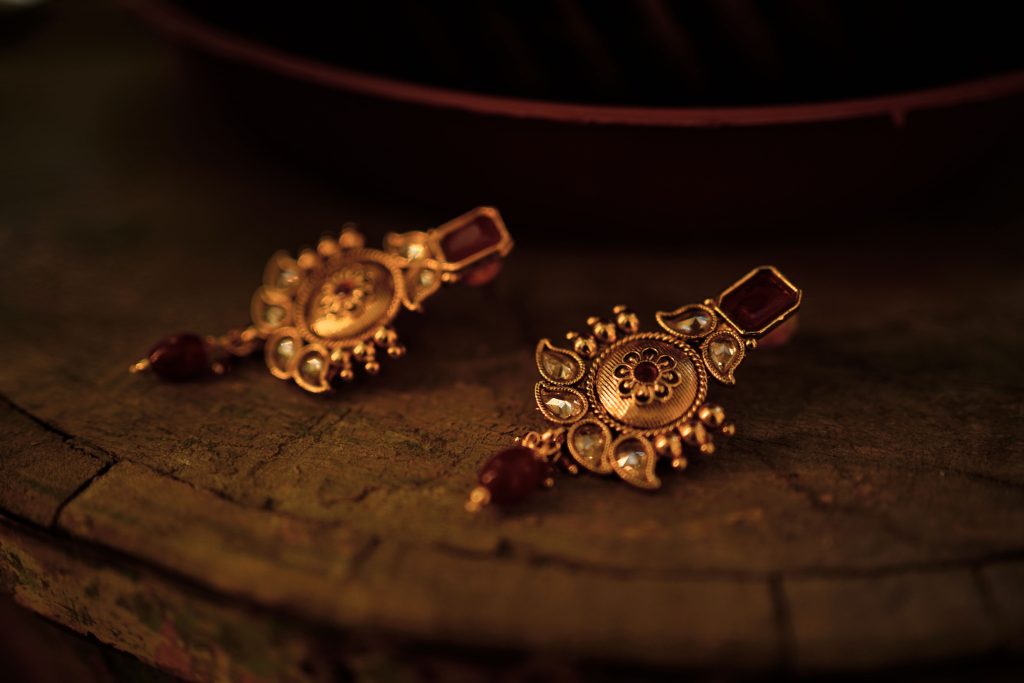
Buying jewellery online has become an easy way to discover styles, compare prices and find pieces that may not be available in your local shops.
Whether you’re looking for earrings, necklaces, bracelets, rings or a gift, online jewellery stores offer an enormous selection.
But there is one obvious disadvantage.
You can’t physically examine the jewellery before you buy it.
A photograph can make a piece look larger, more substantial or more impressive than it actually is. Materials can also be misunderstood if you don’t read the description carefully. This is a common problem when buying fashion accessories online.
Fortunately, there are several simple checks that can make buying jewellery online much safer and help you get better value for your money.
Here are 10 things to check before ordering jewellery online in South Africa.
1. Check Exactly What the Jewellery Is Made From
The first thing to investigate is the material.
A product might be described as:
- Solid gold
- Gold plated
- Gold filled
- Sterling silver
- Stainless steel
- Silver plated
- Titanium
- Brass
- Costume jewellery
- Synthetic materials
These aren’t interchangeable descriptions.
For example, a gold-plated item isn’t the same as an item made from solid gold.
Similarly, jewellery that looks like silver may actually be made from another metal with a silver-coloured finish.
Don’t judge the material from the photograph.
Read the product specifications.
If the material isn’t clearly stated, consider contacting the retailer before ordering.
2. Look at the Actual Measurements
This is one of the most important things to check when buying jewellery online.
Photographs can be extremely misleading when it comes to size.
An earring photographed close to a model’s face may appear much larger than it actually is.
A pendant photographed by itself can also be difficult to judge.
Look for measurements such as:
- Pendant length
- Pendant width
- Chain length
- Earring height
- Earring width
- Bracelet length
- Ring dimensions
- Thickness
If measurements are provided in millimetres or centimetres, use something familiar to visualise the size.
For example, don’t simply think:
“That’s quite a small pendant.”
Instead, look at the actual measurement and compare it with an object you already have.
3. Check Jewellery Sizes Carefully
Sizing is particularly important when buying rings and bracelets.
Different retailers may use different sizing systems.
A ring might be described using:
- South African sizing
- UK sizing
- US sizing
- European sizing
- A numerical measurement in millimetres
Make sure you understand which system the retailer is using.
If you’re buying a ring as a gift, determining the correct size can be particularly difficult.
Some retailers provide sizing charts or guides.
Use them.
Don’t simply guess if the retailer provides a way to determine the correct size.
4. Look at the Product Photographs Carefully
Photographs are obviously important when shopping online.
But don’t look only at the main promotional photograph.
Look for additional images showing:
- The front
- The back
- The clasp
- The fastening
- The chain
- The earrings from different angles
- The jewellery being worn
- Close-up details
A product photographed from several angles gives you much more information than one carefully staged image.
Also check whether the photograph shows the actual product being sold.
Some retailers use representative images for products that may have variations.
5. Read Customer Reviews
Customer reviews can provide information that isn’t obvious from the product description.
Look for comments about:
- Actual size
- Weight
- Quality
- Colour
- Finish
- Comfort
- Durability
- Packaging
- Whether the product looks like the photograph
Don’t rely on a single review.
Instead, look for recurring patterns.
If several customers independently mention that a necklace is smaller than expected, for example, that is useful information.
Customer photographs can be even more valuable because they show the product under normal conditions.
6. Investigate the Retailer
The jewellery itself isn’t the only thing you should investigate.
Look at the retailer.
A reputable online jewellery store should provide clear information about:
- Who operates the business
- Contact details
- Delivery
- Returns
- Refunds
- Payment methods
- Product specifications
- Customer service
Be cautious if a website has very little information about the business or makes unusually extravagant claims about its products.
A professional-looking website doesn’t automatically mean that a retailer is reputable.
Look for evidence that the business is established and that customers have actually received their orders.
7. Check the Return Policy Before Buying
This is particularly important with jewellery.
You may receive an item and discover that:
- It is smaller than expected
- The colour isn’t what you expected
- The ring doesn’t fit
- You don’t like the style
- The product isn’t suitable as a gift
Before ordering, find out exactly what the retailer’s return policy allows.
Check:
- How long you have to return an item
- Whether change-of-mind returns are allowed
- Whether earrings have special conditions
- Whether personalised jewellery can be returned
- Whether sale items can be returned
- Who pays return shipping
- Whether the item must be unused
- Whether original packaging is required
Don’t wait until after receiving the jewellery to discover that you can’t return it.
8. Calculate the Complete Cost
The displayed price isn’t necessarily the final amount you’ll pay.
For South African shoppers, consider:
Product price + delivery + applicable additional charges = total cost
If you’re buying from an overseas retailer, there may also be considerations involving:
- Currency conversion
- Import costs
- Taxes or duties
- International delivery
- Possible customs delays
A product advertised for R300 isn’t necessarily cheaper than a similar locally available product costing R400 if the first product attracts high additional costs.
Always compare the landed cost, not just the advertised price.
9. Understand What You’re Getting for the Price
Jewellery prices can vary enormously.
Two necklaces that look almost identical in photographs might have dramatically different prices.
There could be differences in:
- Materials
- Construction
- Brand
- Craftsmanship
- Gemstones
- Manufacturing
- Warranty
- Retailer reputation
But don’t assume that a higher price automatically means better quality.
Instead, ask:
What am I actually getting for the additional money?
If the answer is unclear, compare the specifications of several products.
10. Consider How and Where You’ll Wear It
The best jewellery purchase isn’t necessarily the most impressive one.
Think about your lifestyle.
Will you wear it:
- Every day?
- To work?
- On weekends?
- For special occasions?
- While travelling?
- As part of a particular outfit?
A versatile necklace that works with ten outfits may provide more value than a dramatic necklace that only works with one.
Similarly, comfortable earrings that you can wear regularly may be a better investment than a pair that looks impressive but rarely gets worn.
How to Choose the Right Jewellery for Everyday Wear
Buying Jewellery as a Gift
Jewellery can make an excellent gift because it can be both personal and practical.
But buying jewellery for somebody else introduces additional considerations.
Think about their:
- Personal style
- Preferred colours
- Existing jewellery
- Clothing style
- Lifestyle
- Ring size, if applicable
If you’re uncertain, necklaces, bracelets and earrings can sometimes be easier gift choices than rings because sizing is less of an issue.
Be Careful With Jewellery Descriptions
Jewellery terminology can sometimes be confusing.
A product may contain words that sound impressive without necessarily meaning what you assume.
For example, terms describing:
- Plating
- Coating
- Finish
- Metal content
- Gemstones
- Synthetic stones
- Imitation stones
can have very different meanings.
If you’re spending a substantial amount of money, don’t rely on marketing language alone.
Look for precise specifications.
Buying Fashion Jewellery Versus Fine Jewellery
There is a major difference between buying inexpensive fashion jewellery and purchasing a valuable piece.
Fashion jewellery
Often focuses on:
- Appearance
- Trends
- Affordable pricing
- Variety
- Experimenting with different styles
Fine jewellery
May place greater emphasis on:
- Precious metals
- Gemstones
- Craftsmanship
- Certification
- Long-term value
- Warranty
- Provenance
Neither category is necessarily better.
It depends on what you’re looking for.
If you want to experiment with current fashion trends, inexpensive jewellery can make sense.
If you’re making a substantial investment, however, you should investigate the product considerably more carefully.
Buying Jewellery From an Online Marketplace
Marketplaces can provide enormous choice.
But you’re often buying from individual sellers or multiple independent retailers rather than from one central jewellery business.
Before ordering, check:
- Seller ratings
- Number of completed sales
- Customer reviews
- Product descriptions
- Photographs
- Returns
- Buyer protection
- Delivery arrangements
The marketplace’s policies and the individual seller’s policies may both be relevant.
Second-Hand Jewellery
Second-hand jewellery can offer interesting opportunities.
It can also provide access to vintage and discontinued pieces.
However, condition becomes particularly important.
Check for:
- Scratches
- Tarnishing
- Missing stones
- Damaged clasps
- Bent components
- Repairs
- Wear on plating
If the item is described as a particular precious metal or branded product, look for evidence supporting the claim.
Jewellery and Sustainability
Buying fewer, better-used pieces can sometimes make more sense than continually replacing inexpensive accessories.
Before buying something new, consider whether you already own something that serves the same purpose.
You can also consider:
- Second-hand jewellery
- Vintage jewellery
- Jewellery made to last
- Pieces that work with multiple outfits
- Repairable jewellery
The most sustainable jewellery purchase may simply be the one you continue wearing for years.
Don’t Ignore Jewellery Care
Different materials may require different care.
Some jewellery should be kept away from:
- Water
- Perfume
- Cosmetics
- Household chemicals
- Excessive moisture
Follow the care instructions supplied with the product.
If care requirements are not explained, find out before buying an expensive piece.
How to Compare Two Jewellery Products
Suppose you’ve narrowed your choice down to two similar necklaces.
Instead of simply choosing the cheaper one, compare them side by side.
| Factor | Necklace A | Necklace B |
|---|---|---|
| Material | Check | Check |
| Dimensions | Check | Check |
| Chain length | Check | Check |
| Weight | Check | Check |
| Customer reviews | Check | Check |
| Warranty | Check | Check |
| Return policy | Check | Check |
| Delivery | Check | Check |
| Total price | Check | Check |
This approach can make the buying decision much easier.
A Useful Rule: Don’t Buy From the Photograph Alone
If you remember only one thing from this article, make it this:
Never make a jewellery purchase based solely on the photograph.
Before buying, check:
Material → Size → Specifications → Reviews → Retailer → Returns → Total cost
That simple process can eliminate many of the common disappointments associated with online jewellery shopping.
Common Mistakes When Buying Jewellery Online
Assuming the jewellery is larger than it really is
Always check measurements.
Assuming “gold” means solid gold
Read the complete material description.
Ignoring ring sizing
Use the retailer’s sizing information.
Buying because something is heavily discounted
A discount doesn’t make an unwanted item good value.
Ignoring delivery costs
Compare the final cost.
Not checking the return policy
Especially risky when buying jewellery online.
Trusting only professional photographs
Look for customer photographs.
Assuming an expensive item must be high quality
Compare specifications rather than price alone.
Buying from an unknown retailer without researching them
Check the business and customer feedback first.
Online Jewellery Buying Checklist
Before clicking Buy, ask:
- Do I understand exactly what the jewellery is made from?
- Have I checked the actual dimensions?
- Is the size correct?
- Have I read the complete description?
- Have I looked at all the available photographs?
- Have I read customer reviews?
- Is the retailer reputable?
- Have I checked the return policy?
- Is there a warranty?
- What will delivery cost?
- Are there possible additional charges?
- Does the price represent good value?
- Will I actually wear the jewellery?
- Am I buying it because I like it or simply because it’s discounted?
Final Thoughts
Buying jewellery online in South Africa can be a convenient way to discover a much wider selection than you may find in traditional stores.
But the convenience comes with one important responsibility: you need to investigate the product before ordering it.
Don’t let attractive photography make the decision for you.
Check the material.
Check the dimensions.
Check the sizing.
Read the reviews.
Investigate the retailer.
Understand the return policy.
And calculate the complete cost before you pay.
Most importantly, think about how the jewellery fits into your actual wardrobe and lifestyle.
The best purchase isn’t necessarily the cheapest piece or the most expensive one.
It’s the jewellery that gives you the combination of style, quality, practicality and value that you’re looking for.