
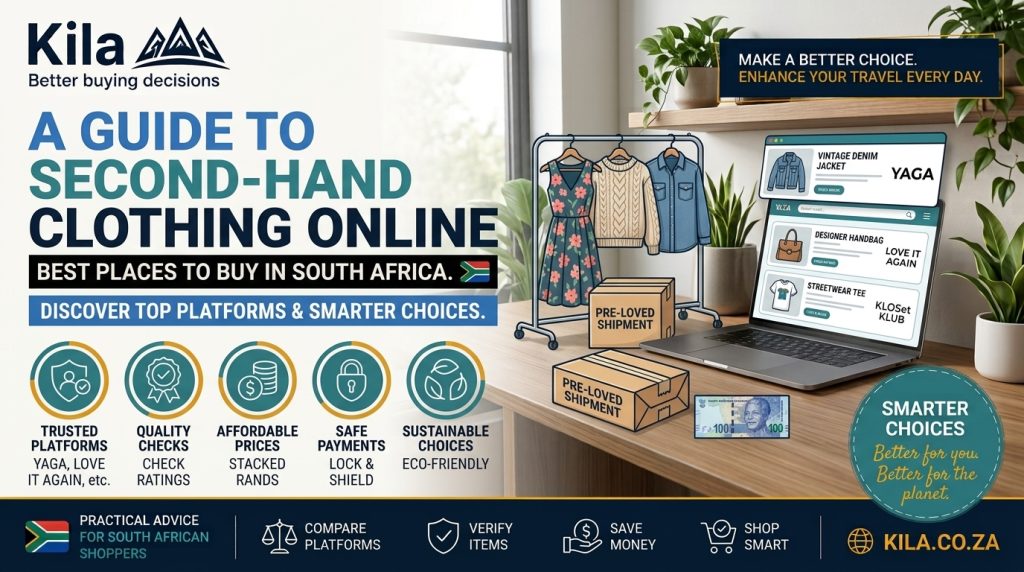
Buying clothes doesn’t always mean buying something brand new.
Second-hand and pre-owned clothing can be a practical way to find good-quality fashion at lower prices, discover unusual pieces and make better use of clothes that might otherwise sit unused in someone’s wardrobe.
Online shopping has made the process even easier. Instead of spending hours visiting thrift shops and second-hand stores, you can browse clothing from sellers across South Africa from your phone or computer.
But buying pre-owned clothing online requires a slightly different approach from buying new.
You can’t simply rely on the product photograph.
You need to consider the condition, measurements, authenticity, seller information, delivery costs and whether the final price represents a genuine saving.
This guide looks at what to consider when buying second-hand clothing online in South Africa and how to find the best value.
Why buy second-hand clothing?
There are several reasons to consider pre-owned fashion.
It can cost less
One of the biggest attractions is price.
Clothing that originally cost considerably more when new may be available for substantially less after being worn.
The actual saving depends on the item, brand, condition and seller’s asking price, so don’t assume every second-hand item is automatically a bargain.
You can find things that aren’t in stores
Second-hand marketplaces can contain:
- Older styles
- Discontinued products
- Vintage pieces
- Limited editions
- Previous-season clothing
- Items that are difficult to find in conventional stores
This can make second-hand shopping particularly interesting if you don’t want to wear exactly the same styles currently available everywhere.
It can extend the life of clothing
Buying pre-owned gives an existing garment another opportunity to be used rather than immediately purchasing something new.
For shoppers who want to make more considered fashion purchases, that can be an attractive advantage.
Where can you buy second-hand clothing online in South Africa?
There are several ways to shop for pre-owned clothing.
These include:
- Dedicated second-hand fashion marketplaces
- Online thrift stores
- Social media marketplaces
- Individual seller websites
- Charity and vintage stores with online shops
Each approach has advantages and disadvantages.
For example, a dedicated marketplace may provide integrated payment and delivery systems, while buying directly from an individual seller may require more caution.
The important thing is to understand how the transaction is protected before paying.
Yaga: a useful option for South African shoppers
One platform worth considering is Yaga, a South African marketplace focused on buying and selling new and preloved fashion.
Yaga allows individual sellers to list fashion items and buyers to browse and purchase them online. According to Yaga, sellers can list and sell for free, while buyers can choose from integrated delivery options at checkout.
For Kila readers, the attraction is that it combines the variety of a marketplace with features intended to make buying second-hand clothing more straightforward.
How buying on Yaga works
The basic process is relatively simple.
You find an item you’re interested in, review the listing and either purchase it or, where available, make an offer.
You then select an available delivery method and complete the payment through the platform.
Yaga states that payment is held securely and released to the seller after the buyer confirms receipt of the item.
This is an important distinction from simply transferring money directly to someone selling an item through a social-media post.
How to Shop for Second-Hand Clothing Online in South Africa
Buyer protection matters
When buying second-hand clothing online, one of your biggest concerns should be:
What happens if the item isn’t as described?
Yaga says its purchases are covered by Buyer Protection, which includes secure payment, an escrow model, customer support and a return/refund policy for qualifying situations.
That doesn’t mean buyers shouldn’t check listings carefully.
You should still examine photographs and descriptions before purchasing and make sure you understand the platform’s current terms.
But having an established purchasing and payment process can provide additional reassurance.
Check the condition carefully
This is probably the most important rule when buying second-hand clothing.
Don’t assume that “good condition” means the same thing to every seller.
Look carefully at the photographs and description.
Check for:
- Stains
- Fading
- Pilling
- Tears
- Missing buttons
- Loose stitching
- Damaged zips
- Stretching
- Worn areas
- Alterations
- Odours
If the photographs don’t show something clearly, ask the seller.
A good second-hand listing should make it possible to understand what you’re actually buying.
Don’t rely on the size label
This is one of the biggest problems with buying clothing online.
A labelled “medium” isn’t necessarily the same size across different brands.
Even within the same brand, different styles can fit differently.
Where possible, look for actual measurements.
Useful measurements can include:
- Chest
- Waist
- Hip
- Shoulder width
- Sleeve length
- Inside leg
- Garment length
Compare those measurements with a garment you already own that fits you comfortably.
This can be much more useful than relying solely on the label.
Ask about alterations
A garment may have been altered by its previous owner.
For example:
- Trousers may have been shortened.
- A dress may have been taken in.
- Sleeves may have been changed.
- A waist may have been adjusted.
Alterations aren’t necessarily a problem, but they can affect how the garment fits you.
Check the description and ask the seller if you’re unsure.
Check the brand
Brand can make a significant difference to second-hand value.
Some brands retain considerably more value than others because of:
- Quality
- Reputation
- Demand
- Materials
- Design
- Scarcity
However, don’t assume that a well-known brand automatically represents good value.
Compare the second-hand price with what the item costs new.
If a pre-owned item is only slightly cheaper than a current new version, the saving may not justify buying used.
Compare the price with the original price
Knowing what an item originally sold for can help you judge whether the asking price is reasonable.
For example, imagine:
Original price: R1,500
Second-hand price: R1,000
That may look like a R500 saving.
But if the same item is currently available new for R1,100 during a sale, the second-hand purchase suddenly looks much less attractive.
Always compare against today’s price where possible, not just the original recommended retail price.
Remember the delivery cost
The price displayed on a second-hand marketplace isn’t necessarily the final amount you’ll pay.
Your actual cost may be:
Item price + delivery + applicable buyer fees
Yaga states that delivery is generally added at checkout and paid by the buyer unless the seller offers free shipping.
There can also be a Buyer Protection fee.
So don’t compare two items solely on their advertised prices.
Compare the total cost to get the item to you.
Look at the seller’s other items
If you find something you like, look at what else the seller has available.
There are two potential benefits.
First, you may find additional clothing that suits you.
Second, buying multiple items from the same seller can sometimes reduce the effective delivery cost.
Yaga has a bundling feature that can allow additional purchases from the same shop within a specified period without an additional delivery charge for those items, subject to the platform’s current rules.
This can make a multi-item purchase more attractive.
Don’t be afraid to make an offer
Some second-hand marketplaces allow buyers and sellers to negotiate.
Yaga currently has a Make an Offer feature. Buyers can submit an offer, after which the seller can accept, decline or make a counter-offer. Yaga states that offers cannot be below 70% of the original listed price, and the offer price doesn’t include shipping or the Buyer Protection fee.
Negotiation can be useful, but keep it reasonable.
If an item is already fairly priced, the seller may have little reason to reduce it.
Check whether the item is genuine
This becomes particularly important when buying expensive or luxury fashion.
A designer label can make a second-hand item considerably more expensive, but it can also make counterfeit products attractive to dishonest sellers.
Look for:
- Clear photographs
- Brand labels
- Serial numbers where applicable
- Original packaging where relevant
- Proof of purchase where available
- Detailed descriptions
- Consistent seller information
Yaga specifically states that only authentic original luxury items can be sold on its platform and advises sellers to provide information supporting an item’s origin.
If an expensive designer item appears suspiciously cheap, treat that as a reason to investigate rather than an automatic bargain.
Be realistic about vintage clothing
Vintage clothing can be particularly attractive because it offers styles that aren’t readily available in modern stores.
But vintage doesn’t necessarily mean perfect condition.
Older clothing may show:
- Fading
- Fabric wear
- Discolouration
- Previous repairs
- Changes in sizing standards
Look carefully at the photographs and description.
The age of the garment should form part of your expectations.
Don’t overlook basic clothing hygiene
When buying pre-owned clothing, think about what happens before you wear it.
Follow the garment’s care instructions and clean it appropriately when you receive it.
For items that require specialist cleaning, factor that into the overall cost.
This is particularly relevant for garments that are difficult to wash or require dry cleaning.
Look carefully at the photographs
Good photographs can tell you a lot.
Ideally, you want to see:
- Front
- Back
- Labels
- Fabric
- Fastenings
- Any flaws
- Close-ups of areas showing wear
Don’t be suspicious simply because a seller doesn’t have professional studio photographs.
Second-hand clothing is often sold by individuals photographing items at home.
What matters is whether the photographs provide enough information to make a sensible decision.
Read the description
A useful description should tell you more than:
“Beautiful dress. Good condition.”
Look for information about:
- Brand
- Size
- Material
- Condition
- Age
- Fit
- Alterations
- Defects
- Measurements
If important information is missing, ask before buying.
Check the seller’s history
Where a platform provides seller information, look at it.
Consider:
- Previous ratings
- Reviews
- Number of sales
- Other listings
- How long they’ve been active
A seller with a history of successful transactions can provide additional confidence.
However, don’t assume that a seller with limited history is automatically unreliable.
Everyone has to make their first sale.
Understand the return policy
Second-hand clothing can be more difficult to return than new clothing.
Before purchasing, understand the platform’s current rules regarding:
- Items that don’t match the description
- Incorrect items
- Significant undisclosed flaws
- Returns
- Refunds
Don’t assume you can return an item simply because you changed your mind.
Read the relevant marketplace terms before purchasing.
How to spot a genuine bargain
A low price alone doesn’t make something a bargain.
A better way to think about it is:
Value = condition + quality + brand + usefulness + price
A R200 item you never wear isn’t good value.
A R600 jacket that fits perfectly, is in excellent condition and replaces something you were going to buy for R1,200 may be a much better purchase.
The goal isn’t to spend as little as possible.
It’s to get more value from the money you spend.
When second-hand clothing may not be the best choice
Pre-owned clothing isn’t right for every purchase.
You may prefer new clothing when:
- You need a very specific size
- You require guaranteed availability
- You need a particular technical fabric
- You want a manufacturer’s warranty
- The price difference is very small
- You’re buying a basic item that is inexpensive new
The point isn’t to buy everything second-hand.
It’s to recognise when second-hand offers a better option.
A simple second-hand clothing checklist
Before clicking Buy, ask yourself:
☐ Is the price genuinely attractive?
☐ Have I compared the current new price?
☐ Have I checked the item’s condition?
☐ Are there photographs of any flaws?
☐ Do I know the actual measurements?
☐ Does the item appear authentic?
☐ Have I checked the seller’s history?
☐ Have I calculated the total cost including delivery?
☐ Do I understand the return/refund rules?
☐ Will I actually wear the item?
If you can answer “yes” to those questions, you’re much more likely to make a good purchase.
Buying second-hand doesn’t mean compromising on style
One of the misconceptions about second-hand clothing is that you have to compromise on appearance.
In reality, online pre-owned marketplaces can give you access to an enormous variety of styles.
You can search for:
- Everyday clothing
- Workwear
- Dresses
- Jackets
- Shoes
- Handbags
- Accessories
- Sportswear
- Vintage pieces
- Designer fashion
The trick is being selective.
Instead of buying something simply because it is cheap, look for pieces that genuinely fit your wardrobe and your lifestyle.
Final thoughts
Buying second-hand clothing online can be an excellent way to make your fashion budget go further.
But the best purchases don’t happen because you found the lowest price.
They happen because you found the right item at the right price and understood exactly what you were buying.
Check the condition, measurements, seller, delivery cost and return protections before committing.
And if you’re buying through a marketplace such as Yaga, make use of the platform’s built-in purchasing and protection features rather than moving a transaction outside the platform. Yaga specifically states that purchases made through its platform are covered by its Buyer Protection, while transactions made outside the platform aren’t protected by it.
For Kila, that’s ultimately what better buying decisions are about:
Spend less where you can — but don’t sacrifice value just to get a lower price.
View the pre-loved offers at Yaga