
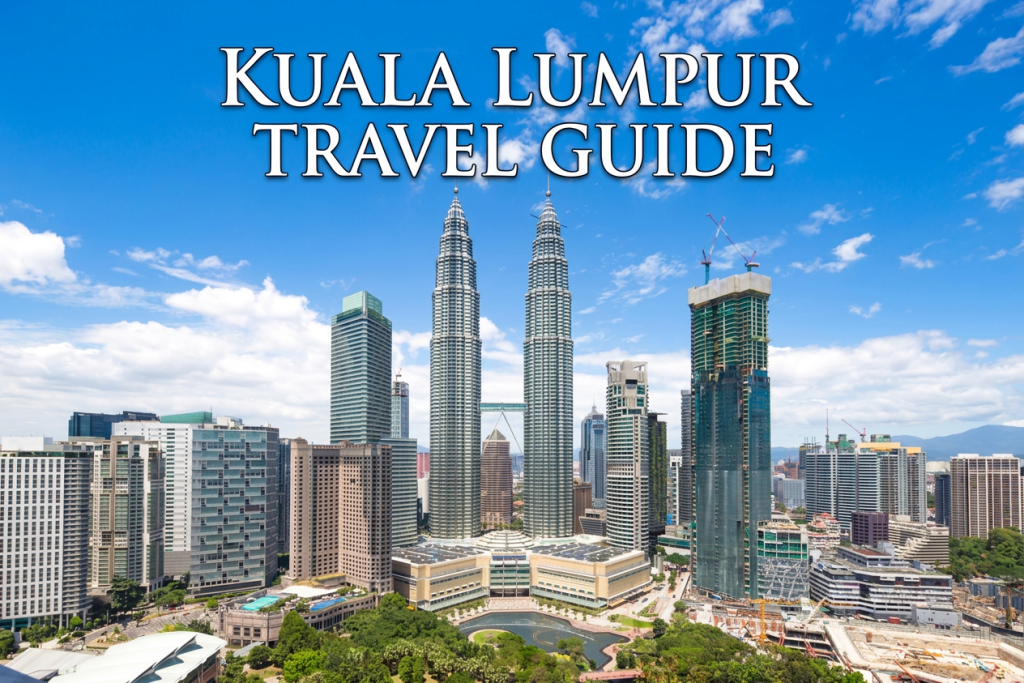
Kuala Lumpur is one of Southeast Asia’s most appealing city-break destinations. Malaysia’s capital combines modern skyscrapers, colourful street markets, impressive shopping centres, historic buildings and a food culture influenced by Malay, Chinese and Indian traditions.
For South Africans looking for an international holiday, Kuala Lumpur can offer a different experience from European city breaks. You can admire the famous Petronas Twin Towers, explore traditional markets, enjoy Malaysian street food, visit beautiful temples and mosques, and use the city as a starting point for exploring other parts of Malaysia.
Another attraction is the opportunity to experience a major Asian city without necessarily paying the prices associated with some of the world’s more expensive destinations. Your actual costs will depend on flight prices, accommodation choices, exchange rates and the activities you select.
This guide explains what South African travellers should consider before visiting Kuala Lumpur, from entry requirements and flights to accommodation, transport, food and a suggested five-day itinerary.
If you are comparing destinations in Asia, you can also explore our Singapore Travel Guide for South Africans, Bangkok Travel Guide for South Africans and Seoul Travel Guide for South Africans.
Why visit Kuala Lumpur?
Kuala Lumpur offers a combination of contemporary city life, cultural attractions, shopping and accessible food experiences.
The city is known for its skyline, particularly the Petronas Twin Towers, but there is much more to explore beyond the famous buildings.
You can spend a morning visiting a Hindu temple, enjoy lunch at a traditional food market, browse modern shopping centres in the afternoon and finish the day sampling Malaysian cuisine.
Highlights include:
- Petronas Twin Towers: Kuala Lumpur’s iconic twin skyscrapers.
- KLCC Park: A green public space beside the Petronas Twin Towers.
- Batu Caves: A major Hindu religious site outside the central city.
- Merdeka Square: An important historic square surrounded by landmark buildings.
- Central Market: A popular destination for crafts, gifts and souvenirs.
- Petaling Street: A lively shopping and food area in Chinatown.
- Jalan Alor: A well-known street-food destination.
- Thean Hou Temple: A striking Chinese temple overlooking part of the city.
- KL Tower: Another landmark offering views across Kuala Lumpur.
Kuala Lumpur can suit couples, solo travellers, families, shoppers and food enthusiasts. It can also work as a stopover before travelling to destinations such as Penang, Langkawi or other parts of Malaysia.
When is the best time to visit Kuala Lumpur?
Kuala Lumpur has a tropical climate, with warm temperatures and humidity throughout the year. Rain can occur in any season, so it is sensible to prepare for occasional heavy showers.
Rather than expecting a distinct winter and summer, plan around your activities, accommodation prices and flight availability.
January to March
These months can be suitable for exploring the city, shopping and visiting attractions. However, rainfall varies, and you should still expect warm, humid conditions.
April to August
Temperatures remain warm, and there may be periods of heavy rain. This season can still work well for sightseeing because many attractions, shopping centres and restaurants are indoors.
September to December
Rainfall patterns vary across Malaysia and throughout the year. Check the forecast close to departure and allow flexibility for outdoor activities.
Malaysia’s regional weather patterns differ, so conditions in Kuala Lumpur may not match those on the country’s islands or east coast.
Practical tip: Pack lightweight clothing, comfortable walking shoes, sun protection and a compact umbrella. If you plan to visit religious sites, include clothing that allows you to dress respectfully.
Flights from South Africa to Kuala Lumpur
Travelling from South Africa to Kuala Lumpur generally involves a long-haul flight, often with a connection depending on the airline and departure date.
For travellers leaving Johannesburg, start by comparing flights from OR Tambo International Airport. Travellers departing from Cape Town or Durban should compare the cost and convenience of different departure options.
Kuala Lumpur International Airport is the principal international gateway for the city. Before booking, check which terminal your flight uses and how you will travel from the airport to your accommodation.
When comparing flights, consider:
- Total journey time.
- Number of connections.
- Length of each layover.
- Checked baggage allowances.
- Meals and seat selection.
- Whether the journey is on one ticket or separate tickets.
- Transit visa requirements, where applicable.
- Cancellation and change fees.
- Arrival time in Kuala Lumpur.
A cheaper flight may not represent the best value if it involves an inconvenient overnight stop or separate tickets that leave you responsible for missed connections.
Our guide to choosing the right flight for an international trip from South Africa explains how to compare fares, baggage allowances, connections and schedules.
If you are combining Kuala Lumpur with another destination, our guide to planning a multi-city international trip from South Africa can help you think through flight connections, itinerary planning and the overall budget.
Malaysia entry requirements for South Africans
Entry requirements should always be checked before booking an international trip.
According to Malaysia’s Ministry of Foreign Affairs in Pretoria, South African passport holders do not require a visa for stays of up to 90 days. This is subject to the applicable entry conditions and can change, so verify the current rules before departure.
Official information is available from the Ministry of Foreign Affairs Malaysia — Pretoria and the Malaysian Immigration Department.
What should you check before departure?
Confirm that:
- You are travelling on a passport accepted by Malaysian immigration.
- Your passport meets the current validity requirements.
- Your visit falls within the permitted visa-free period.
- You meet the current arrival and immigration requirements.
- You have any required arrival declaration completed.
- You can provide your accommodation and onward or return travel details if requested.
- You have checked any transit requirements for connecting countries.
Malaysia’s immigration authorities may require foreign visitors to complete the Malaysia Digital Arrival Card (MDAC), subject to exemptions and current rules. Check the official immigration website for the current requirements and use only the official submission channel.
Do not assume that visa-free entry removes every other entry requirement.
Important: Entry requirements can change. Confirm them using official Malaysian government sources shortly before travelling, particularly if you have a non-standard passport or plan to stay longer than a typical holiday.
Where should you stay in Kuala Lumpur?
Choosing the right neighbourhood can make your visit easier and help you manage your budget.
Kuala Lumpur has accommodation ranging from budget guesthouses to international hotels and serviced apartments. Compare the location as carefully as the room rate.
KLCC
KLCC is a convenient choice if you want to be close to the Petronas Twin Towers, KLCC Park, restaurants and major shopping centres.
It is particularly appealing for first-time visitors who want to see the city’s best-known landmarks.
Accommodation in this area can cost more than in some other neighbourhoods, so compare rates carefully.
Bukit Bintang
Bukit Bintang is known for shopping, restaurants, entertainment and access to several popular city attractions.
It can suit visitors who want plenty of dining and shopping options within walking distance or a short public transport journey.
The area can be busy, so check guest reviews if you prefer a quieter stay.
Chinatown and Petaling Street
Chinatown can be an interesting option for travellers who enjoy markets, historic streets, cafés and local food.
Accommodation options vary, and the area can provide convenient access to cultural attractions and central transport links.
Check the exact location of your accommodation, as noise levels and facilities can differ between properties.
KL Sentral
KL Sentral is a major transport hub, making it useful for visitors who prioritise convenient rail connections and airport transfers.
It can be a practical base if you expect to travel around the city or continue to other destinations.
How to choose the right hotel
Before booking, compare:
- Total price, including taxes and fees.
- Distance to public transport.
- Guest reviews and recent feedback.
- Air conditioning.
- Room size and luggage space.
- Breakfast options.
- Cancellation conditions.
- Laundry facilities.
- Check-in arrangements.
Our hotel booking guide for South Africans explains how to compare accommodation based on location, facilities and overall value rather than headline price alone.
Getting around Kuala Lumpur
Kuala Lumpur has several public transport options, including rail services, buses and taxis. The best choice depends on where you are staying and which attractions you want to visit.
Rail services
The city’s rail network includes MRT, LRT, monorail and commuter rail services. These can be useful for travelling between major shopping, business and tourist areas.
Before setting out, check the latest routes, fares and service information.
Airport transfers
The KLIA Ekspres offers a direct rail connection between Kuala Lumpur International Airport and KL Sentral. Other options include the KLIA Transit service, airport buses, taxis and app-based ride services.
Compare journey time, price and convenience, especially if you are travelling with several suitcases or arriving late at night.
Taxis and ride-hailing
Taxis and app-based ride services can be useful when travelling with luggage, visiting locations not close to a station or returning to your hotel after an evening out.
Confirm the estimated fare and pickup point before travelling. Airport terminals and large shopping centres may have designated pickup areas.
Walking
Walking can be enjoyable within individual neighbourhoods, but Kuala Lumpur’s heat, humidity and sudden rain can make long walks uncomfortable.
Plan outdoor sightseeing for cooler parts of the day, carry water and use public transport between areas when necessary.
What should you eat in Kuala Lumpur?
Food is one of Kuala Lumpur’s biggest attractions. Malaysian cuisine reflects the country’s Malay, Chinese and Indian influences, with plenty of regional variations.
Visitors can find street food, casual eateries, food courts and more formal restaurants throughout the city.
Dishes worth trying include:
- Nasi lemak: Rice cooked with coconut milk, often served with sambal, peanuts, anchovies, egg and other accompaniments.
- Roti canai: A flaky flatbread commonly served with curry.
- Char kway teow: Stir-fried flat rice noodles with a mixture of ingredients.
- Satay: Grilled skewers served with a dipping sauce.
- Laksa: A noodle soup with regional variations, often featuring a rich, spicy broth.
- Rendang: A richly spiced meat dish associated with Malay and Indonesian cooking traditions.
- Hainanese chicken rice: Chicken served with seasoned rice and accompanying sauces.
- Teh tarik: A popular pulled milk tea.
Jalan Alor and traditional markets are popular places to explore local food, while shopping centres often contain food courts with a wide variety of options.
Dietary requirements
Malaysia has a large Muslim population, and halal food is widely available. However, do not assume that every restaurant or dish meets a particular dietary requirement.
If you have food allergies or follow a specific diet, ask about ingredients and preparation methods. Dishes can contain seafood, peanuts, dairy or other allergens, and sauces may include ingredients that are not obvious from the menu.
The best things to do in Kuala Lumpur
You can see many of Kuala Lumpur’s main attractions over several days, especially if you group activities by location.
Visit the Petronas Twin Towers
The Petronas Twin Towers are among Kuala Lumpur’s most recognisable landmarks.
Visitors can book access to the Skybridge and observation deck for views over the city. Tickets and entry arrangements can change, so check the official Petronas Twin Towers website before planning your visit.
Allow time to explore KLCC Park and the surrounding area.
Explore Batu Caves
Batu Caves is a major Hindu religious site just outside central Kuala Lumpur. The limestone hill, cave temples and colourful stairway make it one of the region’s best-known attractions.
Dress respectfully, follow local instructions and prepare for stairs and warm weather.
Check current access arrangements before visiting, especially during religious festivals when the area can be particularly busy.
Discover Merdeka Square
Merdeka Square is an important historical area surrounded by notable buildings, including the Sultan Abdul Samad Building.
It is a good place to explore on foot and learn more about Malaysia’s history.
Visit early or later in the day if you want to spend time outdoors without the strongest midday heat.
Shop at Central Market
Central Market is a popular stop for crafts, souvenirs, clothing and gifts.
It can be useful if you want to find Malaysian-themed keepsakes without spending the whole day travelling between shopping areas.
Compare prices and check the quality of products before buying.
Explore Chinatown and Petaling Street
Chinatown offers a mix of markets, food, small shops and historic streets.
It is a good place to wander, sample local dishes and discover a different side of the city from the modern shopping malls.
Keep valuables secure in crowded areas and check prices before making purchases.
Visit Thean Hou Temple
Thean Hou Temple is a striking Chinese temple with ornate architecture and views over parts of Kuala Lumpur.
Visitors should remember that it is a place of worship. Dress appropriately and follow any restrictions on photography or access.
Enjoy KL Tower
KL Tower provides another perspective on Kuala Lumpur’s skyline.
On a clear day, views can include the Petronas Twin Towers and the surrounding city. Compare available ticket options and opening hours before visiting.
Spend time in KLCC Park
KLCC Park offers a green space in the heart of the city, with walking paths and views of the towers.
It is a convenient place to take a break between shopping and sightseeing.
Discover Kuala Lumpur’s shopping malls
Shopping is a major part of the Kuala Lumpur experience. The city has large modern malls, international fashion brands, local retailers and specialist shops.
If shopping is one of your priorities, set a budget before arriving and check whether any tourist tax-refund arrangements apply to your purchases.
How much does a trip to Kuala Lumpur cost?
The cost of a holiday depends on flight prices, travel dates, accommodation, exchange rates and personal spending habits.
Rather than relying on a single daily estimate, build a budget using prices for your intended travel dates.
| Expense | What to consider |
|---|---|
| Return flights | Compare routes, connections and baggage |
| Accommodation | Neighbourhood, facilities and cancellation terms |
| Food | Street food, food courts, cafés and restaurants |
| Transport | Airport transfer, rail, buses and ride-hailing |
| Attractions | Tickets, tours and special experiences |
| Shopping | Clothing, gifts, souvenirs and other purchases |
| Travel insurance | Medical expenses, cancellations and exclusions |
| Mobile connectivity | Roaming, eSIM or local SIM options |
| Emergency funds | Unexpected expenses or itinerary changes |
Ways to manage your budget
Compare flights early. Check several dates and connecting routes instead of choosing the first fare you see.
Choose your location carefully. A hotel close to suitable transport may save time and reduce taxi costs.
Try local food. Markets and food courts can provide variety without requiring every meal to be in a formal restaurant.
Plan paid attractions. Check ticket prices and opening times in advance.
Budget for shopping. Kuala Lumpur has many shopping centres, so it is easy to spend more than planned.
Review currency charges. Check your bank’s foreign transaction fees and cash withdrawal charges before leaving South Africa.
For the best estimate, calculate the cost of flights and accommodation first, then allow for meals, local transport, attractions and shopping.
Practical tips for South African travellers
Arrange mobile connectivity
Mobile data can help with maps, transport planning, hotel bookings and communication.
Compare international roaming, an eSIM or a local SIM option before departure. Check that your phone supports the option you choose.
Our guides to choosing an eSIM for international travel and understanding how eSIMs work when travelling overseas from South Africa explain what to consider when selecting mobile connectivity for your trip.
Pack for tropical weather
Lightweight clothing is useful in Kuala Lumpur, but remember to bring clothes suitable for visiting religious sites.
A small umbrella, comfortable footwear and sun protection can make sightseeing easier.
Respect local customs
Malaysia is culturally diverse, and expectations can differ between religious sites, restaurants and public spaces.
Dress respectfully at mosques and temples, remove footwear where requested and follow posted visitor instructions.
Consider travel insurance
Travel insurance can help protect against eligible unexpected costs, including medical emergencies, cancellations and baggage problems.
Compare coverage limits, exclusions, excesses and requirements for pre-existing medical conditions.
Before buying a policy, read our guide to travel insurance for South Africans to understand the details worth checking.
Keep important documents accessible
Keep copies of your passport, travel bookings, insurance information and emergency contacts in a secure place.
Make sure you can access essential information if your phone loses power or you cannot connect to the internet.
A suggested five-day Kuala Lumpur itinerary
Five days gives you a useful starting point for seeing the main attractions without rushing through every neighbourhood.
Day 1: Arrival and KLCC
Check in, settle into your accommodation and explore the Petronas Twin Towers area and KLCC Park. Keep the first evening relaxed after your journey.
Day 2: History and central Kuala Lumpur
Visit Merdeka Square, explore the Sultan Abdul Samad Building area and browse Central Market. Continue to Chinatown if you have time.
Day 3: Batu Caves and local food
Visit Batu Caves earlier in the day, then return to the city for lunch and an afternoon of shopping or relaxing.
Day 4: Shopping and city views
Explore Bukit Bintang or another shopping district. Add KL Tower or a booked visit to the Petronas Twin Towers if it suits your interests.
Day 5: Temples and flexible exploration
Visit Thean Hou Temple, explore a neighbourhood you have not yet seen, or enjoy a relaxed food-focused day before departure.
This itinerary is flexible. Check opening hours, transport arrangements, ticket availability and local conditions before finalising your plans.
Should you combine Kuala Lumpur with another destination?
Kuala Lumpur can work well as part of a longer Asian trip, especially if you want to experience more than one city.
You could combine it with Singapore, Bangkok or another destination, depending on flight prices, available time and your interests.
However, adding destinations also introduces additional transport costs, accommodation changes and potential border or entry requirements.
If you are considering a multi-stop holiday, plan the route before booking separate flights. Our guide to planning a multi-city international trip from South Africa can help you compare the options.
Is Kuala Lumpur worth visiting from South Africa?
Kuala Lumpur is worth considering if you want an international holiday with a mixture of modern city attractions, cultural experiences, shopping and diverse food.
It can be particularly appealing to travellers who enjoy exploring large cities and trying local cuisine. The city also offers convenient connections for people who want to continue to other destinations in Malaysia or Southeast Asia.
The most important steps are to check current entry requirements, compare flight itineraries, choose accommodation in a suitable neighbourhood and prepare a realistic budget.
With some planning, Kuala Lumpur can be a rewarding introduction to Malaysia and a memorable addition to your international travel list.
Official sources and useful links
- Malaysia Ministry of Foreign Affairs — Pretoria: https://www.kln.gov.my/web/zaf_pretoria/requirement_foreigner
- Malaysian Immigration Department: https://www.imi.gov.my/
- Official Malaysia tourism website: https://www.malaysia.travel/
- Petronas Twin Towers: https://www.petronastwintowers.com.my/
Entry requirements, transport fares, attraction prices and opening hours can change. Readers should confirm current details with the relevant official source before travelling.