
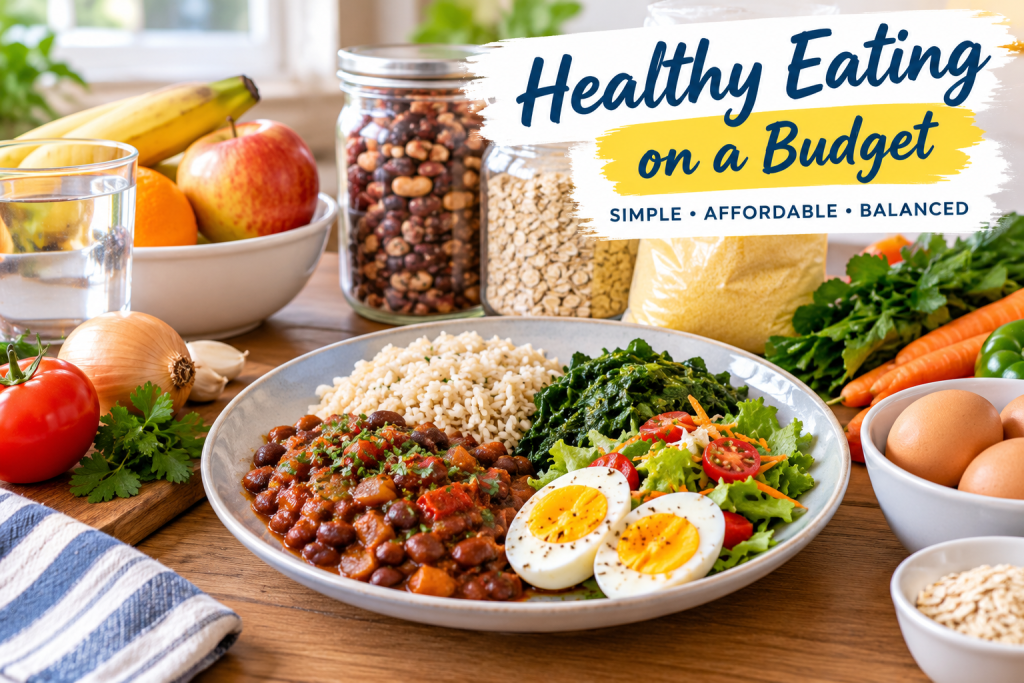
Eating well doesn’t have to mean buying expensive health foods, speciality ingredients or costly products labelled as superfoods.
For many South African households, the real challenge is finding a way to eat reasonably well while managing rising grocery bills, transport costs and other household expenses.
The good news is that a balanced diet can be built around ordinary, affordable foods. Beans, lentils, eggs, seasonal vegetables, oats, maize meal and other everyday staples can all contribute to nutritious meals.
The key is knowing what to buy, how to plan meals and how to make ingredients stretch across several dishes without sacrificing variety.
This guide explains how to eat a balanced diet on a budget in South Africa, with practical shopping advice, meal ideas and ways to reduce waste.
1. What does a balanced diet actually mean?
A balanced diet provides the nutrients your body needs to function, maintain tissues and support general health.
Rather than concentrating on one particular food or following a restrictive eating plan, aim for variety across the foods you eat.
A balanced eating pattern generally includes:
- Vegetables and fruit: Sources of vitamins, minerals, fibre and other beneficial plant compounds.
- Whole grains and starchy foods: Such as oats, wholewheat bread, brown rice, potatoes and maize meal.
- Protein-rich foods: Including beans, lentils, eggs, fish, chicken, dairy products and other suitable alternatives.
- Dairy or fortified alternatives: Such as milk, yoghurt or appropriately fortified plant-based drinks.
- Small amounts of unsaturated fats: From foods such as peanuts, seeds, nuts and vegetable oils.
Water should also be your main everyday drink.
You don’t need every meal to contain every food group. What matters is the overall pattern of your eating over time.
A simple approach is to include a vegetable or fruit, a filling staple and a source of protein in your main meals whenever practical.
2. Start with affordable staple foods
Some of the best budget foods are familiar household staples rather than fashionable health products.
The most useful choices will depend on local prices, availability, cooking facilities and your household’s preferences.
Maize meal
Maize meal is widely used in South African households and can provide an affordable source of energy.
It can accompany beans, lentils, vegetables, eggs or other protein-rich foods.
Where available and affordable, fortified maize meal can also contribute important micronutrients.
Oats
Oats are useful for breakfast because they are versatile, filling and provide fibre.
Prepare them with water or milk, then add a banana, grated apple or another affordable fruit.
Buying larger packages can sometimes reduce the cost per serving, provided you can store them properly and use them before they deteriorate.
Rice
Rice is a convenient base for meals containing vegetables, beans, lentils, eggs or chicken.
Compare the price per kilogram of different varieties rather than assuming that one type is always the best value.
Potatoes and sweet potatoes
Potatoes and sweet potatoes can provide energy and contribute nutrients to a meal.
They can be boiled, baked or roasted with modest amounts of oil. Pair them with vegetables and protein for a more complete meal.
Beans and lentils
Dried beans and lentils are particularly useful when trying to reduce grocery costs.
They provide protein and fibre and can be used in soups, stews, curries, salads and other dishes.
Dried varieties may offer better value than canned options, although canned beans can be convenient when time, cooking equipment or electricity is limited.
Check whether canned products contain added salt and compare the price per usable portion.
3. Choose affordable sources of protein
Protein is important for maintaining muscles and other body tissues. Fortunately, you don’t need to buy expensive cuts of meat to include protein in your diet.
Consider the following options.
| Food | Budget-friendly ways to use it |
|---|---|
| Dried beans | Stews, soups and bean curries |
| Lentils | Lentil curry, soup and savoury mince alternatives |
| Eggs | Boiled eggs, omelettes and vegetable scrambles |
| Peanut butter | Oats, wholewheat toast or simple snacks |
| Tinned fish | Sandwiches, salads and meals with potatoes |
| Chicken portions | Stews, oven-baked meals and rice dishes |
| Milk or plain yoghurt | Breakfasts, snacks and meal ingredients |
| Soya mince | Pasta sauces, curries and savoury dishes |
Prices vary considerably between retailers, brands and package sizes. Compare the cost of a realistic serving rather than just the price of the package.
You can also combine plant and animal protein sources throughout the week instead of relying on meat at every meal.
4. Buy vegetables and fruit according to the season
Fresh produce can become expensive when particular items are out of season or affected by supply shortages.
Instead of planning every meal around a fixed list of vegetables, check what’s reasonably priced and build your meals around those ingredients.
Affordable options may include:
- Cabbage
- Carrots
- Onions
- Pumpkin
- Spinach or other locally available leafy vegetables
- Tomatoes when prices are favourable
- Seasonal apples, bananas or citrus fruit
- Frozen mixed vegetables
Frozen vegetables can be especially useful because they are convenient, last longer than many fresh alternatives and can be used in small quantities.
Canned vegetables and fruit can also be practical options. Compare labels for added salt, sugar and other ingredients.
Don’t assume that every fresh food is automatically healthier than its frozen or canned equivalent. The overall product, preparation method and nutritional content matter.
5. Compare the cost per serving, not just the shelf price
A low shelf price doesn’t always mean that a product is the best value.
Package size, preparation losses and the number of servings can all affect the final cost.
For example, dried beans may require soaking and cooking, while canned beans are ready to use. The canned option costs more in some cases, but it may save time and electricity.
When comparing products, consider:
- Price per kilogram or litre.
- Number of usable servings.
- Cooking time and energy costs.
- How much of the food is discarded.
- Whether you can use the entire package.
- Storage requirements and likely spoilage.
A larger package is worthwhile only if you can afford it, store it safely and use it before it goes off.
6. Plan meals before you shop
One of the simplest ways to manage grocery costs is to plan several meals before visiting the shops.
You don’t need a complicated spreadsheet or a strict menu for every day.
Start by deciding which meals you’ll prepare over the next few days, then create a shopping list based on the ingredients required.
For example, a bag of carrots could be used in a stew, a soup and a vegetable side dish. A batch of cooked beans could provide the basis for more than one meal.
Planning in this way helps reduce the chance of buying ingredients that are used once and then forgotten.
A simple weekly planning method
- Check what you already have in the cupboard, fridge and freezer.
- Choose several meals that share some ingredients.
- Identify the foods you still need.
- Set a realistic grocery budget.
- Compare prices before buying.
- Plan how to use leftovers safely.
Try to include a mixture of familiar meals and small variations so that inexpensive ingredients don’t become monotonous.
7. Example of a budget-friendly meal plan
The following is an example of how ordinary ingredients can be combined into balanced meals. It is not a prescribed diet, and portion sizes and individual needs will vary.
| Day | Breakfast | Lunch | Dinner |
|---|---|---|---|
| Monday | Oats with banana | Egg and vegetable sandwich | Bean stew with maize meal and cabbage |
| Tuesday | Wholewheat toast and egg | Leftover bean stew | Chicken and vegetable rice |
| Wednesday | Oats with apple | Lentil soup and bread | Potato, spinach and egg meal |
| Thursday | Plain yoghurt with oats | Leftover chicken and rice | Lentil curry with rice |
| Friday | Peanut butter toast | Bean and vegetable salad | Baked potatoes with beans and vegetables |
| Saturday | Oats with fruit | Egg sandwich | Vegetable and soya mince pasta |
| Sunday | Eggs and toast | Leftovers | Chicken or bean stew with vegetables |
Adapt this plan to your preferences, dietary requirements and the prices in your area. If some ingredients are expensive, replace them with suitable alternatives.
The point is not to follow this exact menu. It is to show how a few versatile ingredients can support a variety of meals.
Some interesting meals can be found on the Maffies YouTube channel
8. Make leftovers work harder
Leftovers can save both money and preparation time when handled safely.
A large pot of bean stew, soup or curry can provide several meals. Cooked food can also be portioned for lunches or frozen for later use.
Useful habits include:
- Cook quantities that suit your household.
- Refrigerate perishable food promptly.
- Store leftovers in clean, covered containers.
- Use refrigerated leftovers within a safe period.
- Freeze portions that won’t be eaten soon.
- Reheat food thoroughly and avoid repeated cooling and reheating.
Don’t leave cooked food sitting at room temperature for extended periods. Follow recognised food-safety guidance, especially in hot weather.
Before freezing meals, label containers with the contents and date. This makes it easier to use older portions first.
9. Reduce food waste
Food waste can quietly increase your grocery bill.
A few practical changes can make a difference.
Store food correctly
Some produce lasts longer when refrigerated, while other items are best kept in a cool, dry place. Follow appropriate storage recommendations for each food.
Keep dry goods in sealed containers to protect them from moisture and pests.
Use ingredients before buying more
Check the fridge before shopping. Plan meals around foods that need to be used soon.
Freeze suitable foods
Bread, cooked meals and some chopped vegetables can be frozen when appropriate.
Understand date labels
A best-before date generally relates to quality, whereas a use-by date can relate to safety. Follow the product’s label and storage instructions, and don’t assume that food is safe simply because it looks or smells normal.
Use edible portions
Where appropriate, use vegetable trimmings in stocks or soups, provided they are clean and suitable for consumption.
Small changes can reduce the amount of food you pay for but never actually eat.
10. Be careful with cheap processed foods
Convenience foods can be inexpensive and useful, especially when time is limited. However, a diet made up mainly of highly processed snacks, sugary drinks and convenience meals may not provide the variety of nutrients you need.
Compare food labels and look at the amount of:
- Salt or sodium.
- Added sugar.
- Saturated fat.
- Fibre.
- Protein.
You don’t need to avoid every processed product. Canned beans, frozen vegetables, plain yoghurt and fortified staple foods can all be practical choices.
Instead, aim for an overall eating pattern that includes a range of nutritious foods while keeping the cost manageable.
11. Save money on drinks and snacks
Drinks and snacks can add up over a month, particularly when they are bought individually.
Water is generally a sensible first choice for everyday hydration.
If you usually buy bottled water, consider whether safe tap water is available where you live. Follow local water-quality advice if there are concerns about your supply.
For snacks, consider options such as:
- Seasonal fruit.
- Plain yoghurt.
- Homemade popcorn with modest added salt.
- Boiled eggs.
- Wholewheat toast.
- A small portion of peanuts or other nuts when affordable.
You don’t need expensive snack bars, speciality drinks or products marketed as essential for health.
For more practical advice, see our guide to staying hydrated and recognising the signs of dehydration.
12. Is healthy eating possible with limited cooking facilities?
Not everyone has the time, equipment or electricity to prepare meals from scratch every day.
If cooking facilities are limited, look for foods that require little preparation or can be used in several ways.
Examples include:
- Canned beans and lentils.
- Tinned fish.
- Wholewheat bread.
- Peanut butter.
- Oats.
- Long-life milk.
- Ready-to-eat fruit.
- Plain yoghurt.
- Suitable canned vegetables.
Choose products that can be stored safely under the conditions available to you. Once opened, many canned and refrigerated products require refrigeration and should not be kept at room temperature indefinitely.
If you have access to a freezer, preparing a few meals when electricity is available may help reduce the need for daily cooking.
13. Avoid expensive health-food claims
Products promoted as superfoods, detox solutions or essential wellness purchases can be costly.
Some speciality foods can be enjoyable additions to a diet, but they are not automatically necessary for good nutrition.
A balanced diet can be built around ordinary foods that provide a variety of nutrients.
Be cautious of marketing claims that promise dramatic improvements in health from a single ingredient or product. No one food can replace an overall healthy eating pattern, and supplements should not be treated as substitutes for a varied diet unless a qualified healthcare professional advises otherwise.
If you have a diagnosed nutrient deficiency, a medical condition or specific dietary requirements, seek advice from a registered dietitian or appropriate healthcare professional rather than attempting to manage it solely through online advice.
14. What if you have special dietary needs?
A budget-friendly meal plan should still meet your individual needs.
For example:
- People with diabetes may need personalised guidance on carbohydrate intake and meal planning.
- People with kidney disease may need to manage particular nutrients under medical supervision.
- People with food allergies need to check ingredients carefully.
- Older adults may have different protein, energy or other nutritional needs.
- Pregnant people may need specific food-safety precautions and nutritional advice.
If you are managing a medical condition, speak to a registered dietitian or healthcare professional about affordable foods that suit your circumstances.
For general nutrition information in South Africa, consult reputable public-health resources such as the National Department of Health and the World Health Organization.
15. A simple grocery checklist
Use this as a starting point and adjust it to your household, budget and local prices.
- One or two affordable staple foods, such as maize meal, oats, rice or potatoes.
- Beans, lentils or another suitable protein source.
- Eggs, chicken, fish or other protein foods that fit your budget.
- Several vegetables, including seasonal or frozen options.
- Fruit that is reasonably priced.
- Milk, plain yoghurt or a suitable fortified alternative if used.
- Basic ingredients such as onions, oil and seasonings.
- Ingredients for meals that can be prepared in batches.
- Containers or storage options for leftovers.
- A realistic spending limit and a list of what you already have.
You don’t need to buy every item each week. Choose what is useful for the meals you intend to prepare.
Final thoughts
Eating a balanced diet on a budget is less about buying expensive health foods and more about making sensible use of the food available to you.
Affordable staples, beans and lentils, eggs, seasonal vegetables and fruit can form the basis of varied meals. Planning ahead, comparing cost per serving and reducing waste can help your grocery budget go further.
Start with a few changes rather than trying to transform every meal at once.
Plan several meals, buy ingredients you’ll actually use, and build variety into your eating pattern over time.
A practical approach to healthy eating should support your wellbeing without putting unnecessary pressure on your household finances.
Official resources
This article provides general nutrition information and is not a substitute for individual medical or dietary advice.