
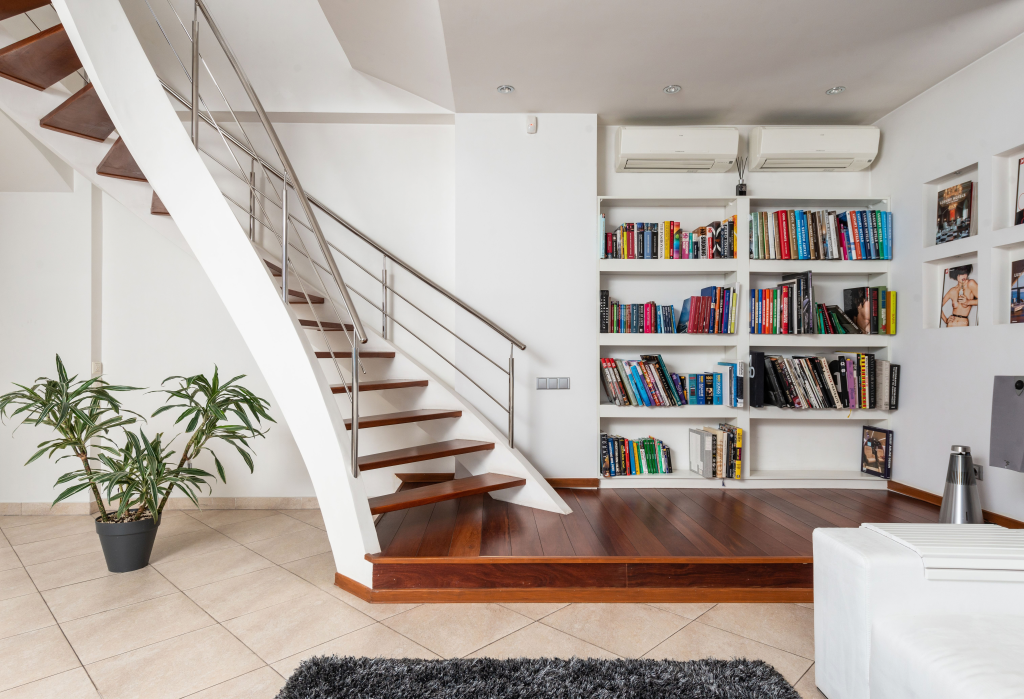
A bookshelf can be much more than somewhere to put books. The right bookshelf can provide valuable storage, help organise a room, display photographs and decorative items, and even become an important part of your interior design.
However, choosing one is not simply a matter of finding a unit that looks attractive. You need to consider the available space, the number of books and items you want to store, shelf dimensions, construction, materials, stability and how the bookshelf will fit into the room.
This guide explains what to look for when buying a bookshelf so you can choose one that is practical, attractive and suitable for your home.
1. Start by Measuring the Available Space
Before looking at styles or materials, measure the area where the bookshelf will go.
This sounds obvious, but furniture that looks perfectly proportioned in an online photograph can be surprisingly large when it arrives at your home.
Measure:
- Available width
- Maximum height
- Available depth
- Ceiling height
- Doorways and access routes
- Space around windows, doors and other furniture
- Skirting boards and other obstructions
Don’t measure only the wall. Consider how the bookshelf will interact with the rest of the room.
For example, a tall bookshelf positioned next to a window may interfere with curtains or block natural light. A deep bookshelf in a narrow passage can also make the room feel cramped.
If you are furnishing an entire room, it is worth considering the other furniture at the same time. Our guide on How to Choose the Right Bedroom Furniture: Beds, Wardrobes & Storage includes useful advice about measuring rooms and planning furniture placement.
Measure the access route too
A bookshelf may fit perfectly into the intended space but still be difficult to get through the front door.
For larger or assembled furniture, check:
- Door widths
- Passageways
- Staircases
- Lift dimensions if applicable
- Turning space
- The height and width of the packaging
Flat-pack furniture can solve some access problems because it is assembled inside the home.
2. Decide How Much Storage You Actually Need
Think about what you intend to put on the bookshelf.
Books are the obvious choice, but modern bookshelves are often used for much more than books.
You might want space for:
- Books and magazines
- Photographs
- Plants
- Ornaments
- Collectibles
- Baskets
- Storage boxes
- Documents
- Children’s items
- DVDs or other media
- Decorative objects
If the bookshelf will mainly hold books, estimate how much shelf space you currently need and allow some room for future additions.
Buying a unit that is already completely full can make the room look cluttered and leaves no flexibility.
On the other hand, buying an enormous bookshelf for a small collection may waste both money and floor space.
3. Choose Between Open Shelves and Closed Storage
Bookshelves are available in many configurations.
Open bookshelves
Open shelving is useful when you want easy access and want the contents to form part of the room’s décor.
Advantages include:
- Easy access
- Good visibility
- Attractive for displaying books and ornaments
- Can make a room feel more open
- Easy to rearrange
The disadvantage is that everything is visible, so open shelving can look untidy if it becomes overloaded.
Bookshelves with cupboards or doors
Some units combine open shelves with enclosed storage.
This can be particularly useful when you want to display attractive items while hiding things such as paperwork, cables, boxes or less decorative belongings.
Bookshelves with drawers
Drawers provide another option for smaller items that you don’t want left on display.
If you need both display and storage, a combination unit may be more practical than a completely open bookshelf.
4. Consider the Height
Bookshelves range from low units that sit below window level to tall floor-to-ceiling designs.
The right height depends on the room and how you intend to use the furniture.
Low bookshelves
Low units can work well beneath windows, along walls or behind sofas.
They can also double as display furniture.
Medium-height bookshelves
These provide useful storage without dominating the room.
They are often easier to access and may be suitable for living rooms, bedrooms and home offices.
Tall bookshelves
Tall units provide substantial storage while using relatively little floor space.
However, the upper shelves may be difficult to reach.
A tall bookshelf should also be stable and appropriately secured where necessary, particularly in homes with children or pets.
Don’t choose a tall unit simply because it offers more storage. Make sure you can comfortably use the upper shelves.
5. Pay Attention to Shelf Depth
Shelf depth is one of the details that is easy to overlook when shopping online.
A shallow bookshelf can be ideal for smaller paperbacks and decorative objects, while deeper shelves can accommodate larger books and storage baskets.
However, excessive depth can waste space and make items difficult to reach.
Think about the objects you actually intend to store.
If your collection contains a mixture of paperback books, large hardbacks and decorative objects, adjustable shelving can be particularly useful.
6. Adjustable Shelves Add Flexibility
Fixed shelves can provide a strong and simple construction, but adjustable shelves give you more flexibility.
This can be particularly useful if you have books of different sizes.
With adjustable shelving, you can create:
- Taller spaces for large books
- Smaller spaces for paperbacks
- Display areas for ornaments
- Spaces for storage baskets
- More efficient use of vertical space
Before buying, check how the shelves are adjusted and whether the adjustment system feels secure.
Also check the maximum recommended load for each shelf where this information is available.
Books can be surprisingly heavy, so don’t assume that every decorative shelving unit is designed to carry a large library.
7. Choose the Right Material
The material has a major effect on appearance, durability, weight and price.
Solid wood
Solid wood bookshelves can provide a traditional or premium appearance and can be very durable.
Different woods have different characteristics, so look at the construction rather than assuming that all wooden furniture is equivalent.
Solid wood can also be relatively heavy.
Engineered wood
Materials such as MDF and particleboard are widely used in modern furniture.
They can offer attractive finishes at a lower cost than many solid-wood alternatives.
However, construction quality matters. Look carefully at:
- Panel thickness
- Edge finishing
- Back panels
- Shelf supports
- Hardware
- Overall rigidity
Metal
Metal shelving can provide a contemporary or industrial appearance.
It can also be useful where a simple, open storage design is wanted.
Metal and wood combinations are popular because they combine a practical structure with a warmer appearance.
Glass
Glass shelving can create a lighter visual appearance and works particularly well for displaying decorative objects.
However, it may not be the best choice if you want a bookshelf specifically for a large and heavy book collection.
8. Think About the Weight of Your Books
Books are heavier than they look.
A shelf that holds a few decorative objects may not be suitable for a tightly packed collection of large books.
Look for information about the recommended shelf load before buying.
Shelf sagging is another issue to consider. Long shelves carrying substantial weight may eventually bow if they are not adequately supported.
If you have a large collection of heavy books, prioritise sturdy construction and appropriate shelf support rather than choosing purely on appearance.
9. Choose a Style That Works With Your Existing Furniture
A bookshelf should not necessarily match every other piece of furniture exactly, but it should work with the overall appearance of the room.
Consider:
- Colour
- Wood finish
- Frame design
- Handles
- Shelf shape
- Decorative details
- Modern versus traditional styling
A minimalist bookshelf with clean lines may suit a contemporary interior, while a darker wooden unit may work better in a more traditional room.
If you’re updating several elements of a room, think about the overall combination. For example, the bookshelf might work alongside the furniture, rug, curtains and lighting rather than being treated as an isolated purchase.
Our guides on How to Choose the Right Rug for Your Home: Size, Material, Style & Care and How to Choose the Right Curtains for Your Home can help when coordinating the broader look of a room.
10. Consider the Colour Carefully
Neutral colours such as white, black, grey and natural wood tones are relatively easy to incorporate into different interiors.
A more distinctive colour can make the bookshelf a feature of the room.
The best choice depends on whether you want the furniture to:
- Blend into the background
- Complement existing furniture
- Provide contrast
- Become a decorative focal point
Remember that the books and objects placed on the shelves will also contribute to the overall colour of the furniture.
A very colourful collection of books can make even a simple white bookshelf visually striking.
11. Don’t Forget the Back Panel
The back of a bookshelf can have a surprisingly large effect on its appearance.
A fully open-backed bookshelf can feel light and airy and may work well as a room divider.
A bookshelf with a solid back provides a more conventional appearance and can help prevent smaller objects from falling behind the unit.
A coloured or contrasting back panel can also become a design feature.
If you’re placing a bookshelf against a wall, check whether the back panel is finished appropriately and whether it needs to be fixed to the wall.
12. Bookshelves Can Help Divide a Room
A bookshelf doesn’t always have to stand against a wall.
Open shelving can sometimes be used to divide a larger room into separate areas.
For example, a bookshelf could help distinguish:
- A living area from a dining area
- A home office from a bedroom
- A reading area from the rest of a room
If you use furniture in this way, choose an open design that allows light to pass through.
A solid, tall unit can make a room feel divided and potentially darker.
Also consider stability. A freestanding bookshelf used as a room divider needs to be particularly secure.
13. Think About Safety and Stability
Stability is especially important with tall furniture.
A bookshelf can become top-heavy when loaded with books and other objects.
When purchasing, look for:
- A wide and stable base
- Strong shelf supports
- Good-quality fixings
- Clear assembly instructions
- Appropriate wall-fixing provisions
If the manufacturer recommends securing the bookshelf to the wall, take that recommendation seriously.
Avoid placing heavy objects high above head level where possible.
Homes with young children or pets require additional attention to furniture stability.
14. Buying a Bookshelf Online
Buying furniture online can be convenient, but you need to check more than the photograph.
Before placing an order, look carefully at:
Dimensions
Check the complete dimensions rather than relying on the product photograph.
Material
Make sure you understand whether the furniture is solid wood, engineered wood, metal, glass or a combination.
Assembly
Check whether the bookshelf arrives fully assembled or requires assembly.
Delivery
Furniture can be large and heavy, so check delivery arrangements and any additional charges.
Returns
Read the retailer’s returns policy before buying, particularly for large furniture.
Customer reviews
Reviews can reveal practical issues that aren’t obvious from the product description, including assembly difficulty, stability, finish quality, and whether the furniture looks like the photographs.
For more general advice about shopping for furniture online, Best Places to Buy Home Décor Online in South Africa provides useful guidance on comparing online options.
15. Flat-Pack or Fully Assembled?
Flat-pack furniture has become extremely common because it can be cheaper to transport and easier to get into the home.
It can also offer excellent value.
However, assembly quality matters.
Before buying a flat-pack bookshelf, check:
- How many pieces need to be assembled
- Whether all required hardware is included
- Whether assembly instructions are provided
- Whether two people are recommended for assembly
- Whether the unit needs to be secured to the wall
If you’re not comfortable assembling furniture yourself, factor the potential cost of assistance into your purchase decision.
16. Consider the Cost Per Unit of Storage
Price alone doesn’t tell you whether a bookshelf represents good value.
A cheaper unit with limited capacity may actually provide less useful storage than a slightly more expensive, sturdier unit.
Compare:
- Overall dimensions
- Number of shelves
- Adjustable versus fixed shelves
- Shelf load capacity
- Materials
- Construction quality
- Storage capacity
- Delivery cost
- Assembly requirements
This gives you a better basis for comparing different products.
17. Don’t Overfill the Bookshelf
Once your new bookshelf is installed, resist the temptation to fill every available space.
A mixture of books and decorative objects can create a more attractive result than rows of tightly packed items.
You could combine:
- Books
- Plants
- Framed photographs
- Small ornaments
- Baskets
- Decorative boxes
Leaving some open space can make the entire unit look less cluttered.
For books, you can also experiment with both horizontal and vertical arrangements.
18. Bookshelves Aren’t Just for Books
One of the biggest advantages of a bookshelf is its versatility.
A well-chosen unit can be used in almost any room.
Living room
Use it for books, photographs, ornaments and plants.
Bedroom
Use it for books, accessories and small storage baskets.
Home office
Use it for reference books, files and office supplies.
Children’s room
Use it for books, toys and storage containers.
Dining room
A bookshelf can provide space for cookbooks, decorative objects and serving accessories.
Entrance area
A smaller shelving unit can provide a convenient place for baskets and decorative items.
19. A Simple Bookshelf Buying Checklist
Before buying, ask yourself:
Space
- Have I measured the available width, height and depth?
- Will it fit through the door?
- Will it interfere with windows or other furniture?
Storage
- What will I actually store?
- How much shelf space do I need?
- Do I need adjustable shelves?
Construction
- Is it sturdy enough for the intended load?
- Are the shelves adequately supported?
- Does it need wall fixing?
Style
- Does the colour work with my room?
- Does the design complement my existing furniture?
- Do I want open or closed storage?
Shopping
- Have I checked the dimensions carefully?
- Have I checked delivery costs?
- Is assembly required?
- Have I read customer reviews?
- What is the returns policy?
Taking a few minutes to answer these questions can prevent an expensive furniture-buying mistake.
Final Thoughts
The right bookshelf should combine storage, stability, practicality and appearance.
Start by measuring your available space and deciding what you need to store. Then consider the shelf dimensions, material, construction, load capacity and adjustability.
After those practical considerations are sorted, you can concentrate on the appearance and choose a style that works with the rest of your home.
Whether you’re looking for a compact bookshelf for a small apartment or a substantial storage unit for a large book collection, the same principle applies: buy for the way you actually live, rather than simply choosing the bookshelf that looks best in a photograph.
A well-chosen bookshelf can provide useful storage for many years while also becoming an attractive part of your home.