
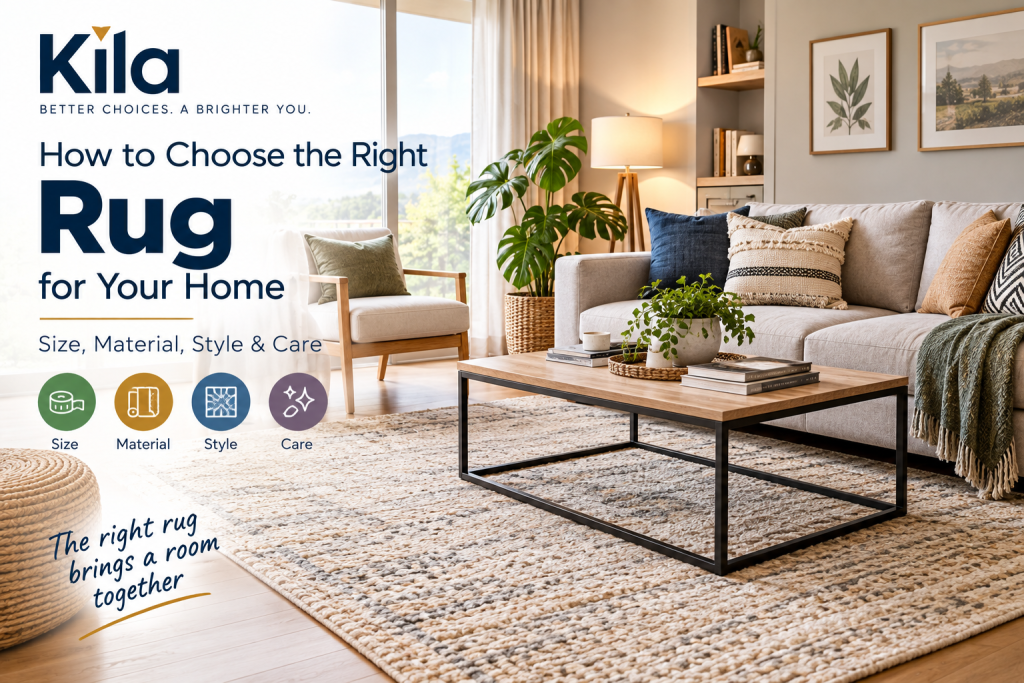
A rug can completely change the look and feel of a room. It can make a large space feel more comfortable, define different areas in an open-plan home, add warmth to hard floors and bring colour or texture into an otherwise plain room.
But choosing the right rug involves more than simply finding a design you like. The wrong size, material or shape can make a room feel unbalanced, while the right rug can tie the furniture and décor together.
Whether you are furnishing a new home or simply refreshing an existing room, this guide explains what to consider before buying a rug.
1. Start With the Room and Its Purpose
Before looking at colours and patterns, think about where the rug will be used.
Different rooms have different requirements.
Living room
A living-room rug should work with your main furniture arrangement. It can help visually connect the sofa, chairs and coffee table into one area.
Large rugs are often particularly effective in living rooms because they create a defined seating area.
Bedroom
A bedroom rug can add warmth and comfort, particularly around the bed.
You can choose a large rug extending beyond the sides and foot of the bed, or use smaller rugs beside the bed.
Dining room
A dining-room rug needs to be large enough for the table and chairs.
Ideally, the chairs should remain on the rug even when pulled away from the table. A rug that is too small can quickly become impractical.
Entrance or hallway
These areas generally benefit from hard-wearing rugs that can cope with frequent foot traffic.
A washable or easy-to-clean material can also be useful in an entrance where dirt and moisture may be brought indoors.
2. Choose the Right Rug Size
One of the most common mistakes when buying a rug is choosing one that is too small.
A rug can look much smaller once it is placed in a room than it appeared in an online photograph or showroom.
Before shopping, measure the area where you intend to put it.
Living-room rug sizes
There are several ways to position a rug in a living room.
All furniture on the rug:
A large rug can accommodate the sofa, chairs and coffee table. This creates a unified appearance.
Front legs on the rug:
The rug sits underneath the front portion of the sofa and chairs while their back legs remain on the floor. This is often a practical compromise.
Coffee-table-only rug:
A smaller rug can sit beneath the coffee table. This uses less space but can sometimes make the furniture arrangement appear disconnected.
The best choice depends on the size and layout of your room.
How to Choose the Right Sofa for Your Home: 8 Things to Consider
Bedroom rug sizes
For a bedroom, consider whether you want the rug to extend around the entire bed or simply provide soft surfaces on either side.
Measure the bed and surrounding floor space before choosing a size.
Dining-room rug sizes
For dining areas, measure the table and then allow additional space around it for the chairs.
Remember that people pull chairs backwards when sitting down. The rug should ideally remain underneath the chair legs during normal use.
3. Think About the Shape
Rugs are available in more than just rectangular designs.
Rectangular rugs
Rectangular rugs are the most versatile option and work particularly well with rectangular sofas, beds and dining tables.
Round rugs
Round rugs can soften a room dominated by straight lines.
They work particularly well beneath round dining tables, coffee tables or in smaller seating areas.
Runner rugs
Runners are long, narrow rugs that are useful in hallways, passages and alongside kitchen counters.
They can also be used beside a bed.
Irregular shapes
Some decorative rugs use organic or unusual shapes. These can create a more distinctive appearance but may be harder to position with conventional furniture.
4. Choose the Right Material
The material affects how a rug feels, how durable it is, how easy it is to clean and how much maintenance it requires.
Wool
Wool is naturally durable and has a comfortable, luxurious feel.
It can be an excellent choice for living rooms and bedrooms, although quality wool rugs can be relatively expensive.
Cotton
Cotton rugs are generally lighter and can have a more casual appearance.
Some can also be easier to clean than heavier materials, depending on the construction and manufacturer’s instructions.
Synthetic fibres
Materials such as polyester and polypropylene are widely used in modern rugs.
They can offer good durability and are often available at more accessible prices.
Synthetic rugs can be particularly practical for busy households.
Jute and natural fibres
Jute and similar natural fibres provide texture and an earthy appearance.
They can work well with natural, rustic, coastal and contemporary interiors.
However, check the manufacturer’s cleaning and moisture recommendations before using them in areas where spills are common.
Viscose and similar fibres
Viscose can create a soft, luxurious appearance with attractive colour variation.
However, some viscose rugs require more careful maintenance and may not be the best choice for areas exposed to heavy traffic or frequent spills.
5. Consider the Pile Height
Pile refers to the height and density of the rug fibres.
Low pile
Low-pile rugs are relatively flat and are generally easier to vacuum.
They can work well in busy areas and underneath furniture.
Medium pile
Medium-pile rugs provide more softness while remaining reasonably practical.
They are often suitable for bedrooms and living rooms.
High pile
High-pile rugs feel soft and comfortable underfoot.
They can create a warm, luxurious atmosphere, but they may require more cleaning and can be less convenient underneath furniture or in high-traffic areas.
For a busy family home, practicality may be more important than maximum softness.
6. Think About Colour
The colour of your rug should complement the room rather than compete with everything else.
If your furniture and walls are already visually busy, a simpler rug may create a better balance.
If the room uses neutral colours, a patterned or more colourful rug can become a focal point.
You should also consider how much natural light the room receives.
Darker colours can make a room feel more intimate, while lighter colours can make a space appear brighter and more open.
However, very light rugs can show dirt and stains more easily.
7. Patterns Can Transform a Room
Patterns can add personality to an otherwise plain room.
Geometric patterns can suit contemporary interiors, while traditional or distressed patterns can create a more classic appearance.
Natural and organic patterns can work well with wood, woven materials and neutral colours.
The important thing is to consider the existing décor.
If you already have patterned curtains, cushions or furniture, introducing another strong pattern may make the room feel visually crowded.
How to Choose the Right Curtains for Your Home
8. Coordinate the Rug With Your Existing Furniture
You do not necessarily need to match your rug exactly to your furniture.
In fact, an exact colour match can sometimes make a room feel overly coordinated.
Instead, look for complementary colours.
For example, a neutral sofa could work with a patterned rug containing one or two colours already present in the room.
A colourful sofa may work better with a more understated rug.
Think about the overall combination of:
- Sofa colour
- Flooring
- Curtains
- Cushions
- Coffee table
- Wall colour
- Decorative accessories
- Lighting
The goal is to create visual balance rather than identical colours everywhere.
How to Choose the Right Lighting for Your Home
9. Consider Your Flooring
The relationship between the rug and the floor underneath it is also important.
A rug can soften hard surfaces such as:
- Tile
- Laminate
- Wood
- Vinyl
- Concrete
On patterned or strongly coloured flooring, a simpler rug may work better.
On plain flooring, you have more freedom to introduce colour and pattern.
Also consider whether the rug needs an anti-slip backing or separate rug pad.
A rug that moves whenever someone walks across it can become both frustrating and potentially hazardous.
10. Think About Cleaning and Maintenance
A beautiful rug is not particularly useful if it is difficult to maintain in the environment where you intend to use it.
Before buying, check:
- Whether it can be vacuumed normally
- Whether it is washable
- How spills should be treated
- Whether professional cleaning is recommended
- Whether the colours are likely to fade in strong sunlight
- Whether the manufacturer recommends a rug pad
- Whether the material is suitable for pets or children
If you have pets or young children, practicality may be more important than choosing the most delicate or luxurious material.
11. Think About Traffic Levels
Not every room needs the same type of rug.
A decorative rug in a rarely used guest room can be selected primarily for appearance.
A rug in a busy family living room needs to cope with considerably more use.
For high-traffic areas, consider:
- Durable fibres
- Low or medium pile
- Easy cleaning
- Good colour resistance
- Secure positioning
- A construction designed for frequent use
A more delicate rug may be better reserved for an area where it is less likely to experience heavy traffic.
12. Rugs and Pets
If you have dogs or cats, consider how the rug will interact with them.
Long, loose fibres may collect hair and make cleaning more difficult.
Some pets may also scratch or pull at loose fibres.
A relatively durable, easy-to-clean rug can therefore be a more practical choice.
Colour is another consideration. A rug that closely complements the colour of your pet’s hair may make shedding less noticeable between cleanings, although regular cleaning is still important.
13. Don’t Forget the Rug Pad
A rug pad is an often-overlooked accessory.
Depending on the rug and flooring, a suitable pad can help:
- Reduce slipping
- Add cushioning
- Protect the floor
- Help the rug remain in position
- Reduce movement and bunching
- Make the rug feel more comfortable
Check the manufacturer’s recommendations before buying a separate pad because some rugs already have suitable backing.
14. Buying a Rug Online
Buying rugs online can provide access to a much wider selection than visiting physical stores.
However, there are several things to check before ordering.
Check the dimensions carefully
Don’t rely on the photograph to judge the size.
Look at the actual measurements and compare them with the space in your home.
Read the material description
A photograph cannot tell you how a rug feels.
Check the fibre composition and construction.
Look at customer photographs
Where available, customer photographs can provide a better indication of how the rug looks in a normal home.
Check the return policy
This is particularly important with large rugs.
If the colour or size is not right, returning a bulky item may be more complicated than returning smaller household goods.
Check delivery costs
Large rugs can be expensive to transport.
Always check the final delivered price rather than comparing the advertised product price alone.
Best Places to Buy Home Décor Online in South Africa
15. Avoid Choosing a Rug Based Only on Appearance
One of the biggest mistakes is falling in love with a rug’s appearance without considering whether it is suitable for the room.
Before buying, ask:
Is it the right size?
Is the material appropriate for the room?
Will it cope with the amount of traffic?
Is it easy enough to clean?
Does it work with the existing furniture?
Will it stay in position?
Is it suitable for pets or children if applicable?
A rug should look good, but it also needs to work in the environment where it will actually be used.
16. How Much Should You Spend?
There is no single correct budget for a rug.
Prices can vary enormously depending on size, material, construction, design and brand.
Instead of deciding purely on price, consider the value you expect from the rug.
A rug for a guest bedroom that receives little traffic may not justify the same investment as a large living-room rug that will be used every day.
Also remember that the cheapest option is not necessarily the best value if it needs to be replaced quickly.
17. A Simple Rug-Buying Checklist
Before placing your order, work through this checklist:
- Measure the room and furniture
- Decide where the rug will be positioned
- Choose the appropriate size
- Decide whether you need a rectangular, round or runner rug
- Consider the room’s traffic level
- Choose an appropriate material
- Consider the pile height
- Check the colour against existing décor
- Decide whether you want a pattern
- Consider cleaning and maintenance
- Check whether you need a rug pad
- Check the online retailer’s return policy
- Check delivery costs
- Read customer reviews
- Confirm the final dimensions before ordering
Final Thoughts
The right rug can make a surprisingly large difference to a room.
The key is to choose it as part of the room rather than as an isolated decorative item. Consider the size first, then think about material, durability, colour, pattern, texture and maintenance.
A practical rug that fits the room properly will generally give you more satisfaction than one chosen purely because it looked attractive in a photograph.
Whether you are updating a living room, bedroom, dining area or hallway, taking a few minutes to measure the space and consider how the rug will actually be used can prevent an expensive mistake.