
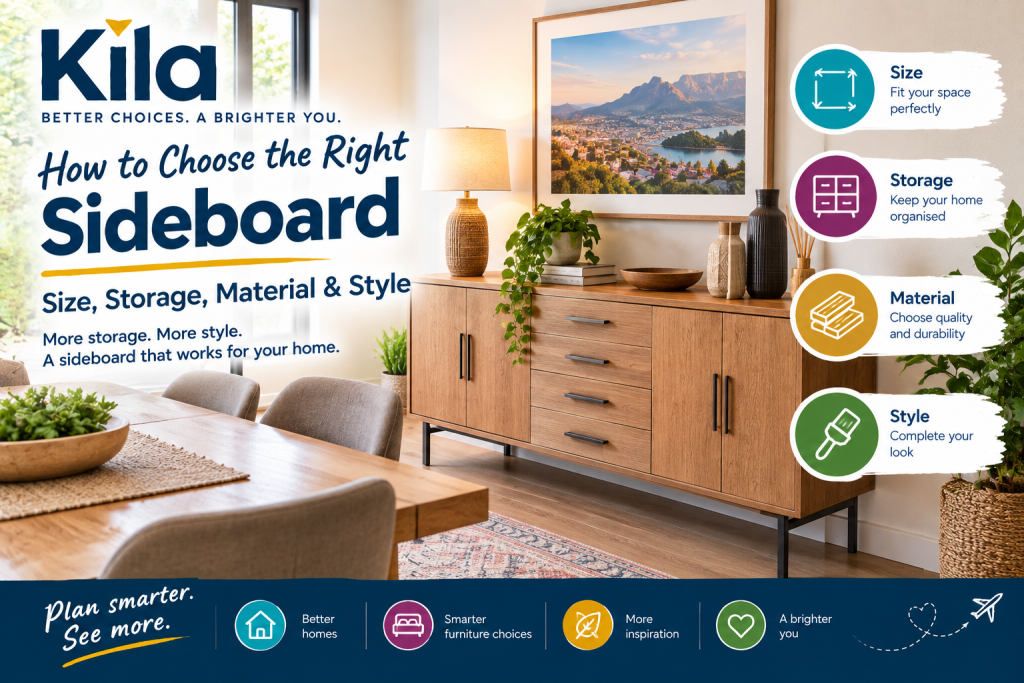
A sideboard can be one of the most useful pieces of furniture in a home. It provides additional storage while also giving you a surface for lamps, photographs, plants, ornaments and other decorative items.
Traditionally associated with dining rooms, modern sideboards can be used in almost any room. A well-chosen unit can work as dining-room storage, a living-room console, an entrance-hall cabinet or even additional bedroom storage.
However, sideboards come in many different sizes, materials, configurations and styles. Choosing the right one requires more than finding a design you like.
You need to consider the available space, storage requirements, dimensions, construction, accessibility and how the sideboard will work with the rest of your furniture.
This guide explains what to look for before buying a sideboard for your home.
1. Decide Where the Sideboard Will Go
The first step is deciding exactly where you intend to use it.
Common locations include:
- Dining rooms
- Living rooms
- Entrance halls
- Bedrooms
- Home offices
- Open-plan living areas
- Hallways
The location will influence the size and type of sideboard you need.
A dining-room sideboard might be used for plates, glasses, tablecloths and serving dishes, while a living-room unit might store books, games, blankets or decorative items.
An entrance-hall sideboard may need to be considerably shallower so that it doesn’t interfere with movement through the room.
Before shopping, measure the available space carefully.
2. Measure More Than the Wall
It is tempting to measure only the width of the wall and then look for a sideboard that fits.
There are several other measurements to consider.
Measure:
- Available width
- Maximum height
- Maximum depth
- Distance from doors
- Distance from windows
- Walking space in front of the furniture
- Position of plugs and switches
- Skirting boards
- Nearby furniture
A sideboard that technically fits may still make a room uncomfortable if people cannot walk past it easily.
Don’t forget the doors
If the sideboard has cupboard doors or drawers, make sure there is enough room for them to open fully.
This is particularly important in narrow dining rooms and hallways.
3. Choose the Right Width
Sideboards are available in everything from compact units to large wall-length designs.
A wider sideboard provides more storage and a larger display surface, but it can also dominate a small room.
Before choosing the widest unit that will fit, consider the proportions of the room.
A sideboard generally looks better when it feels appropriately sized in relation to the surrounding furniture.
For example, a small sideboard against a very large dining-room wall can look lost, while an oversized unit in a compact room can make the space feel crowded.
4. Consider the Depth
Depth is particularly important when buying a sideboard.
A deeper cabinet provides more internal storage but takes up more floor space.
A shallow unit can work well in:
- Hallways
- Narrow dining rooms
- Small apartments
- Compact living rooms
If the sideboard is primarily for display rather than heavy storage, a shallower design may be sufficient.
Measure the available space and compare it with the manufacturer’s actual depth, rather than judging from photographs.
5. Choose the Right Height
Sideboards can range from relatively low furniture to taller storage cabinets.
A low sideboard provides a large surface for decoration and can make a room feel more open.
A taller unit can provide additional storage within a smaller footprint.
Think about what you want to place on top.
If you plan to display:
- Lamps
- Artwork
- Plants
- Photographs
- Decorative objects
Make sure the height leaves the display area visually comfortable.
6. Decide How Much Storage You Need
Think about what you actually want to store before choosing the internal layout.
A dining-room sideboard might hold:
- Plates
- Bowls
- Glasses
- Cutlery
- Serving dishes
- Tablecloths
- Napkins
- Placemats
A living-room sideboard might store:
- Board games
- Books
- Blankets
- Documents
- Decorative items
- Children’s toys
An entrance unit could hold:
- Keys
- Bags
- Shoes
- Accessories
- Small household items
The intended contents should influence the combination of cupboards, drawers and shelves.
7. Cupboards or Drawers?
Different storage arrangements suit different needs.
Cupboards
Cupboards are useful for larger objects.
They can accommodate:
- Dinnerware
- Serving dishes
- Boxes
- Household equipment
- Larger decorative items
Drawers
Drawers are useful for smaller objects that can otherwise become difficult to organise.
They can hold:
- Cutlery
- Documents
- Keys
- Small accessories
- Remote controls
- Stationery
Combination storage
A sideboard with both cupboards and drawers can offer the greatest flexibility.
If you’re unsure what you’ll store in the furniture over time, a combination design can be a sensible option.
8. Think About Adjustable Shelves
Adjustable shelves can make a significant difference to storage flexibility.
If the shelves can be moved, you can create space for objects of different sizes.
This is particularly useful if you intend to store a mixture of:
- Tall bottles
- Dinnerware
- Storage boxes
- Books
- Serving dishes
Check how the shelves are supported and whether they can safely carry the weight you intend to place on them.
9. Consider the Material
Sideboards are available in a wide range of materials and finishes.
Solid wood
Solid wood can provide a traditional and durable appearance.
Different wood species have different characteristics, colours and maintenance requirements.
Solid wood furniture can also be relatively heavy.
MDF and engineered wood
Engineered wood is widely used in modern furniture.
It can provide attractive finishes at a lower price than many solid-wood products.
Pay attention to:
- Panel thickness
- Edge finishing
- Hardware
- Back panels
- Shelf supports
- Overall construction
Metal
Metal can create a modern or industrial appearance.
It is sometimes combined with wood or engineered panels for a mixed-material design.
Glass
Glass may be incorporated into doors or shelving.
It can create a lighter visual appearance but requires more cleaning and care.
10. Think About the Finish
The finish affects both appearance and practicality.
Common options include:
- Natural wood
- Painted finishes
- Gloss
- Matt finishes
- Veneer
- Laminate
A glossy surface can create a modern appearance but may show fingerprints and dust more readily.
A matt or textured finish may be more forgiving in a busy household.
Natural wood finishes can work well with a wide range of décor styles.
11. Match or Coordinate With Your Existing Furniture
Your sideboard doesn’t necessarily have to be an exact match for your dining table or other furniture.
In fact, matching every piece exactly can sometimes make a room look overly coordinated.
Instead, consider whether the pieces share complementary characteristics such as:
- Similar wood tones
- Similar colours
- Similar hardware
- Similar design lines
- Complementary materials
For example, a modern dining table could work with a simple wooden sideboard even if the two pieces aren’t part of the same furniture collection.
If you’re furnishing the dining room, our guide How to Choose the Right Dining Table for Your Home: Size, Shape, Material & Style provides useful advice on coordinating the main furniture in the space.
12. Think About the Surface
The top of a sideboard is effectively another display or working surface.
Think about what you want to put there.
You might use it for:
- A table lamp
- Family photographs
- Artwork
- Plants
- Decorative bowls
- Candles
- Serving items
- A small bar arrangement
Avoid overcrowding the surface.
Leaving some empty space can make the furniture look more attractive and makes it easier to clean.
13. Consider Cable Management if Necessary
Although a sideboard isn’t primarily technology furniture, some people use one to store or support equipment such as lamps or other household items.
If you plan to place anything electrical on the unit, consider the location of nearby electrical outlets.
If the furniture has a solid back, check whether cables can be routed without creating pressure against the wall.
Don’t drill holes into furniture unless you’re certain the modification won’t affect its structural integrity or warranty.
14. Think About Door and Drawer Hardware
Hardware can have a major effect on both appearance and usability.
Check:
- Handles
- Knobs
- Drawer runners
- Hinges
- Soft-close mechanisms
- Door alignment
Smooth-running drawers can make a sideboard considerably more pleasant to use.
Soft-close mechanisms can also reduce noise and help protect the furniture from repeated slamming.
You don’t necessarily need premium hardware, but it is worth checking the quality of the moving parts before buying.
15. Stability Matters
A sideboard should sit firmly on the floor.
Check whether it has:
- Adjustable feet
- A stable base
- Strong internal supports
- Appropriate wall-fixing provisions
This becomes especially important with tall or heavily loaded furniture.
If the manufacturer recommends securing the furniture to the wall, follow those instructions.
Furniture safety is particularly important in homes with young children or pets.
16. Think About Cleaning and Maintenance
Furniture that looks beautiful but requires constant maintenance may not be practical for your home.
Consider how easy the surfaces are to clean.
Ask:
- Does the finish show fingerprints?
- Are there difficult decorative grooves?
- Can spills be wiped away easily?
- Are the handles easy to clean?
- Does the material require special products?
A dining-room sideboard is particularly likely to encounter food and drink spills, so practical maintenance should be part of your decision.
17. Choose a Style That Suits the Room
Sideboards are available in almost every interior style.
Modern
Modern sideboards typically feature clean lines, simple hardware and relatively uncluttered designs.
Scandinavian-inspired
These often combine light wood, simple shapes and a minimalist appearance.
Traditional
Traditional designs may use darker wood, decorative details and more substantial construction.
Industrial
Industrial-style units may combine metal frames with wood-effect panels.
Mid-century inspired
These often feature tapered legs, clean lines and warm wood finishes.
Choose the style that works with your existing room rather than simply following current trends.
18. Consider the Legs and Base
The base design can affect both appearance and practicality.
Raised legs
Raised furniture can create a lighter appearance and makes it easier to clean underneath.
Plinth base
A plinth creates a more substantial appearance and can provide additional visual weight.
Solid base
A solid base can provide stability but may make cleaning underneath more difficult.
If you have a robot or conventional vacuum cleaner, check whether it can reach underneath the unit.
19. Buying a Sideboard Online
Furniture is increasingly purchased online, but there are several things you should check before ordering.
Product dimensions
Check the complete dimensions, including height, width and depth.
Internal dimensions
External dimensions don’t tell you how much usable storage the furniture provides.
Look for internal shelf and drawer dimensions if available.
Material
Confirm what the furniture is actually made from.
A product described as having a “wood finish” may not be solid wood.
Assembly
Check whether the furniture arrives assembled or flat-packed.
Delivery
Large furniture may have additional delivery charges or special delivery requirements.
Returns
Read the returns policy carefully before buying.
Returning large furniture can be considerably more complicated than returning a small household item.
Reviews
Customer reviews can reveal issues such as:
- Difficult assembly
- Poor alignment
- Weak drawer runners
- Colour differences
- Damage during delivery
- Construction quality
Look for recurring comments rather than relying on one review.
20. Flat-Pack Versus Fully Assembled
Flat-pack furniture can offer excellent value and is easier to transport.
However, assembly quality matters.
Before buying, consider:
- How many components need assembly?
- Are instructions included?
- Are all tools supplied?
- Will two people be required?
- Does the unit need wall fixing?
- How long is assembly likely to take?
If you’re not comfortable assembling furniture, include the potential cost of professional assembly when comparing prices.
21. Don’t Ignore Delivery
Large furniture can be considerably more expensive to deliver than smaller household goods.
When comparing online prices, calculate the total delivered cost rather than comparing the product prices alone.
Check:
- Delivery charges
- Delivery areas
- Delivery times
- Room-of-choice delivery if offered
- Assembly options
- What happens if the furniture arrives damaged
This is particularly important in South Africa, where delivery costs can vary significantly depending on the retailer and destination.
22. Consider the Sideboard’s Long-Term Use
Furniture can remain in a home for many years.
Try to avoid choosing a sideboard solely because it matches a temporary décor trend.
A relatively timeless design can remain useful even if you redecorate the room later.
Neutral colours, simple lines and versatile materials can make it easier to reuse the furniture in another room.
For example, a dining-room sideboard could eventually become a living-room storage cabinet or entrance-hall console.
23. Sideboard Versus Console Table
These pieces of furniture can look similar but serve different purposes.
A console table is generally designed as a relatively narrow surface with limited storage.
A sideboard usually provides significantly more enclosed storage.
Choose a console if you mainly need:
- A decorative surface
- A place for keys
- A narrow hallway table
- A place for photographs or lamps
Choose a sideboard if you need:
- Cupboard storage
- Drawers
- Dinnerware storage
- Household storage
- A substantial display surface
If space is limited, a narrow sideboard can sometimes provide the best combination of storage and surface area.
24. Consider Using Baskets and Organisers
Internal storage can become much more useful with simple organisers.
Depending on the design, you could use:
- Small baskets
- Drawer dividers
- Storage boxes
- Document organisers
- Cutlery trays
This allows you to divide large storage areas into smaller, more manageable sections.
25. Avoid Buying More Storage Than You Need
It can be tempting to buy a huge sideboard because additional storage always sounds useful.
But oversized furniture can make a room feel crowded.
Before buying, consider whether you can achieve the same result with a smaller unit.
A well-organised sideboard with efficient storage may be more useful than a large cabinet that simply encourages you to accumulate more belongings.
26. A Simple Sideboard Buying Checklist
Before making your purchase, ask:
Space
- Have I measured the available width, height and depth?
- Will drawers and doors open properly?
- Is there enough walking space?
Storage
- What exactly will I store?
- Do I need cupboards, drawers or both?
- Are shelves adjustable?
Construction
- What material is used?
- Is the furniture stable?
- Are the hinges and drawer runners good quality?
- Does it need to be secured to the wall?
Style
- Does it complement my existing furniture?
- Will the design still work if I redecorate?
- Is the finish practical for my household?
Online shopping
- Have I checked the internal dimensions?
- Is assembly required?
- What does delivery cost?
- What happens if the furniture arrives damaged?
- What is the returns policy?
Final Thoughts
The right sideboard can provide an excellent combination of storage, display space and style.
Start by measuring the room and deciding what you need to store. Then choose the appropriate dimensions, internal layout and materials.
Pay particular attention to depth, because a sideboard that is too deep can quickly make a room feel cramped.
When buying online, look beyond the product photograph. Check the dimensions, materials, construction, delivery arrangements, customer reviews and returns policy before placing your order.
Most importantly, choose furniture based on how you actually use your home.
A good sideboard shouldn’t simply fill an empty wall. It should solve a storage problem while making the room more functional and attractive.