
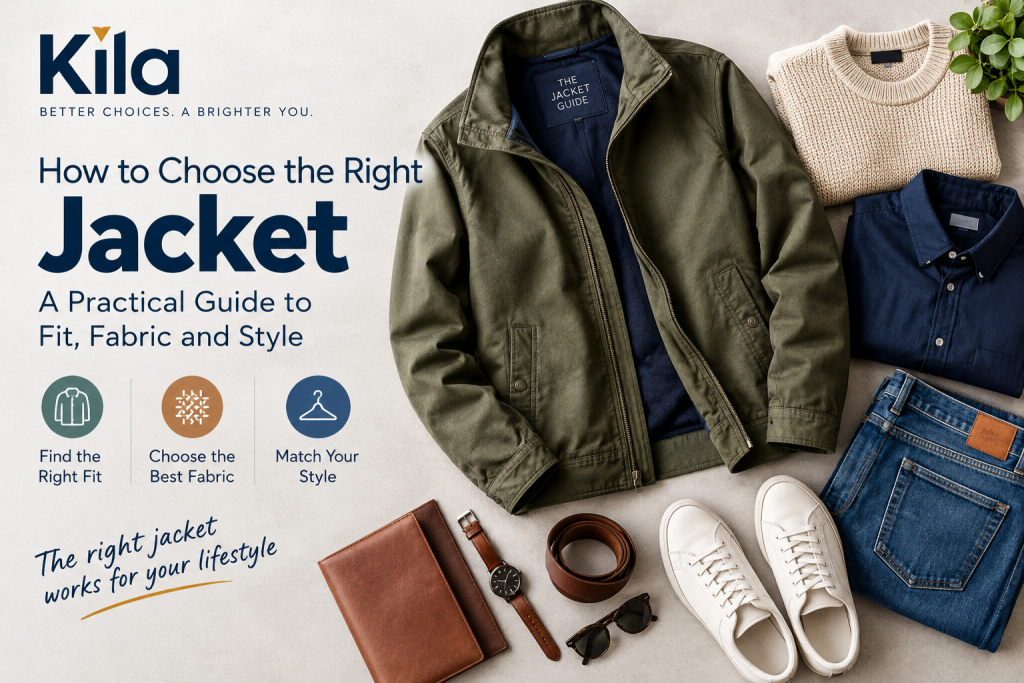
A good jacket can be one of the most useful pieces of clothing in your wardrobe. It can provide warmth, protection from wind and rain, or simply complete an outfit.
But choosing the right jacket isn’t always straightforward. There are countless styles, materials, fits and prices available, and a jacket that works well for one person may be completely unsuitable for another.
The right choice depends on where you live, what you do, how you dress and when you expect to wear it.
This guide explains what to look for when buying a jacket, whether you’re shopping online or in a store.
1. Start With What You Need the Jacket For
The first question isn’t about colour or brand.
It’s:
What do you want the jacket to do?
A jacket might be needed for:
- Everyday wear
- Work
- Travelling
- Cold weather
- Rain
- Outdoor activities
- Smart-casual occasions
- Completing an outfit
- Layering over other clothing
A lightweight jacket for everyday use will have very different requirements from a waterproof jacket for outdoor activities.
Knowing the purpose first makes the rest of the decision much easier.
2. Consider the South African Climate
South Africa has a wide range of climates, so the ideal jacket varies considerably depending on where you live and travel.
In some parts of the country, winters can be cold and dry. Other areas experience relatively mild winters but considerable wind or rain.
This means you don’t necessarily need an extremely heavy winter coat.
For many South Africans, a versatile wardrobe might include:
- A lightweight everyday jacket
- A warmer winter jacket
- A rain-resistant jacket
- A smarter jacket for occasions where casual clothing isn’t appropriate
The best combination depends on your local climate and lifestyle.
3. Choose the Right Jacket Style
There are many different jacket styles, each suited to different situations.
Bomber jackets
Bomber jackets are generally casual and versatile.
They can work well with:
- Jeans
- Chinos
- T-shirts
- Casual shirts
- Sneakers
They are often a useful choice when you want something less formal than a blazer.
Denim jackets
Denim jackets are another casual option.
They can work particularly well with:
- T-shirts
- Jeans
- Chinos
- Casual dresses
- Sneakers or casual shoes
Their relatively simple design makes them useful for everyday wear.
Blazers
A blazer provides a smarter appearance without necessarily being as formal as a full suit jacket.
It can work well for:
- Business-casual clothing
- Dinners
- Events
- Smart-casual occasions
- Travel
A versatile neutral-coloured blazer can be a useful addition to a wardrobe.
Parkas
Parkas are generally designed for colder weather and often provide more coverage than shorter jackets.
Depending on their construction, they may offer insulation and protection from wind or rain.
Puffer jackets
Puffer jackets use insulation contained within stitched sections or chambers.
They can provide considerable warmth without necessarily being as heavy as some traditional coats.
Waterproof and rain jackets
These are designed primarily to protect against wet weather.
They may be lightweight and easy to pack, making them particularly useful for travel.
4. Think About the Fit
A jacket can look completely different depending on how well it fits.
Check:
- Shoulder position
- Sleeve length
- Chest
- Waist
- Jacket length
- Arm movement
- Collar
- Overall shape
The shoulder area is particularly important.
If the shoulder seams sit far beyond your shoulders, the jacket may look too large.
If they sit significantly inside your shoulders, the jacket may be too small.
5. Make Sure You Can Move Comfortably
Don’t judge a jacket only while standing still.
Move your arms.
Raise them.
Reach forward.
Sit down.
A jacket that looks perfect but restricts movement may quickly become uncomfortable.
This is particularly important for:
- Travel jackets
- Outdoor jackets
- Workwear
- Winter jackets worn over layers
If you are buying online, check the return policy before ordering so that you can return an unsuitable size.
6. Think About What You’ll Wear Underneath
One of the most common jacket-buying mistakes is choosing a size based on a T-shirt when the jacket will actually be worn over a shirt or sweater.
Think about your normal layering.
If you intend to wear:
T-shirt → jacket
you may need a different fit from:
shirt → sweater → jacket
A winter jacket should generally provide enough room for the layers you expect to wear underneath without becoming excessively loose.
7. Check the Sleeve Length
Sleeves that are too short can make even a good jacket look poorly fitted.
Sleeves that are excessively long can interfere with your hands and make the jacket uncomfortable.
The ideal sleeve length depends partly on the style.
For a casual jacket, there can be more flexibility.
For a smarter jacket, sleeve length tends to be more noticeable.
8. Choose the Right Material
The fabric has a major effect on how a jacket looks, feels and performs.
Common materials include:
- Cotton
- Denim
- Wool
- Polyester
- Nylon
- Leather
- Suede
- Fleece
- Synthetic insulated fabrics
- Blended materials
There isn’t one universally best material.
The right choice depends on what you expect from the jacket.
9. Cotton Jackets
Cotton can be comfortable, breathable and relatively versatile.
It is commonly used for:
- Casual jackets
- Overshirts
- Lightweight jackets
- Field jackets
However, cotton can absorb water, so it isn’t necessarily the best choice when rain protection is important.
Some cotton jackets are treated to improve their resistance to moisture.
10. Wool Jackets
Wool is valued for its warmth and appearance.
It is particularly common in:
- Smart jackets
- Coats
- Winter clothing
- Blazers
Wool can provide a more traditional or refined appearance, although it generally requires more care than some synthetic materials.
11. Synthetic Fabrics
Polyester and nylon are widely used in modern jackets.
Depending on their construction, they can provide:
- Durability
- Water resistance
- Wind resistance
- Lightweight construction
- Easy maintenance
Synthetic fabrics are particularly common in outdoor and travel jackets.
12. Leather Jackets
Leather jackets have remained popular for decades and can become a distinctive part of a wardrobe.
When buying leather, consider:
- Type of leather
- Thickness
- Finish
- Stitching
- Lining
- Hardware
- Fit
Leather jackets can be expensive, so construction quality is particularly important.
Also consider whether you are prepared to maintain the jacket properly.
13. Suede Jackets
Suede has a softer appearance than conventional smooth leather.
It can look excellent as part of a smart-casual wardrobe.
However, suede generally requires more care and can be less suitable for wet conditions.
If you live in an area where rain is common, consider how practical the material will be for your lifestyle.
14. Check Weather Protection
If the jacket is intended for outdoor use, investigate its weather protection rather than assuming it is waterproof.
There is a difference between:
Water-resistant
and
Waterproof
A water-resistant jacket may handle light rain or brief exposure to moisture.
A waterproof jacket is designed to provide a substantially higher level of protection.
Look at the manufacturer’s specifications rather than relying solely on marketing language.
15. Consider Wind Protection
Wind can make a relatively mild day feel considerably colder.
If you’re buying a jacket for outdoor use, check whether it is designed to reduce wind penetration.
Features that may help include:
- Adjustable cuffs
- High collars
- Drawcords
- Elasticated hems
- Wind-resistant fabric
- Storm flaps
These details can make a noticeable difference in exposed conditions.
16. Look at the Insulation
For colder weather, the jacket’s insulation becomes important.
Common options include:
- Down
- Synthetic insulation
- Fleece
- Wool
- Other insulating materials
Down can provide excellent warmth for its weight, but it requires appropriate care and may perform differently when wet.
Synthetic insulation can be more practical in some wet-weather conditions.
For ordinary South African winter use, you may not need an extremely heavily insulated jacket unless you live in or travel to particularly cold areas.
17. Pockets Matter More Than You Think
Pockets are one of those features that you may not appreciate until you don’t have enough of them.
Consider whether you need space for:
- Phone
- Wallet
- Keys
- Sunglasses
- Travel documents
- Small accessories
Also look at whether the pockets have:
- Zips
- Buttons
- Flaps
- Internal compartments
Secure zipped pockets can be particularly useful when travelling.
18. Check the Zip and Hardware
The quality of the zip, buttons and other hardware can affect how long a jacket lasts.
Check:
- Main zip
- Pocket zips
- Buttons
- Snaps
- Buckles
- Drawcords
A jacket may use excellent fabric but still be disappointing if the hardware is poorly made.
When shopping online, photographs of the hardware and customer reviews can provide useful clues.
19. Choose a Colour You Will Actually Wear
A jacket can look fantastic in a product photograph and still spend most of its life in your cupboard if the colour doesn’t work with your wardrobe.
Versatile colours include:
- Black
- Navy
- Charcoal
- Grey
- Beige
- Khaki
- Brown
A neutral jacket can be easier to combine with multiple outfits.
Brighter colours can also work well, particularly when the jacket is intended to be a statement piece.
The important thing is to choose a colour that fits your existing clothing rather than buying something simply because it looks attractive on the website.
20. Consider Jacket Length
Jacket length affects both appearance and practicality.
Short jackets can provide a more casual appearance and are often easy to wear with jeans and trousers.
Longer jackets can provide greater coverage and may be more appropriate for cold or wet conditions.
Consider:
- Your height
- What trousers or skirts you wear
- Where the jacket sits
- How much protection you need
- Whether you will be sitting frequently while wearing it
21. Think About Travel
A jacket can be one of the most useful pieces of clothing when travelling.
A good travel jacket may provide:
- Weather protection
- Secure pockets
- Lightweight construction
- Easy packing
- Versatility
- Extra storage
If you are travelling internationally, consider choosing something that works with several outfits rather than taking a different jacket for every occasion.
22. Consider Care Requirements
Before buying an expensive jacket, find out how it needs to be cleaned.
Some jackets can simply be machine washed.
Others may require:
- Dry cleaning
- Specialist leather cleaning
- Hand washing
- Special detergents
- Careful drying
A jacket that requires complicated maintenance may not be suitable for someone who wants easy-care clothing.
23. Buying a Jacket Online
Buying clothing online can be convenient, but jackets require particular attention to sizing.
Before ordering, check:
- Size chart
- Chest measurement
- Shoulder measurement
- Sleeve length
- Jacket length
- Fit description
- Material
- Return policy
Don’t assume that a medium from one brand will fit exactly like a medium from another.
If measurements are provided, compare them with a jacket you already own that fits well.
24. Look at Customer Reviews
Reviews can provide information that isn’t obvious from product photographs.
Look for comments about:
- Fit
- Sizing accuracy
- Material quality
- Warmth
- Comfort
- Colour
- Durability
- Waterproofing
- Quality of zips and buttons
Pay particular attention to repeated comments.
One customer saying a jacket runs small is useful.
If dozens of customers say it runs small, it is much more significant.
25. Don’t Confuse Fashion With Function
A fashionable jacket isn’t necessarily a practical jacket.
Before buying, decide which matters most for the particular jacket:
Appearance, function, or a balance of both?
For a fashion jacket, appearance may be the main consideration.
For a rain jacket, protection should probably be more important.
For an everyday jacket, a balance of appearance, comfort and practicality may make the most sense.
26. How Much Should You Spend?
There is no single correct price for a jacket.
Consider:
- How frequently you will wear it
- Expected lifespan
- Material
- Construction
- Brand
- Features
- Your budget
A jacket that you wear several times a week can justify spending more than a jacket that will only be worn occasionally.
Rather than asking whether a jacket is expensive or cheap, consider whether it provides good value for the way you intend to use it.
27. Common Jacket-Buying Mistakes
Buying the wrong size
Always check measurements rather than relying only on your usual clothing size.
Forgetting about layers
Make sure there is enough room for the clothing you expect to wear underneath.
Choosing purely on appearance
Consider comfort, construction and practical requirements as well.
Assuming water-resistant means waterproof
Check the manufacturer’s specifications.
Ignoring the care instructions
Some materials require considerably more maintenance than others.
Buying a colour that doesn’t match your wardrobe
A versatile colour may provide considerably more value.
Ignoring the return policy
This is particularly important when buying clothing online.
Choosing the cheapest jacket
Price alone doesn’t tell you how durable or suitable the jacket will be.
28. A Simple Jacket-Buying Checklist
Before buying, ask:
- What will I use the jacket for?
- Is the style appropriate?
- Is the fit correct?
- Can I move comfortably?
- Will I wear layers underneath?
- Is the material suitable?
- Do I need water or wind protection?
- Is the jacket warm enough?
- Are the pockets useful?
- Are the zips and hardware good quality?
- Does the colour work with my wardrobe?
- Is the jacket easy to care for?
- Have I checked the size chart?
- Have I read recent reviews?
- Can I return it if the fit is wrong?
Final Thoughts
The right jacket should do more than look good on a model or in a product photograph.
It should suit the way you live, the climate you experience and the clothing you already own.
Start by deciding what you need the jacket to do. Then consider the style, fit, material, weather protection, comfort and overall quality.
If you’re shopping online, pay particular attention to measurements and return policies. Product photographs can help you judge appearance, but specifications and customer reviews can tell you much more about how the jacket is likely to perform in everyday use.
A well-chosen jacket can become one of the most useful pieces in your wardrobe, so it is worth taking a little time to make the right choice.