
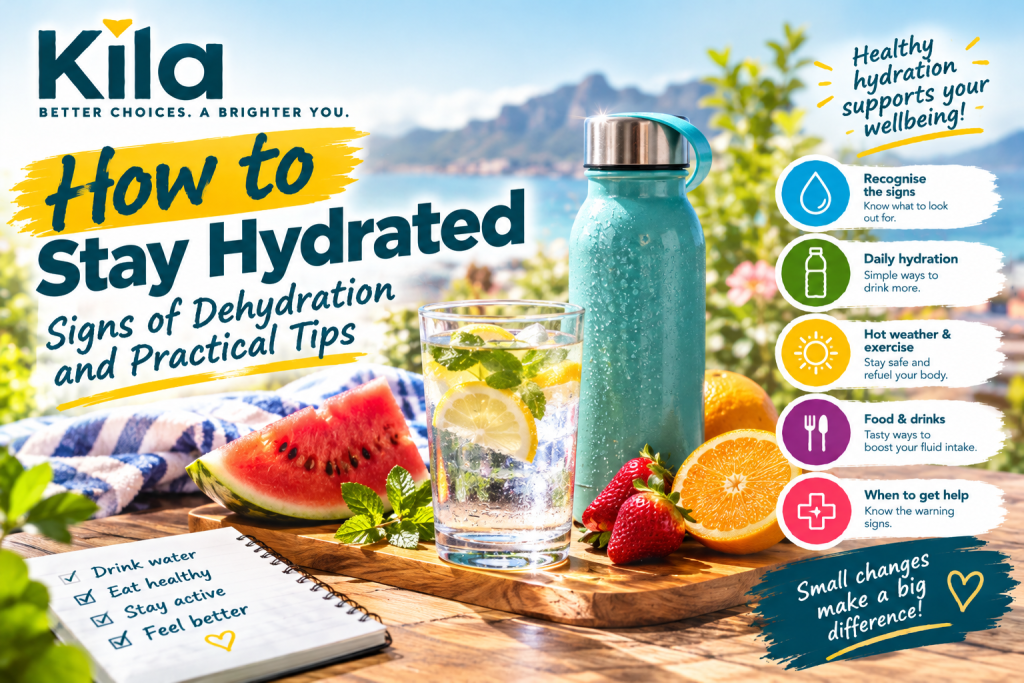
Staying hydrated is one of the simplest ways to support your everyday health, yet it is easy to overlook how much fluid you drink during a busy day.
You might spend hours at work, run errands, exercise or work outdoors without stopping for water. During hot weather, your body can lose additional fluid through sweating. Illnesses that cause vomiting or diarrhoea can increase fluid losses even further.
The good news is that maintaining healthy hydration habits does not usually require expensive drinks, powders or supplements. For most people, drinking water regularly and paying attention to their body’s needs is a sensible starting point.
In this guide, we explain how to stay hydrated, recognise common signs of dehydration, understand how your fluid needs change and know when to seek medical help.
Why is hydration important?
Water is essential for normal body function. It helps regulate body temperature, transport nutrients, support digestion and maintain normal circulation.
Your body continually loses fluid through urine, sweat, breathing and bowel movements. You need to replace these losses to maintain an appropriate fluid balance.
When you lose more fluid than you take in, dehydration can develop.
Mild dehydration may cause thirst, tiredness or a headache. More serious dehydration can affect circulation and become a medical emergency.
Hydration is particularly important when you are:
- Spending time outdoors in hot weather.
- Exercising or doing physically demanding work.
- Sweating more than usual.
- Recovering from an illness.
- Experiencing vomiting or diarrhoea.
- Caring for an older adult who may not notice thirst as readily.
Good hydration habits are useful throughout the year, not only during summer.
How much water should you drink each day?
There is no single daily water target that suits everyone.
Your fluid requirements depend on factors such as body size, activity level, climate, diet, health and whether you are pregnant or breastfeeding.
Some public health guidance suggests around six to eight cups or glasses of fluid daily as a general starting point for many people. This is not a strict limit or a universal prescription. You may need more in hot weather, during prolonged physical activity or when you are ill.
It is also important to distinguish between plain water and total fluid intake. Water is an excellent choice, but other drinks and the moisture contained in foods contribute to your overall intake.
A practical approach is to:
- Drink regularly throughout the day.
- Have water with meals.
- Keep water accessible at work or when travelling.
- Drink more when you are sweating heavily, as appropriate.
- Pay attention to thirst and other signs that you may need more fluid.
People with certain medical conditions, including some heart and kidney conditions, may be advised to limit their fluid intake. If you have been given specific fluid instructions by your healthcare professional, follow those rather than general online advice.
What are the signs of dehydration?
Recognising dehydration early can help you respond before it becomes more serious.
Common signs in adults include:
- Feeling unusually thirsty.
- Having a dry mouth, lips or tongue.
- Passing urine less frequently than usual.
- Having darker yellow urine than is typical for you.
- Feeling tired or weak.
- Experiencing a headache.
- Feeling dizzy or lightheaded, particularly when standing up.
No single symptom proves that you are dehydrated. Urine colour, for example, can be affected by foods, vitamins and medicines.
However, if you notice several symptoms together, especially after sweating heavily or being ill, consider whether you may be losing more fluid than you are replacing.
If symptoms are significant, persistent or worsening, seek medical advice.
What causes dehydration?
Dehydration can occur for several reasons.
Not drinking enough fluid
You may simply forget to drink during a busy day, have limited access to water or avoid drinking because you do not want to use the toilet frequently.
Older adults and people who depend on others for drinks may be particularly vulnerable.
Hot weather and excessive sweating
South African summers can bring high temperatures, particularly in inland areas. Spending extended periods in the sun or working in hot environments can increase fluid losses.
Exercise, gardening, outdoor events and physically demanding jobs can also increase the amount you sweat.
Exercise and physical activity
Your body loses fluid through sweating during exercise. The amount varies depending on the activity, duration, intensity, temperature and individual physiology.
Long or strenuous sessions may require more attention to fluid replacement than light activities.
Vomiting and diarrhoea
Illnesses that cause vomiting or diarrhoea can lead to significant losses of water and electrolytes.
In these circumstances, simply drinking a large amount of plain water may not always be sufficient. An appropriate oral rehydration solution may be needed to replace lost fluid and salts.
Fever and other illnesses
A fever and some illnesses can increase fluid requirements or make it harder to drink enough.
Certain medicines, including diuretics, can also increase fluid loss. If you regularly experience dehydration symptoms, discuss your medicines and health circumstances with a healthcare professional rather than changing prescribed treatment yourself.
10 practical ways to stay hydrated
1. Start your day with a drink
Having a glass of water when you wake up is an easy way to begin your daily fluid intake.
You do not need to drink a large amount immediately. A normal glass is a reasonable starting point if it suits your needs.
Build the habit around something you already do, such as having breakfast or making your morning coffee.
2. Keep a reusable water bottle nearby
One of the simplest ways to drink more regularly is to make water easy to access.
Keep a bottle on your desk, in your bag or nearby when you are working around the house.
If you spend time outdoors, carry enough water for your planned activity and consider whether you will have access to refills.
A reusable bottle can also make it easier to notice whether you are drinking regularly without needing to count every sip.
3. Drink with meals
Having water with breakfast, lunch and dinner provides regular opportunities to take in fluid.
You can also drink with snacks or whenever you feel thirsty.
If you struggle to remember to drink, linking it to meals and other daily routines may be easier than following a complicated hydration schedule.
4. Drink more thoughtfully in hot weather
When temperatures rise, your body may lose more fluid through sweating.
During hot weather:
- Keep water accessible.
- Take regular breaks in the shade or in a cool indoor space.
- Avoid prolonged strenuous activity during the hottest part of the day when possible.
- Wear suitable clothing for the conditions.
- Pay attention to thirst, sweating and how you feel.
If you work outdoors, plan access to drinking water and rest breaks before beginning demanding tasks.
Do not rely on thirst alone during prolonged strenuous activity in hot conditions, particularly when caring for vulnerable people.
5. Adjust your approach to exercise
For ordinary, shorter exercise sessions, water is often sufficient for replacing fluid losses.
For prolonged or intense activity, especially in hot conditions, your needs may be different. You may need to pay attention to both fluid and electrolyte replacement.
Avoid forcing yourself to drink excessive quantities of water. Drinking too much too quickly can also be dangerous.
For long endurance events or demanding physical work, consider advice from a qualified healthcare or sports-nutrition professional.
6. Include foods with a high water content
Drinks are not the only source of fluid.
Many everyday foods contain considerable amounts of water, including:
- Watermelon.
- Oranges.
- Cucumber.
- Tomatoes.
- Lettuce.
- Strawberries.
- Soups and broths.
These foods can contribute to overall fluid intake while providing other nutrients.
You do not need to follow a special diet to benefit. Include a variety of foods that fit your preferences, budget and nutritional needs.
7. Make plain water more appealing
If you find plain water boring, a few simple changes may help.
Try:
- Chilled water.
- Water with lemon or lime slices.
- Fresh mint leaves.
- Water infused with slices of cucumber or fruit.
- Keeping a jug of cold water in the fridge.
These are optional ways to make drinking water more enjoyable. You do not need special flavouring products or hydration powders for routine hydration.
8. Be mindful of alcohol
Alcohol can increase fluid loss and may contribute to dehydration, particularly when combined with hot weather, physical activity or illness.
If you drink alcohol, avoid treating it as a way to hydrate. Water is a better choice for replacing everyday fluid losses.
If you are already dehydrated or unwell, avoid alcohol and focus on appropriate fluid replacement.
9. Do not assume sports drinks are always necessary
Sports drinks are marketed for exercise, but they are not essential for everyone.
For many people doing routine daily activities or shorter exercise sessions, water is sufficient.
Sports drinks may have a role in some prolonged or intense exercise situations, but products differ in their sugar, electrolyte and calorie content.
If you are exercising for a long time in hot conditions, consider your activity and fluid losses rather than choosing a drink solely because it carries a sports or performance label.
10. Build reminders into your routine
If you frequently forget to drink, small reminders can help.
You could:
- Keep a bottle visible.
- Have water during regular breaks.
- Drink with meals.
- Refill your bottle at set points during the day.
- Use a reminder on your phone if you find it helpful.
The objective is to build a sustainable habit, not to become anxious about tracking every millilitre.
Is clear urine always a sign of good hydration?
Not necessarily.
Urine colour can provide a rough indication of hydration, but it is not a perfect measure.
Pale yellow urine is often consistent with adequate hydration for many people. Darker urine may indicate that you need more fluid, but colour can also be affected by certain foods, supplements and medicines.
Very clear urine throughout the day is not a reason to keep drinking more and more water. Excessive fluid intake can be harmful.
Use urine colour as one clue alongside thirst, how frequently you urinate, your activity level and how you feel.
If your urine changes unexpectedly, you notice blood, or you experience persistent excessive thirst or frequent urination, seek medical advice.
Water, sports drinks and oral rehydration solutions: What’s the difference?
These products serve different purposes.
Plain water
Water is an excellent everyday choice for most people. It contains no added sugar and is suitable for routine hydration and many ordinary activities.
Sports drinks
Sports drinks generally contain water, electrolytes and varying amounts of carbohydrates or sugar. They are designed for certain exercise situations, particularly prolonged or strenuous activity.
They are not automatically necessary for normal daily hydration.
Oral rehydration solutions
Oral rehydration solutions are formulated to help replace fluid and electrolytes lost through conditions such as diarrhoea and vomiting.
They are different from ordinary sports drinks. If you or someone you care for has significant fluid loss from illness, ask a pharmacist or healthcare professional which rehydration product is appropriate.
Follow the product instructions carefully. Seek medical attention when symptoms are severe or the person cannot keep fluids down.
What should you do if you think you are dehydrated?
If you are an otherwise healthy adult with mild symptoms and can drink normally, start by taking fluids.
Drink water and continue replacing fluid gradually. If you have been vomiting or have diarrhoea, an appropriate oral rehydration solution may be more suitable than water alone.
If nausea makes drinking difficult, small, frequent sips may be easier to tolerate.
Avoid strenuous activity and move to a cooler environment if heat or sweating may have contributed.
Do not rely on home treatment if symptoms are severe, worsening or accompanied by warning signs.
When to seek urgent medical help
Seek urgent medical assessment if you or someone else has:
- Persistent dizziness when standing.
- Very little urine or markedly reduced urination.
- A rapid heartbeat or breathing.
- Significant weakness or worsening symptoms.
- Repeated vomiting or an inability to keep fluids down.
- Signs of dehydration that do not improve with appropriate fluid replacement.
Confusion, difficulty waking, collapse, seizures or signs of shock require emergency assistance.
Dehydration can become dangerous, particularly in babies, young children, older adults and people with underlying health conditions.
Do not delay seeking help for a vulnerable person because you are trying to manage the problem at home.
Who is more vulnerable to dehydration?
Although anyone can become dehydrated, some people may be at greater risk.
Older adults
The sense of thirst may become less reliable with age. Mobility difficulties, certain medicines and dependence on caregivers can also make it harder to maintain fluid intake.
Regularly offering drinks and making them easy to reach can help.
Babies and young children
Children can lose fluid quickly, particularly when they have vomiting, diarrhoea or a fever.
Warning signs may include fewer wet nappies, a dry mouth, unusual drowsiness or difficulty feeding. Seek medical advice promptly if a child may be dehydrated.
People with certain health conditions
Some health conditions can affect fluid balance or increase fluid losses. Medicines may also influence how much fluid your body loses.
If you have a condition affecting your kidneys, heart or blood sugar, ask your healthcare professional about an appropriate hydration plan.
People who work or exercise in hot conditions
Outdoor workers, athletes and people doing strenuous physical activity may lose significant amounts of fluid through sweat.
Planning breaks, having access to drinking water and managing exposure to heat are important precautions.
Common hydration mistakes to avoid
Waiting until you feel extremely thirsty
Thirst is useful, but you should not ignore it, especially during prolonged activity or hot weather.
Make drinking regularly part of your routine.
Drinking too much water too quickly
More water is not always better. Excessive intake over a short period can dangerously dilute the sodium in your blood.
Drink according to your needs and activity, and avoid forcing large quantities of water.
Assuming every headache means dehydration
A headache can have many causes, including stress, illness, sleep disruption and other health issues.
If you have a headache, consider your overall symptoms and circumstances. Seek medical advice for severe, persistent or unusual headaches.
Using sports drinks for every activity
Sports drinks are not required for every walk, workout or busy day.
For many routine activities, water is sufficient.
Ignoring repeated dehydration symptoms
Frequent thirst, persistent dizziness or ongoing changes in urination may indicate an underlying health issue.
If symptoms keep returning despite reasonable fluid intake, arrange a medical assessment.
Frequently asked questions about hydration
How much water should I drink daily?
Fluid needs vary. Around six to eight cups or glasses of fluid per day is a general guide used by some public health authorities, but your requirements may be higher or lower. Hot weather, exercise, illness, pregnancy and certain medical conditions can change your needs.
Does tea or coffee count towards fluid intake?
Yes, tea and coffee contribute fluid. However, caffeine can affect people differently, and excessive caffeine may cause unwanted effects. Water remains a straightforward everyday option.
Can you become dehydrated in winter?
Yes. Dehydration can happen in any season, especially if you are ill, exercising, sweating or not drinking enough.
Do I need electrolyte supplements?
Not necessarily. Most people do not need special electrolyte products for routine daily hydration. They may be useful in particular circumstances, including significant fluid loss or prolonged strenuous activity. Ask a healthcare professional or pharmacist if you are unsure.
What is the best drink for dehydration?
The appropriate drink depends on the cause and severity. Water may be sufficient for mild fluid loss in an otherwise healthy adult. Vomiting or diarrhoea can require an oral rehydration solution. Severe dehydration needs urgent medical assessment and may require treatment in a healthcare facility.
Can dehydration cause tiredness?
Dehydration can contribute to tiredness, weakness and dizziness. However, these symptoms have many possible causes. Persistent fatigue should not automatically be attributed to dehydration.
Final thoughts
Staying hydrated is a practical daily habit that supports normal body function.
For most people, the basics are straightforward: drink water regularly, keep fluids accessible, pay attention to thirst and adjust your habits when you are exercising, sweating or spending time in hot weather.
You do not need expensive products to maintain everyday hydration, and you should not assume that drinking excessive amounts of water is beneficial.
Recognising the signs of dehydration is equally important. If symptoms are severe, persistent or associated with confusion, collapse or an inability to keep fluids down, seek appropriate medical help.
A consistent, sensible approach to hydration can help you look after your wellbeing without making it unnecessarily complicated.
Related Kila reading
If you are looking to build healthier everyday habits, Kila’s guide to How to Sleep Better: Practical Habits for a Better Night’s Rest explores sleep routines and lifestyle choices that support wellbeing.
For readers considering products marketed for health and wellbeing, How to Choose Health & Wellness Products explains what to consider before buying. If you are comparing supplements, How to Compare Supplements by Cost Per Serving offers a practical way to evaluate value rather than relying on pack price alone.
These guides are intended to complement this article; supplements and specialist hydration products are not necessary for everyone.
Sources and further reading
- City of Cape Town: Gastroenteritis — dehydration, fluid replacement and warning signs.
- National Health Service (NHS): Dehydration — symptoms, causes and when to seek help.
- National Health Service (NHS): Water, drinks and hydration — everyday fluid intake and hydration.
- City of Ekurhuleni: Avoid Dehydration, Drink Water — local advice on hydration and hot weather.
Medical disclaimer: This article provides general educational information and is not a substitute for individual medical advice. Fluid requirements and treatment for dehydration can vary, especially for children, older adults and people with underlying medical conditions.