
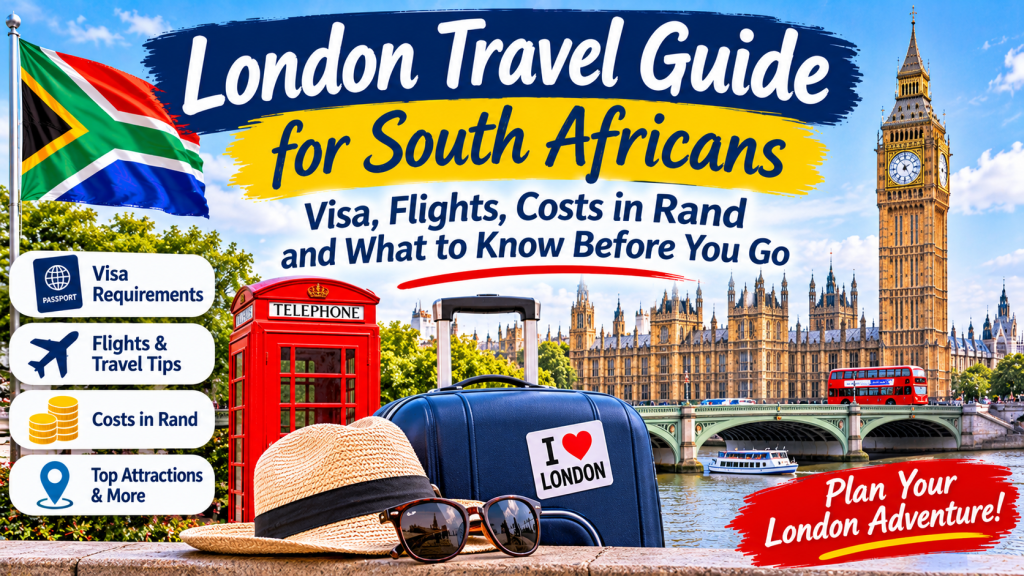
London is the city many South Africans picture first when they think of an overseas trip. It has direct flights from Johannesburg, familiar language, world-class museums that cost nothing to enter and enough history, food and theatre to fill a week and then some. It also has a reputation for being expensive, and for good reason, so a little planning goes a long way.
This guide covers what South Africans need to know before they go: the visa, the flights, what a trip costs in rand, where to stay, how to get around and what to see. For the paperwork, read our companion guide to the UK visa for South Africans.
Quick answers
- Visa: Yes. South Africans need a UK Standard Visitor visa, which costs £135 (about R3,100). See our UK visa guide.
- Flights: British Airways and Virgin Atlantic fly direct from Johannesburg to Heathrow in about 11 hours. Typical return fares are roughly R11,000 to R18,000.
- Budget: About R1,500 to R2,650 a day per person on the ground for a budget trip, or R3,100 to R5,500 mid-range, assuming two people share a room.
- Getting around: Tap a contactless bank card or phone on the Tube and buses. Travel in Zones 1 and 2 is capped at £8.90 a day.
- Best value tip: Many of the best museums are free, including the British Museum, the National Gallery and the Natural History Museum.
- Time difference: South Africa is one hour ahead of London in summer and two hours ahead in winter.
Do South Africans need a visa for London?
Yes. South African passport holders need a UK visa for tourism, and the UK’s ETA scheme doesn’t apply to South Africans. You apply online, attend a biometrics appointment and wait about 15 working days for a decision, so apply four to eight weeks before you travel and keep flights refundable until you are approved. Our UK visa guide for South Africans covers the fee, documents and process in detail.
A UK visa does not cover mainland Europe, and a Schengen visa does not cover the UK. If you plan to add Paris or Amsterdam, you need both. See our Schengen visa guide, and check which other destinations are easier in our list of visa-free countries for South Africans.
Flights from South Africa to London
London is one of the easiest overseas destinations to reach from South Africa because it has direct flights. British Airways and Virgin Atlantic both fly nonstop between Johannesburg and London Heathrow, and several other airlines connect through hubs for lower fares.
| Detail | What to know |
|---|---|
| Direct airlines from Johannesburg | British Airways and Virgin Atlantic, with daily departures |
| Flight time | About 11 hours, usually overnight |
| Airport | London Heathrow (LHR) |
| Typical return fare | Roughly R11,000 to R18,000. Direct flights are often at the higher end |
| Cheapest time | February has been the cheapest month on average. Compare dates, as fares vary by season and demand |
| Most expensive time | December and the northern summer holidays |
| Cheaper alternatives | One-stop flights through the Gulf, Europe or East Africa can cost less but take much longer |
For help choosing between direct and connecting flights, see how to choose the right flight and our tips for planning a long-haul flight from South Africa. Remember that London is one of the best-served destinations from both Johannesburg and Cape Town, so compare departure airports too.
Is London expensive? What a trip costs in rand
London is one of Europe’s priciest cities, mostly because of accommodation. The figures below use a rough conversion of £1 ≈ R23, assume two people share a hotel room and exclude flights and the visa. The pound moves against the rand, so check the current rate before you budget.
Daily costs on the ground
| Travel style | Per person per day (pounds) | Per person per day (rand) |
|---|---|---|
| Budget (hostel dorm or half a budget-hotel room, cheap eats, free sights) | £65–£115 | about R1,500–R2,650 |
| Mid-range (three-star hotel, restaurant meals, a few paid attractions) | £135–£240 | about R3,100–R5,500 |
Accommodation drives the cost. Hostel dorm beds in Zones 1 and 2 typically cost £35 to £70 a night, budget hotel rooms in Zones 2 and 3 about £70 to £120, and three-star hotels in central London roughly £90 to £180. A Zone 2 hotel with good Tube access is often 40% to 60% cheaper than a similar one in Zone 1.
Sample trip budgets per person
| Trip | Flights (return) | Visa | On the ground | Estimated total |
|---|---|---|---|---|
| 7 days, budget | R11,000–R18,000 | about R3,100 | R10,500–R18,500 | about R24,500–R39,500 |
| 7 days, mid-range | R11,000–R18,000 | about R3,100 | R21,700–R38,600 | about R36,000–R60,000 |
These totals leave out travel insurance, shopping and getting to the airport in South Africa. Travel insurance is worth having, because UK medical care can cost visitors. See what to check before you buy travel insurance.
Ways to spend less
- Use the free museums. The British Museum, National Gallery, Tate Modern, the Natural History Museum and the V&A are free to enter, though special exhibitions cost extra.
- Stay in Zone 2. Areas such as Bethnal Green, Clapham and Stratford have good transport links and cheaper hotels.
- Eat smart. Lunch deals, supermarket meal deals, markets and pub lunches cost far less than evening restaurants.
- Walk and use buses. A bus journey costs a flat £1.75, and the bus daily cap is £5.25.
- Book paid attractions online and ahead. Many offer cheaper advance tickets and timed entry.
- Travel off-peak. Winter and shoulder seasons are cheaper for flights and hotels.
Where to stay in London
For a first visit, base yourself near a Tube or Elizabeth line station and pick an area that suits your plans. Our hotel booking guide explains how to compare hotels, rooms and locations.
| Area | Best for | Notes |
|---|---|---|
| South Kensington and Kensington | Museums, parks, first-time visitors | Elegant and well connected, with higher prices |
| Covent Garden, Soho and the West End | Theatre, shopping, nightlife | Central and lively, but expensive and noisy |
| Bloomsbury and King’s Cross | British Museum, trains and day trips | Good transport and a wide range of hotels |
| Southwark and London Bridge | Borough Market, Tate Modern, the river | A good mix of food and sights |
| Paddington | Airport links and Hyde Park | Convenient for arrival and departure |
| Zone 2 (Shoreditch, Bethnal Green, Clapham) | Better value, local atmosphere | A short Tube ride from the centre |
Getting around London
London’s public transport is excellent and easy to use. You don’t need to buy a ticket in advance.
- Tap in with contactless. Use a contactless bank card or phone on the Tube, Elizabeth line, DLR, Overground and buses. Each traveller needs their own card. Check that your South African card works abroad and ask your bank about foreign transaction fees.
- Know the caps. Daily travel in Zones 1 and 2 is capped at £8.90, and a weekly cap of £44.70 applies Monday to Sunday. After the cap, extra journeys that day are free. Buses cost £1.75 a ride, with a daily bus cap of £5.25.
- Tap in and out on the Tube and trains, but only tap in on buses.
- Use the same card all day. The cap only works if you use the same card or device for every journey.
From Heathrow into the city
| Option | Approximate cost | Approximate time |
|---|---|---|
| Piccadilly line (Tube) | about £5.90 | about 50 minutes to central London |
| Elizabeth line | about £15.50 to Zone 1 at all hours since March 2026 | about 30 minutes to the centre |
| Heathrow Express to Paddington | about £26, less if booked well in advance | about 15 minutes |
The cheapest option is the Piccadilly line. If you arrive after an overnight flight with heavy luggage, the Elizabeth line is a good middle ground. Fares change, so check Transport for London’s website before you travel.
What to see and do
- Westminster: Big Ben, the Houses of Parliament, Westminster Abbey and a walk through St James’s Park to Buckingham Palace.
- The museums: The British Museum, Natural History Museum, V&A and National Gallery are free. Book timed entry where required.
- The Tower of London and Tower Bridge: The medieval fortress and the Crown Jewels. Book ahead in busy periods.
- The South Bank: A walk along the Thames from the London Eye to Tate Modern, with Borough Market nearby for food.
- West End theatre: Book tickets in advance, or look for same-day deals.
- Parks and neighbourhoods: Hyde Park, Regent’s Park, Camden, Notting Hill, Greenwich and Richmond.
- Day trips by train: Windsor, Oxford, Cambridge, Brighton and Stonehenge are all within reach for a day.
A sample 5-day itinerary
| Day | Plan |
|---|---|
| Day 1 | Westminster, St James’s Park and Buckingham Palace, then a stroll along the South Bank |
| Day 2 | Museums in South Kensington and a walk through Hyde Park |
| Day 3 | Tower of London, Tower Bridge and Borough Market |
| Day 4 | British Museum, Covent Garden, Soho and a West End show |
| Day 5 | Greenwich or Camden, or a day trip to Windsor or Oxford |
Want to see more of Europe? London connects to Paris and Amsterdam by train. Remember that you need a Schengen visa for both.
When to go
| Season | What to expect |
|---|---|
| Spring (March to May) | Mild and changeable, with blossom in the parks. Easter is busy |
| Summer (June to August) | The warmest and sunniest period, with long days. Peak prices |
| Autumn (September to November) | Pleasant early on, then cooler and wetter. Often good value |
| Winter (December to February) | Cold, damp and dark early. Festive lights and markets in December, with high flight prices. Cheapest flights in January and February |
The UK is in the opposite season to South Africa, so our summer holiday is its winter. London can be rainy in any month, so pack layers and a waterproof jacket.
Practical tips
- Weather and packing: Layers and a waterproof jacket work year-round. See our guide to choosing the right jacket, and choose comfortable walking shoes because you will walk a lot. For bags, see luggage and travel backpacks.
- Staying connected: A travel eSIM is usually cheaper than roaming. Start with how eSIMs work and then how to choose one.
- Power: The UK uses a three-pin plug with a different shape from South Africa’s, so pack a UK adapter. The voltage is compatible with ours.
- Money: Cards and phone payments are accepted almost everywhere, and you rarely need much cash.
- Tipping: Many restaurants add a service charge of around 12.5% to the bill. Check before you add a tip.
- Safety: London is generally safe for visitors, but crowded areas attract pickpockets and phone snatchers. Keep your phone and bag secure.
Before-you-go checklist
- UK visa approved and printed or saved
- Passport valid with blank pages
- Flights booked after the visa is approved
- Accommodation booked near a Tube or Elizabeth line station
- Travel insurance arranged
- Contactless bank card checked and bank notified
- eSIM installed
- UK plug adapter packed
- Timed tickets booked for popular attractions
Frequently asked questions
Do South Africans need a visa for London?
Yes. South Africans need a UK Standard Visitor visa. Apply online on GOV.UK and attend a biometrics appointment. See our UK visa guide for the fee and process.
Are there direct flights from South Africa to London?
Yes. British Airways and Virgin Atlantic fly nonstop from Johannesburg to Heathrow in about 11 hours.
How much does a trip to London cost in rand?
A seven-day budget trip costs roughly R24,500 to R39,500 per person including flights and the visa, and a mid-range trip roughly R36,000 to R60,000, assuming two people share a room.
Is London expensive for South Africans?
Yes, mainly because of accommodation and the exchange rate. Free museums, Zone 2 hotels and cheap lunches help a lot.
What is the cheapest way to get from Heathrow to central London?
The Piccadilly line, at about £5.90 and around 50 minutes. The Elizabeth line is faster, at about £15.50.
How do I pay for the Tube?
Tap a contactless bank card or phone at the gate. Fares are capped at £8.90 a day in Zones 1 and 2.
When is the cheapest time to fly to London?
February has been the cheapest month on average, while December and the northern summer are the most expensive.
How many days do I need in London?
Five to seven days is a good first visit, which gives you time for the main sights, a day trip and a show.
Do I need a plug adapter in London?
Yes. UK plugs differ from South African ones, though the voltage is compatible.
Final thoughts
London rewards South African travellers who plan ahead. Sort out your visa first, book direct flights if your budget allows, stay in a well-connected area and use the free museums to keep costs in check. Once you are there, a contactless card and a good pair of walking shoes are all you need.
Prices, fares and entry rules change often, so confirm current details before you book.
More Kila travel guides
- UK Visa for South Africans
- Schengen Visa for South Africans
- Paris Travel Guide for South Africans
- How to Plan an International Trip from South Africa
- Travel Insurance for South Africans
- All Kila travel guides
Sources and official links
- Transport for London: Fares
- Visit London: Official visitor guide
- KAYAK South Africa: Johannesburg to London Heathrow flights
- Alike: How much does a trip to London cost (2026 budget breakdown)
- London Drum: Contactless fares 2026
- Endless Travel Plans: London family vacation cost
Prices, fares and entry rules change often. Rand amounts are approximate and based on a recent exchange rate. Always confirm current details with the official sources above before you book or travel. Kila may earn a commission if you buy through some links on our site. See our disclosure policy.