
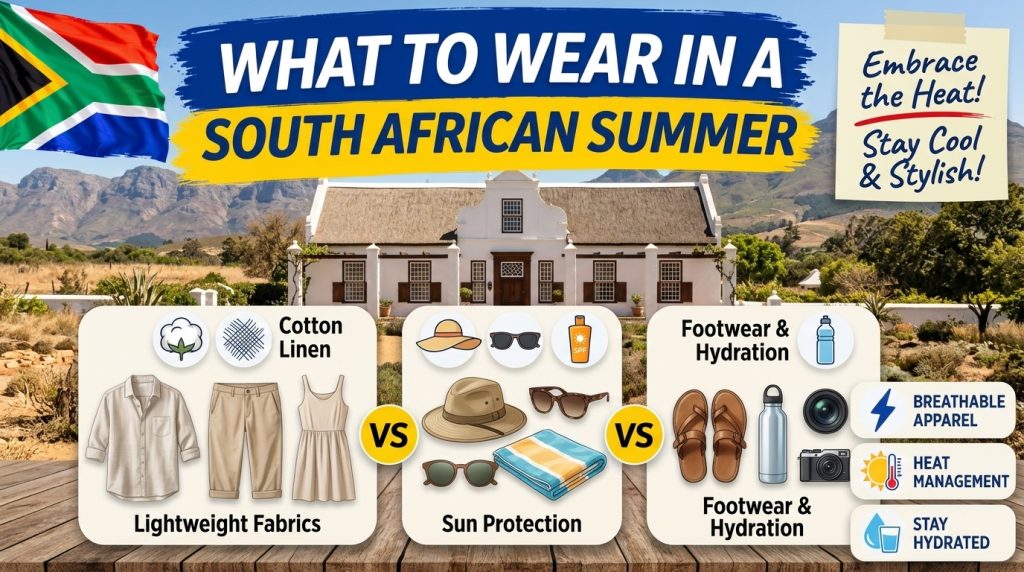
South African summers ask a lot of a wardrobe. Gauteng bakes in dry heat before afternoon thunderstorms, Durban and the KwaZulu-Natal coast turn sticky and humid, Cape Town swings between hot sun and cool wind, and the Lowveld and Northern Cape get properly hot. A shirt that feels fine in Pretoria can feel like a wet towel in Durban.
This guide explains what actually makes clothing cool, compares the main summer fabrics, matches them to South African climates, and covers sun-protective clothing and UPF ratings. It is aimed at everyday wear, from the office to the braai, and it pairs with our guides to choosing sunscreen, choosing the right shirt and building a versatile wardrobe.
Quick answers
- Best all-rounders: Loose, lightweight cotton, linen and linen-cotton blends. Cellulosic fibres such as cotton and flax (linen) tend to be more breathable and comfortable in the heat.
- Humid coast: Choose quick-drying lightweight fabrics, since sweat doesn’t evaporate easily and wet cotton stays damp and heavy.
- Hot and dry: Breathable natural fabrics work well because they absorb sweat and let air through.
- Fabric isn’t everything. Weight, weave, fit, colour and moisture management can matter as much as the fibre itself.
- Sun protection: Look for UPF ratings (15, 30 or 50+) and combine clothing with sunscreen, a hat and sunglasses.
- Usually avoid in the heat: Thick denim, heavy or tightly woven synthetics and tight-fitting clothes.
What actually makes clothes cool?
People often argue about “the best” fabric, but heat comfort depends on several things working together. A loose cotton shirt will usually feel cooler than a tight, cheap synthetic one, and a high-performance polyester top can feel better than a heavy, sweat-soaked cotton one on a humid run.
| Factor | Why it matters |
|---|---|
| Fibre | Cotton and linen are breathable and absorb sweat. Engineered synthetics move moisture across the fabric and dry faster |
| Weight and weave | Light, open weaves let air flow through. Dense, heavy fabrics trap heat |
| Fit | Loose clothing lets air circulate and heat escape. Tight clothing traps heat against the skin |
| Colour | Light colours reflect more sunlight. Dark colours absorb more heat, although a loose cut helps heat dissipate |
| Moisture management | Fabrics that absorb or move sweat away from the skin help you stay comfortable. Fabrics that stay wet feel clammy |
Summer fabrics compared
| Fabric | Strengths | Weaknesses | Best for |
|---|---|---|---|
| Cotton | Breathable and absorbent, soft and easy to care for | Can become heavy and slow to dry when soaked with sweat | Dry heat and everyday wear |
| Linen | Very breathable, dries faster than cotton and feels cool | Creases easily, and the loose weave means low UV protection | Hot, dry days, shirts, trousers and relaxed summer outfits |
| Linen-cotton blends | Breathable with fewer creases and often a softer feel | Less crisp than pure linen | Office and smart-casual summer wear |
| Viscose, rayon and lyocell | Soft, drapey and light | Can be delicate, so check the care label | Dresses, blouses and loose tops |
| Bamboo viscose | Soft and often marketed as breathable and moisture-wicking | Claims vary by product, so check the composition | Sleepwear, T-shirts and loungewear |
| Lightweight merino wool | Good moisture management and odour resistance | Costs more and needs careful washing | Travel, hiking and active wear |
| Performance polyester or nylon | Wicks moisture and dries quickly | Plain, tightly woven polyester can feel hot and hold odours | Humid weather, exercise and outdoor activities |
| Thick denim | Durable and stylish | Heavy and hot in summer | Cooler evenings. Choose lighter weights in summer |
If you love denim, look for lightweight or stretch options and read our guide to choosing the right jeans for fit and fabric weight.
What to wear where: South African climates
South Africa’s summer conditions differ a lot from region to region. Use this as a starting point and adjust for your own tolerance for heat.
| Region | Typical summer conditions | What works |
|---|---|---|
| Highveld (Johannesburg, Pretoria) | Hot, often dry days, afternoon thunderstorms and cooler evenings | Breathable cotton, linen and blends, a light layer for evenings and rain, and strong sun protection at altitude |
| Durban and the humid coast | Hot and humid, including at night | Lightweight, quick-drying and loose clothes. Avoid heavy cotton that stays wet |
| Cape Town and the Western Cape | Dry sunshine, wind and cool evenings | Light layers, breathable fabrics and a windproof layer for evenings and the coast |
| Hot interior (Limpopo, Northern Cape, Karoo) | Very hot and dry | Loose long sleeves and light colours with UPF protection, a wide-brimmed hat and sunscreen |
Sun-protective clothing and UPF
Clothing blocks some UV radiation on its own, but a UPF rating means the fabric has been tested for a certain level of protection. Common ratings are UPF 15, 30 and 50+, with a higher number meaning more protection. UPF is mostly a matter of how thick and dense the fabric is, so the most protective fabrics are often less breathable. Linen, for example, rarely reaches UPF 50+ because of its open weave, although blends can improve this.
UPF clothing works alongside sunscreen, not instead of it. Cover exposed skin with the right product (see how to choose sunscreen in South Africa), and add a wide-brimmed hat and sunglasses.
- Check the label. Look for an actual UPF rating rather than a vague “sun protection” claim.
- Choose coverage. Long sleeves and collars protect the most skin. Lightweight long-sleeved shirts are cooler than many people expect.
- Look for ventilation. Vents, mesh panels and a looser fit improve airflow in sun-protective shirts.
- Hats matter. Look for vents, light materials and quick-drying fabric.
Outfit ideas for South African summers
- The office: A linen-cotton shirt or breathable blouse with lightweight trousers or a dress. Our guide to choosing the right shirt covers fit and fabric.
- The braai: A loose cotton or linen shirt, shorts or light chinos and breathable footwear. Avoid tight synthetic tops that trap heat near the fire.
- The beach and pool: A UPF cover-up or rash vest, a wide-brimmed hat and quick-drying shorts.
- Weddings and smart events: Lightweight linen or breathable blends in light colours, with a layer ready for cooler evenings.
- Walking and sightseeing: Breathable shoes that you can walk in all day. See how to choose the right shoes.
- Cool evenings: A light jacket or overshirt for storms and cool evenings. See how to choose the right jacket.
Buying summer clothes: what to check
- Read the fabric composition. “100% polyester” and “cotton blend” can feel very different in the heat, and a few percent of stretch fibre changes how a garment behaves.
- Feel the weight and weave. Hold the fabric up to the light. A loose weave lets more air through.
- Choose a looser fit. Size up if you are between sizes in a fitted style.
- Prefer light colours for sunny days.
- Check the care label. Linen and viscose may need gentler washing, and some fabrics shrink.
- Know your return rights when you buy online. See our guide to buying clothes and shoes online in South Africa.
Looking after summer clothes
Wash summer fabrics according to the label, usually on a cool, gentle cycle, and hang them in the sun to dry where you can. Line-drying is free and saves electricity. See our guide to reducing electricity use at home. Linen softens with washing and creases are part of its look, while viscose and delicate blends may need hand washing. Rinse sweat and sunscreen out of clothes promptly so they don’t build up and stain.
Heading somewhere hot and humid?
The same rules apply on holiday. For humid destinations such as Bangkok and Singapore, choose lightweight, quick-drying clothes and pack extra tops. For dry heat such as Dubai, breathable natural fabrics and sun protection are the priority, with a light layer for aggressively air-conditioned malls and restaurants.
Summer clothing checklist
- Loose, lightweight tops in cotton, linen or breathable blends
- Quick-drying options for humid days or exercise
- At least one UPF-rated long-sleeved shirt
- A wide-brimmed hat and sunglasses
- Breathable, comfortable shoes
- A light layer for storms and cool evenings
- Sunscreen and a plan for reapplying it
Frequently asked questions
What is the best fabric for hot weather in South Africa?
There isn’t one perfect fabric. Cotton and linen are breathable and work well in hot, dry conditions, while lightweight quick-drying fabrics do better in humid weather and when you sweat a lot. Weight, weave and fit matter too.
Is linen or cotton better for summer?
Linen is usually cooler and dries faster, but it creases and offers little UV protection. Cotton is softer and easier to care for but stays damp longer when soaked.
Is polyester bad in hot weather?
Not always. Plain, tightly woven polyester can feel hot and hold odours, but performance polyester moves moisture and dries quickly, which helps in humid conditions and exercise.
What should I wear in Durban’s humidity?
Loose, lightweight and quick-drying clothes. Avoid heavy cotton and tight clothing that stays damp.
Are dark colours too hot for summer?
Dark fabrics absorb more heat, so light colours are cooler in direct sun. A loose fit helps dark clothes stay comfortable.
What does UPF mean on clothing?
Ultraviolet Protection Factor is a rating of how much UV a fabric lets through. Common ratings are UPF 15, 30 and 50+, with a higher number meaning more protection.
Can I rely on UPF clothing instead of sunscreen?
No. UPF clothing protects covered skin, so you still need sunscreen on exposed skin, plus a hat and sunglasses.
Is denim okay in summer?
Thick denim is hot. Choose lightweight or stretch denim, or save heavier jeans for cooler evenings.
How do I keep summer clothes looking good?
Follow the care label, wash gently, line-dry in the shade or sun as the label allows, and rinse out sweat and sunscreen promptly.
Final thoughts
Dressing for a South African summer is mostly about matching fabric and fit to your local heat, then protecting your skin from the sun. Choose loose, lightweight clothes, pick breathable natural fabrics for dry heat and quick-drying ones for humidity, add UPF protection where you spend time outdoors and keep a light layer for storms and cool evenings.
Fabric performance varies by garment, so check labels and how clothes feel before you buy.
More Kila style and fashion guides
- How to Choose the Right Shirt: Fit, Fabric and Style Guide
- How to Choose the Right Jeans
- How to Choose the Right Shoes for Your Lifestyle
- How to Build a Versatile Wardrobe Without Overspending
- Buying Clothes and Shoes Online in South Africa
- All Kila Style & Fashion guides
Sources and further reading
- WTOP: The best fabric for extreme heat? It’s more complicated than you think
- REI: The best clothing for humidity and hot weather
- Backpacker: Why you should wear linen in hot weather
- Polygiene: Fabrics for hot weather
Fabric performance varies by garment and by person, and this article is general information. If you have a medical condition that affects how you cope with heat, speak to a health professional. Kila may earn a commission if you buy through some links on our site. See our disclosure policy.