
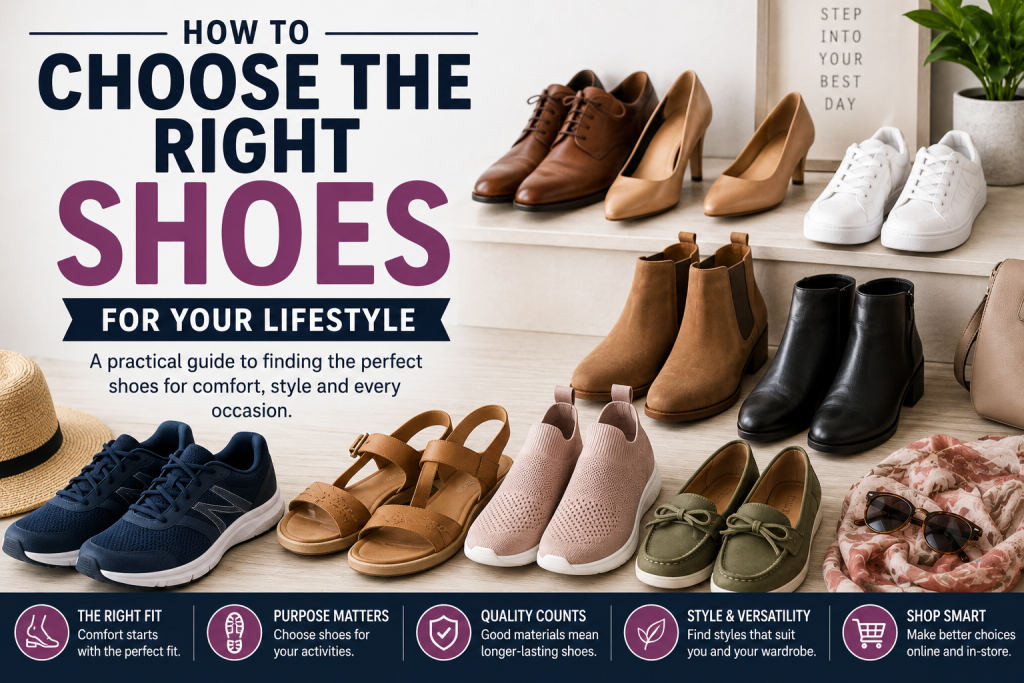
Shoes are one of the most important purchases in any wardrobe.
The right pair can be comfortable enough to wear throughout the day, suitable for the activities you enjoy and durable enough to provide good value over time.
The wrong pair, however, can spend most of its life sitting in the cupboard.
With so many different styles, materials, brands and prices available, choosing the right shoes isn’t always easy. A pair that looks excellent in a photograph may not necessarily be comfortable or suitable for your everyday needs.
The best approach is to start with how you intend to use the shoes.
Are you looking for something for work? Everyday shopping and errands? Walking? Travel? Special occasions? Outdoor activities?
Once you know the answer, it becomes much easier to narrow down your choices.
Start with how you will use the shoes
Before looking at brands or colours, think about the main purpose of the shoes.
Different activities place different demands on footwear.
You might need shoes for:
- Everyday wear
- Work
- Walking
- Travel
- Exercise
- Outdoor activities
- Formal occasions
- Social events
- Summer
- Winter
- Driving
A pair of formal shoes may look excellent at a special event but be completely unsuitable for spending an entire day walking around a city.
Likewise, comfortable walking shoes may be practical but inappropriate for a formal occasion.
Start with the purpose, then choose the style.
How many pairs of shoes do you actually need?
You don’t necessarily need a huge shoe collection.
A practical wardrobe could include a few versatile options:
Everyday shoes
A comfortable pair suitable for shopping, errands and general activities.
Walking or casual shoes
Useful when you’re going to spend significant amounts of time on your feet.
Formal shoes
For work functions, weddings, dinners and other occasions where casual footwear isn’t appropriate.
Sandals
Useful during warmer weather and for casual occasions.
Boots
Depending on your lifestyle and climate, boots can provide a practical option for cooler weather and outdoor activities.
The ideal collection depends on your lifestyle rather than a particular number of pairs.
Comfort should be a priority
A shoe can look fantastic and still be a poor purchase if you don’t find it comfortable.
Comfort depends on several factors, including:
- Shape
- Width
- Cushioning
- Flexibility
- Weight
- Heel height
- Sole construction
- Material
- Fit
Different people’s feet are shaped differently, so a shoe that feels comfortable to one person may not feel the same to someone else.
Don’t assume that a particular brand or style will automatically suit you.
How should shoes fit?
Fit is one of the most important factors when buying footwear.
A shoe should generally feel secure without being excessively tight.
Pay attention to:
- Toe room
- Heel movement
- Width
- Pressure points
- Arch area
- Overall comfort
Your toes shouldn’t feel compressed against the front of the shoe.
At the same time, your heel shouldn’t slide excessively with every step.
Don’t rely entirely on your usual shoe size
Shoe sizing isn’t always consistent between brands or even between different models from the same brand.
A size that fits perfectly in one shoe may feel different in another.
This is particularly important when shopping online.
Check the retailer’s size guide and, where available, the manufacturer’s measurements.
If you’re buying from a retailer with a physical store, trying the shoes on can eliminate much of the uncertainty.
Consider the width of the shoe
Length isn’t the only measurement that matters.
Some people need a wider shoe, while others prefer a narrower fit.
If a shoe feels tight across the sides of your foot even though the length seems correct, you may need a different width or design rather than simply buying a larger size.
A larger shoe may give you more length but still not solve the width problem.
Try shoes on at the right time
Feet can change slightly throughout the day.
If possible, try shoes on later in the day when your feet have had a chance to experience normal daily activity.
Wear the type of socks you expect to use with the shoes.
This can give you a more realistic idea of how the shoes will feel during normal use.
Walk around before buying
Don’t simply stand in a shoe for a few seconds.
Walk around.
Pay attention to:
- Heel movement
- Toe pressure
- Tight areas
- Slipping
- Flexibility
- Overall comfort
If something feels uncomfortable immediately, don’t assume that you simply need to “break the shoes in.”
Some footwear does soften with use, but persistent pressure or an obviously poor fit is unlikely to become ideal through wear.
What makes a good everyday shoe?
Everyday shoes need to balance several characteristics.
Look for footwear that is:
- Comfortable
- Durable
- Versatile
- Easy to maintain
- Appropriate for your normal activities
A neutral colour can also make a pair easier to combine with different clothing.
However, there’s no reason to choose a neutral style if it doesn’t suit your wardrobe or personal preferences.
Choosing shoes for work
Work footwear depends heavily on your working environment.
For an office environment, you may want something more formal.
For a job that involves significant walking or standing, comfort may become more important.
For outdoor or physically demanding work, footwear needs to be chosen according to the specific requirements of the job.
Consider:
- How much you’ll walk
- How long you’ll be standing
- Indoor or outdoor conditions
- Dress requirements
- Weather
- Durability
- Cleaning requirements
Don’t choose work shoes solely because they look professional.
If you’re going to spend eight or more hours in them, comfort matters.
Choosing shoes for travel
Travel is one situation where footwear selection becomes particularly important.
A holiday can involve considerably more walking than a normal day at home.
Comfortable footwear can therefore make a significant difference.
For travel, consider:
- Weight
- Comfort
- Walking ability
- Breathability
- Weather
- Ease of cleaning
- Versatility
A versatile pair that works with several outfits can also reduce the number of shoes you need to pack.
How to Plan an International Trip from South Africa
Shoes for walking
If you regularly walk for exercise or spend a lot of time walking during the day, choose footwear designed for that purpose.
Look for:
- Comfortable fit
- Suitable cushioning
- Appropriate flexibility
- Secure fastening
- A sole suited to the surfaces you normally walk on
Don’t assume that an ordinary fashion sneaker is automatically suitable for extended walking.
Likewise, specialist walking shoes aren’t necessarily required for every casual walk.
Choose according to the amount and type of walking you actually do.
Sneakers versus walking shoes
Sneakers cover a very broad range of footwear.
Some are designed primarily for fashion and casual wear, while others are designed for particular sporting or walking activities.
If you’re buying footwear specifically for regular walking or exercise, look at the manufacturer’s intended use rather than choosing based solely on appearance.
Choosing shoes for exercise
Different sports place different demands on footwear.
Running, gym workouts, tennis and other activities can require different characteristics.
If you’re buying shoes for a particular sport, look for footwear designed for that activity.
This can provide more appropriate traction, flexibility and construction than a general-purpose casual shoe.
What about sandals?
Sandals can be extremely useful, particularly in warmer weather.
When choosing sandals, consider:
- Strap security
- Sole construction
- Comfort
- Adjustability
- Intended use
- Ease of cleaning
A very casual sandal may be perfect for a short trip to the shops but less appropriate for extensive walking.
Choosing boots
Boots can provide additional protection and warmth compared with many other types of footwear.
Depending on the design, boots can be suitable for:
- Everyday wear
- Work
- Outdoor activities
- Cooler weather
- Hiking
- Smart-casual outfits
Don’t assume every boot is suitable for outdoor use.
Look at the sole, construction and manufacturer’s intended purpose.
Leather versus synthetic footwear
Material is another major consideration.
Leather
Leather can offer:
- Durability
- A classic appearance
- Breathability in some constructions
- The ability to develop character over time
However, quality varies and leather generally requires appropriate care.
Synthetic materials
Synthetic footwear can offer:
- Lower weight
- Water resistance in some designs
- Easy maintenance
- Lower prices in some cases
- A wide range of styles
Neither material is automatically better.
The right choice depends on the type of shoe and how you intend to use it.
What about suede?
Suede can provide an attractive appearance and a different texture from smooth leather.
However, it can require more care and may be less practical in wet or muddy conditions.
If you like suede footwear, check the manufacturer’s care recommendations and consider whether the material suits your lifestyle.
Why does the sole matter?
The sole is one of the most important parts of a shoe.
It affects:
- Grip
- Flexibility
- Weight
- Durability
- Comfort
The right sole depends on what you are doing.
A smooth sole may be appropriate for formal indoor footwear.
A more substantial tread may be preferable for outdoor activities.
Look at the heel
Heel design affects the way a shoe feels and functions.
A low, stable heel may be suitable for everyday walking.
Higher heels can change the way your weight is distributed and may be more appropriate for specific occasions than extended walking.
If comfort is your priority, don’t choose a heel height simply because you like the appearance.
Consider how long you’ll actually be wearing the shoes.
Lightweight shoes versus heavier shoes
Lightweight footwear can be comfortable for everyday use and travel.
However, weight isn’t the only factor.
A slightly heavier shoe may provide additional structure or durability.
The right balance depends on the purpose.
For travel, lightweight footwear can be particularly appealing because it also reduces luggage weight.
Breathability matters
If you’ll be wearing shoes for long periods, ventilation can make a difference.
Breathable materials and appropriate construction can help make footwear more comfortable in warm conditions.
This is particularly relevant in South Africa, where temperatures can vary significantly depending on the season and region.
Choosing shoes for different seasons
Your footwear requirements may change throughout the year.
Summer
Consider:
- Breathability
- Lightweight construction
- Sandals
- Casual sneakers
Winter
Consider:
- Warmth
- Water resistance
- Boots
- More substantial construction
Transitional seasons
Versatile shoes that work with different outfits and weather conditions can be especially useful.
How to choose shoes for a capsule wardrobe
If you prefer a smaller wardrobe, look for versatile footwear.
A relatively small collection could potentially cover:
- Everyday casual wear
- Work
- Formal occasions
- Walking
- Warm weather
Choose colours and designs that work with clothing you already own.
This can be more economical than buying shoes simply because they’re on sale.
Don’t buy shoes just because they’re discounted
A discount isn’t automatically a saving.
If you don’t need the shoes, you’re still spending money.
Before buying a sale item, ask:
Would I buy this at full price if it weren’t discounted?
If the answer is no, the purchase may not be worthwhile.
Buying shoes online
Online footwear shopping has become increasingly convenient.
You can compare:
- Prices
- Brands
- Materials
- Styles
- Reviews
- Sizes
- Colours
However, footwear presents one major challenge:
You can’t try it on before ordering.
This makes the retailer’s return and exchange policy particularly important.
What to check when buying shoes online
Before placing an order, check:
- Size guide
- Measurements
- Available widths
- Material
- Heel height
- Sole construction
- Customer reviews
- Delivery cost
- Return policy
- Exchange policy
- Warranty where applicable
Don’t rely solely on photographs.
Read the product description carefully.
Customer reviews can be useful
Reviews can help identify recurring issues that aren’t obvious from the manufacturer’s description.
Look for comments about:
- True-to-size fitting
- Width
- Comfort
- Durability
- Quality
- Grip
- Material
- Long-term use
A single negative review isn’t necessarily significant.
Repeated complaints about the same issue are more useful.
What does “true to size” mean?
When shoppers say a shoe is “true to size”, they generally mean that it fits approximately as expected compared with standard sizing.
However, this is subjective.
Different brands use different lasts and construction methods.
Treat customer comments about sizing as useful information, but still check the retailer’s own size guide.
How important is the brand?
Brand reputation can provide useful information about consistency, quality and after-sales support.
But you don’t necessarily need to buy the most famous brand.
A lesser-known brand can offer excellent value if its construction, materials and fit suit your needs.
Look at the product rather than relying entirely on the logo.
How much should you spend on shoes?
There is no single correct price.
Instead, consider cost per use.
A pair of shoes costing R1,500 that you wear several times a week for two years may provide better value than a R500 pair that becomes uncomfortable or deteriorates quickly.
That doesn’t mean expensive shoes are always better.
It means that price should be considered alongside:
- Expected lifespan
- Frequency of use
- Comfort
- Construction
- Maintenance
- Versatility
When should you replace your shoes?
Shoes don’t necessarily need replacing simply because they are old.
Look for signs such as:
- Excessive sole wear
- Damaged upper material
- Loose stitching
- Broken fasteners
- Significant loss of cushioning
- Structural deterioration
- Persistent discomfort
If a pair is no longer performing its intended function, replacing it may make more sense than continuing to wear it.
Looking after your shoes
Good maintenance can extend the life of footwear.
Depending on the material:
- Clean shoes regularly.
- Allow them to dry properly.
- Follow the manufacturer’s care instructions.
- Use appropriate cleaning products.
- Store shoes in a dry environment.
- Avoid exposing materials to conditions they aren’t designed for.
Different materials require different care.
Don’t assume that a product suitable for leather is also appropriate for suede or synthetic materials.
Why shoe rotation can help
If you wear the same pair every day, rotating between two or more suitable pairs can be useful.
It gives each pair time between uses and can reduce wear on any single pair.
This can be particularly practical if you have several pairs that serve different purposes.
Common shoe-buying mistakes
Choosing appearance over comfort
A beautiful shoe isn’t much use if you don’t want to wear it.
Buying the wrong size
Always check fit rather than assuming your usual size will work.
Ignoring width
Length isn’t the only factor in a good fit.
Buying specialist footwear you don’t need
Choose according to your actual activities.
Ignoring return policies
This is particularly important when shopping online.
Buying solely because something is on sale
A bargain is only a bargain if you actually need it.
Ignoring maintenance
Some materials require more care than others.
Buying too many similar pairs
A smaller collection of versatile shoes may provide better value.
A simple shoe-buying checklist
Before buying a new pair, ask:
- What will I mainly use these shoes for?
- Do they fit comfortably?
- Is there sufficient toe room?
- Is the width appropriate?
- Is the heel secure?
- Is the sole suitable for the intended use?
- Is the material appropriate?
- Are they suitable for the weather?
- Can I wear them with clothing I already own?
- Are they comfortable enough for the time I’ll spend wearing them?
- Are they easy to maintain?
- Is the price reasonable?
- What do customer reviews say?
- What is the return policy?
- Is there a warranty?
- Will I actually wear them regularly?
Final thoughts
Choosing the right shoes doesn’t have to be complicated.
Start with purpose.
Think about where you’ll wear the shoes, how long you’ll wear them and what conditions they’ll encounter.
Then consider fit, comfort, construction, materials and price.
A fashionable pair of shoes can be an excellent purchase if it also fits properly and suits your lifestyle.
But don’t let appearance be the only deciding factor.
For everyday footwear, comfort and versatility are often more important than having the latest style.
For travel, look for lightweight and versatile options.
For work, consider how much time you’ll spend standing or walking.
For outdoor activities, choose footwear designed for the conditions.
And when buying online, pay particular attention to sizing, reviews and the retailer’s return policy.
The best pair of shoes isn’t necessarily the most expensive or fashionable one. It’s the pair you’ll be comfortable wearing and that performs the job you bought it to do.
Building a Versatile Wardrobe
Shoes are just one part of creating a practical wardrobe.
The same buying principles apply to other fashion purchases. Instead of buying items simply because they’re fashionable or discounted, consider whether they are genuinely useful and whether they’ll work with what you already own.
How to Build a Versatile Wardrobe Without Overspending
When choosing accessories, handbags and sunglasses, similar principles apply: consider how frequently you’ll use them, quality, versatility and overall value.
How to Choose the Right Handbag: A Practical Buying Guide
How to Choose the Right Sunglasses: A Practical Buying Guide
For shoppers interested in second-hand fashion, Kila also has guides covering what to check before buying and where to shop.
How to Shop for Second-Hand Clothing Online in South Africa: What to Check Before You Buy