
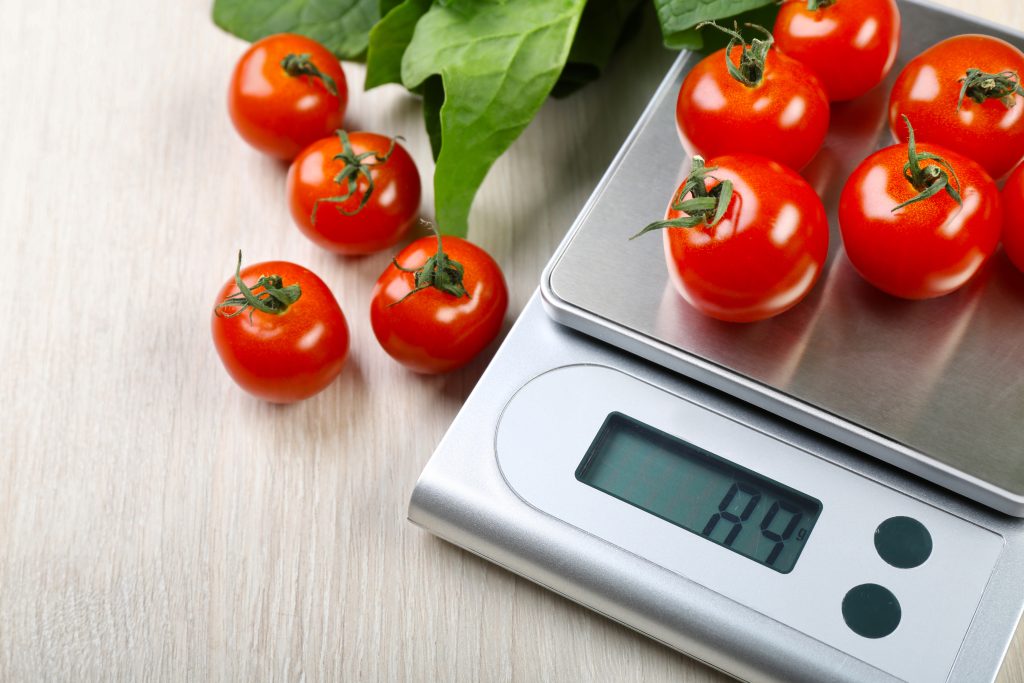
A kitchen scale might not be the most exciting appliance in your kitchen, but it can be one of the most useful.
For everyday cooking, a scale makes it easier to measure ingredients accurately. For baking, it can make an even bigger difference because precise quantities are often important to achieving consistent results.
There are plenty of kitchen scales available, from inexpensive basic digital models to larger scales with removable bowls, rechargeable batteries and additional functions.
But how do you know which one is worth buying?
The good news is that you don’t need a complicated scale for most kitchens. The important thing is choosing one with the right capacity, accuracy, display, weighing functions and design for the way you cook.
How to Choose the Right Stand Mixer for Your Kitchen
Why Use a Kitchen Scale?
Measuring ingredients by weight has several advantages over relying entirely on cups and spoons.
A scale allows you to:
- Measure ingredients more precisely
- Repeat recipes consistently
- Weigh flour and other baking ingredients accurately
- Portion ingredients
- Reduce the number of measuring cups and bowls required
- Weigh ingredients directly into a mixing bowl
- Easily adjust recipe quantities
This can be particularly useful when baking.
For example, a cup of flour can contain different amounts depending on how it is filled and packed. Weighing the flour provides a much more consistent measurement.
A kitchen scale can also make meal preparation quicker because you can weigh ingredients directly into the bowl or container you’re already using.
Digital vs Mechanical Kitchen Scales
The first decision is whether you want a digital or mechanical kitchen scale.
Digital kitchen scales
Digital scales use an electronic sensor and display the result on a screen.
They are generally compact and offer features such as:
- Gram measurements
- Kilogram measurements
- Ounce measurements
- Tare function
- Automatic shut-off
- Low-battery indication
- Sometimes a rechargeable battery
Digital scales are particularly convenient when accuracy and easy reading are priorities.
They are also usually compact enough to store in a kitchen drawer.
Advantages of digital scales
- Easy-to-read display
- Precise measurements
- Compact designs are widely available
- Simple unit conversion
- Tare function
- Generally easy to use
Possible disadvantages
They require a battery or rechargeable power source, and electronic components can potentially fail over time.
Mechanical kitchen scales
Mechanical scales use a spring or similar mechanism and usually have an analogue dial.
They don’t require batteries.
Some traditional designs also include a removable weighing bowl.
Advantages
- No batteries required
- Simple mechanical construction
- Some people prefer the traditional appearance
- Can remain ready to use without worrying about battery power
Disadvantages
- Reading the dial can be less precise
- Usually larger than compact digital scales
- Fine measurements can be more difficult
- The scale may need occasional adjustment or calibration
For most modern kitchens, a digital scale will probably be the more convenient option, particularly if you regularly weigh ingredients in grams.
How Much Weight Should a Kitchen Scale Handle?
Capacity is an important specification that is sometimes overlooked.
A small kitchen scale may handle around 3 kg, while larger models can accommodate significantly more.
Think about what you normally weigh.
If you mainly measure:
- Flour
- Sugar
- Spices
- Coffee
- Small quantities of ingredients
then a compact scale is likely to be sufficient.
If you regularly prepare large batches of dough or weigh ingredients in a large mixing bowl, a higher-capacity model may be more practical.
Don’t confuse capacity with accuracy
A scale that can weigh up to 10 kg isn’t necessarily more accurate than one that can weigh 5 kg.
Capacity tells you how much weight the scale can handle.
Accuracy and readability tell you how precisely it can measure that weight.
These are different specifications.
How Accurate Should a Kitchen Scale Be?
For ordinary household cooking, you don’t necessarily need laboratory-level precision.
However, the scale should provide sufficiently fine measurements for the recipes you prepare.
Many digital kitchen scales measure in 1-gram increments.
That is generally suitable for everyday cooking and most baking.
Some scales offer smaller increments, which can be useful for very small quantities.
Think about what you are likely to measure.
If you’re weighing:
500 g of flour, a 1 g increment is more than adequate for most household cooking.
But if you’re weighing:
2 g of yeast or spices, a scale designed to provide more precise measurements may be useful.
The important thing is to match the scale’s resolution to your requirements rather than simply buying the scale with the smallest number displayed.
What Is the Tare Function?
The tare function is one of the most useful features on a kitchen scale.
It allows you to reset the display to zero after placing a container on the scale.
For example:
- Place your mixing bowl on the scale.
- Press the tare button.
- The display returns to zero.
- Add flour.
- Tare again.
- Add sugar.
- Tare again.
- Continue adding ingredients.
This means you can weigh several ingredients in the same bowl without having to calculate the weight of the bowl or transfer ingredients between containers.
Tare is almost essential
If you’re buying a digital kitchen scale, I would regard a good tare function as one of the most useful features to look for.
Check the Measurement Units
South African recipes commonly use grams and kilograms, but you may also encounter recipes from overseas that use ounces or pounds.
A scale that can switch between units can therefore be useful.
Common options include:
- Grams
- Kilograms
- Ounces
- Pounds
Some scales also provide millilitres, although this feature needs to be treated with some caution.
Why millilitres can be misleading
Millilitres measure volume, while grams measure weight.
A scale can estimate the volume of certain liquids based on assumptions about their density, but this isn’t the same as directly measuring volume.
For precise cooking, it is better to understand whether a recipe specifies weight or volume and measure accordingly.
Platform vs Removable Bowl
Kitchen scales generally fall into two basic designs.
Flat platform scales
These have a flat weighing surface.
You place your bowl, plate or container directly on the platform.
Advantages
- Compact
- Easy to store
- Easy to clean
- Can accommodate different container sizes
- Useful for weighing directly into mixing bowls
For many kitchens, this is the most practical design.
Scales with a weighing bowl
These have a dedicated bowl that sits on the scale.
Advantages
- Convenient for loose ingredients
- Bowl is designed specifically for the scale
- Can be useful when weighing ingredients separately
Potential disadvantages
- Takes up more storage space
- You’re limited to the supplied bowl unless you remove it
- More parts to clean
A removable bowl can nevertheless be useful if you frequently weigh ingredients without using another kitchen container.
Think About the Size of the Weighing Platform
A scale may have excellent specifications but still be inconvenient if the platform is too small.
Consider the size of the bowls and containers you normally use.
A small platform may be perfectly adequate for a cup of flour.
But if you want to place a large mixing bowl on the scale, the display could become difficult to see.
Ideally, you should be able to:
- Place your usual mixing bowl comfortably on the scale
- See the display clearly
- Reach the tare button easily
- Add ingredients without the bowl becoming unstable
This is one reason why looking at the actual dimensions of a product is important when shopping online.
Is the Display Easy to Read?
It sounds obvious, but the display matters.
Look for:
- Large, clear numbers
- Good contrast
- A display that isn’t easily blocked by a bowl
- Buttons that are easy to identify
- A display that remains visible while adding ingredients
Some scales have displays positioned near the edge of the platform.
Others have displays integrated into the weighing surface.
If you regularly use large bowls, consider which arrangement will make the display easiest to see.
What About Auto-Off?
Automatic shut-off is common on digital kitchen scales.
The scale switches itself off after a period of inactivity to conserve battery power.
This can be useful, but there is one potential annoyance.
If you’re following a recipe slowly and pause while preparing another ingredient, the scale may switch off before you’re finished.
Check whether the automatic shut-off period is suitable for the way you cook.
Battery or Rechargeable?
Digital kitchen scales generally use either replaceable batteries or rechargeable batteries.
Replaceable batteries
Advantages:
- Easy to replace
- No charging cable required
- Usually inexpensive
Disadvantage:
- You need replacement batteries available
Rechargeable
Advantages:
- No regular battery purchases
- Convenient for frequent use
Potential disadvantages:
- Needs charging
- Internal battery may eventually deteriorate
- You need the appropriate charging cable
For a kitchen scale that you only use occasionally, replaceable batteries may be perfectly adequate.
Does a Kitchen Scale Need to Be Waterproof?
Probably not.
But it should be easy to clean.
Ingredients inevitably end up on kitchen equipment, particularly when baking.
Look for a design with:
- A smooth weighing surface
- Minimal gaps around buttons
- Easy-to-wipe surfaces
- Removable components where appropriate
Don’t assume that a scale is waterproof simply because it has a sleek design.
Check the manufacturer’s cleaning instructions before putting any electronic kitchen scale under running water.
What About Calibration?
Good scales should provide consistent readings under normal conditions.
However, some models allow calibration, which can be useful if accuracy is particularly important.
If calibration is possible, check:
- How calibration is performed
- Whether calibration weights are required
- Whether instructions are supplied
- Whether the process is straightforward
For normal household cooking, you shouldn’t need to constantly calibrate a quality kitchen scale.
Where Will You Store It?
Kitchen scales are generally small, but storage still matters.
Before buying, think about whether you want to:
Leave it on the counter
or
Store it in a cupboard or drawer.
If storage space is limited, look for a slim design.
Some scales are thin enough to slide vertically into a cupboard or drawer.
A larger traditional mechanical scale may look attractive but take considerably more space.
Can You Weigh Directly Into a Mixing Bowl?
This is one of the simplest ways to make a kitchen scale useful.
Suppose you’re making bread.
Instead of weighing flour into one container, sugar into another and other ingredients separately, you can place your mixing bowl on the scale and use the tare function between ingredients.
This reduces:
- Washing up
- Measuring containers
- Ingredient transfers
- Calculation errors
For anyone who regularly bakes, this can quickly become one of the most useful features of having a kitchen scale.
How to Choose the Right Stand Mixer for Your Kitchen
Kitchen Scale vs Measuring Cups
The two methods aren’t necessarily competitors.
Measuring cups are convenient for some ingredients and recipes.
A scale is particularly useful when:
- Baking
- Following recipes using metric weights
- Scaling recipes up or down
- Measuring flour
- Portioning ingredients
- Repeating recipes consistently
If you frequently use recipes from international websites, a scale can also make it easier to work with recipes that specify ingredients in grams.
A Kitchen Scale Can Help With Recipe Scaling
One advantage of measuring ingredients by weight is that recipes can be scaled relatively easily.
For example, if a recipe makes four portions and you want eight, you can double the quantities.
This becomes particularly convenient when the ingredients are already expressed in grams.
It can also help when cooking for:
- A large family
- Dinner parties
- Meal preparation
- Baking batches
- Freezing meals for later
A scale therefore isn’t just about accuracy. It can make recipe management easier.
Don’t Pay for Features You Won’t Use
Kitchen scales are available at a wide range of prices.
Some include features such as:
- Bluetooth connectivity
- Smartphone apps
- Nutritional databases
- Multiple weighing modes
- Special recipe functions
- Rechargeable batteries
- Temperature sensors
Some of these may be useful.
But for most people, the fundamental functions are more important:
Accurate weighing + good capacity + tare + clear display + easy cleaning.
If you won’t use an app or nutritional database, there is little reason to pay extra for one.
What Should You Look for When Buying Online?
When shopping online, don’t rely solely on photographs and star ratings.
Check the specifications for:
Maximum capacity
Make sure it can handle the quantities you normally weigh.
Readability
Check the smallest increment the scale measures.
Units
Look for grams and kilograms, with ounces and pounds if useful.
Tare function
This should be clearly stated.
Platform dimensions
Make sure your normal bowls will fit comfortably.
Power source
Check whether it uses batteries or rechargeable power.
Auto-off
See whether the shut-off time is specified.
Cleaning
Check the manufacturer’s instructions.
Warranty
Find out who handles warranty claims and after-sales service.
Replacement parts
This is less important than it is for larger appliances, but still worth considering if the model has a removable bowl or specialised components.
Common Kitchen Scale Buying Mistakes
Buying one with insufficient capacity
A small scale might be fine until you place a large mixing bowl containing several kilograms of ingredients on it.
Ignoring the display position
A large bowl can sometimes hide a poorly positioned display.
Choosing based only on price
The cheapest scale isn’t necessarily the best value if it gives inconsistent readings or has a poor-quality sensor.
Paying for unnecessary features
More features don’t automatically make a scale more useful.
Forgetting about storage
A scale should fit naturally into your kitchen rather than becoming another appliance you have to find somewhere to put.
Buying without checking the units
If you primarily use grams and kilograms, make sure those measurements are supported.
What Type of Kitchen Scale Do You Need?
A simple way to decide is to consider your cooking habits.
For everyday cooking
Look for a compact digital scale with:
- At least a few kilograms of capacity
- 1 g increments
- Tare function
- Grams and kilograms
- Easy-to-read display
For regular baking
Consider:
- Good accuracy
- Tare function
- Sufficient capacity for your mixing bowl
- Large, easy-to-read display
- Good platform size
- Easy cleaning
For larger batches
Look for:
- Higher maximum capacity
- Larger platform
- Stable construction
- Clear display
- Strong enough support for your largest mixing bowl
For occasional use
A basic digital scale may be all you need.
There’s no reason to spend heavily on specialist features if the scale will only be used once or twice a month.
Kitchen Scale Buying Checklist
Before buying, ask:
☐ Does it measure in grams and kilograms?
☐ Is the capacity sufficient for my normal recipes?
☐ Is the resolution accurate enough for what I cook?
☐ Does it have a tare function?
☐ Can I see the display when using my largest bowl?
☐ Is the platform large enough?
☐ Is it easy to clean?
☐ Does it use replaceable batteries or rechargeable power?
☐ Does it switch off automatically?
☐ Will it fit comfortably in my kitchen?
☐ Does it have a suitable warranty?
☐ Am I paying for features I will actually use?
Final Thoughts
A kitchen scale doesn’t need to be complicated to be useful.
For most households, a good digital scale with a sensible capacity, 1-gram resolution, tare function, clear display and easy-to-clean surface will handle the majority of cooking and baking requirements.
The most important thing is to buy according to how you actually use your kitchen.
If you bake regularly, prioritise accuracy and the ability to weigh directly into a large mixing bowl.
If you mainly cook everyday meals, a compact scale with a good tare function may be all you need.
And if you’re building a more comprehensive kitchen setup, think about how the scale fits alongside the other equipment you already use.
How to Choose the Right Food Processor for Your Kitchen
How to Choose the Right Blender for Your Kitchen
How to Choose the Right Cookware for Your Kitchen
How to Choose the Right Food Storage Containers for Your Kitchen
The goal isn’t to own the most sophisticated kitchen equipment.
It’s to have the right tools for the way you cook.